
SK Hynix Joins Trillion Dollar Club As Korean Stocks Echo Nasdaq’s 1999 Meltup
The breathtaking rally in South Korean stocks hit a couple of key milestones overnight.
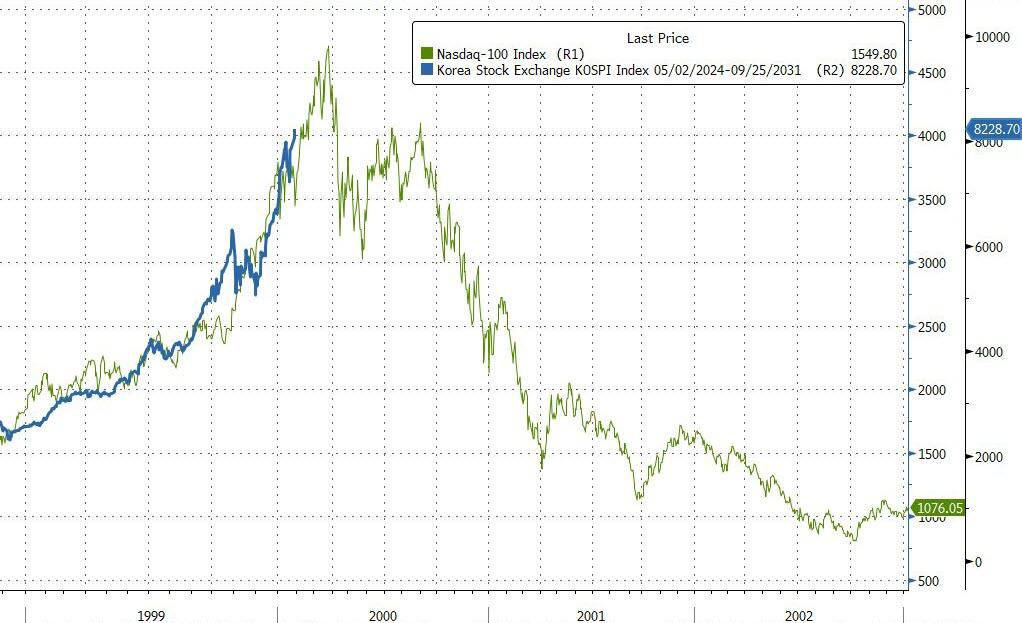
The benchmark Kospi index at one point in the session was up 100% for 2026, rivaling the Nasdaq 100 Index’s 102% surge in 1999 – right before the bubble burst…
Samsung (005930) was up 2.7% and SK Hynix (000660) soared 9.3% rallying to new record highs mainly on three things:
1) overnight backdrop of SOX +5.5% driven by MU +19% strength,
2) launch of leveraged ETF instruments including 14 products that track 2x the return, and 2 inverse products that track -2x the return of SEC(005930) and SK HYNIX(000660), and
3) reports of SEC’s union members voting in favor of a compensation deal and separately, that SK Hynix is making efforts to strengthen its long-term supply agreements via more favorable terms such as higher prepayment and ultra-long tenors of five years or more.
Flow-wise, foreigners extended their net-selling streak in SK HYNIX to 14 consecutive days, selling -$156mn today, while they’ve also ended as marginal net sellers in SEC (-$54mn).
Local instos were net buyers in both names, as they added +$928mn in SK HYNIX and +$330mn in SEC, while retail investors profit-took in both names (-$723mn in SK HYNIX and -$240mn in SEC).
The market value of memory-chip maker SK Hynix surged above $1 trillion for the first time as investors bet the AI boom will lead to a sustained revaluation of the industry.
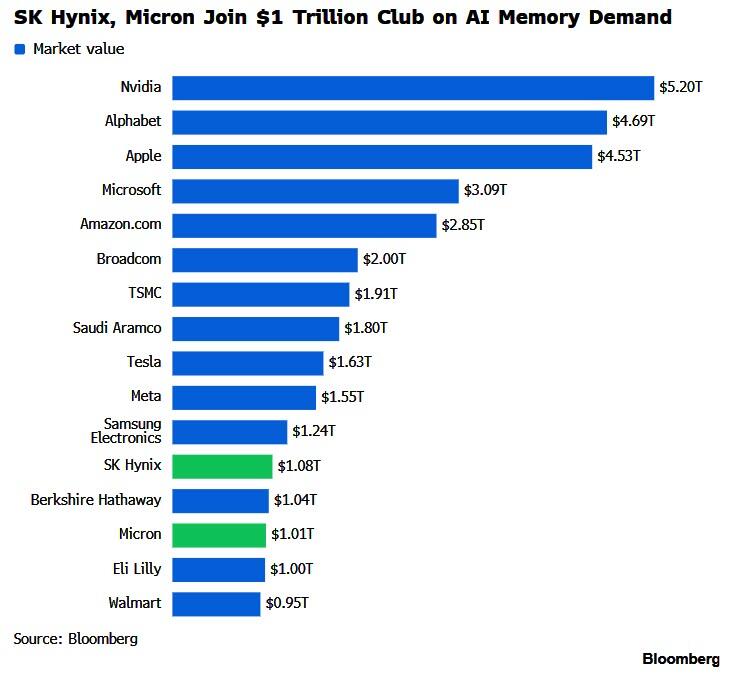
As Bloomberg’s Phill Serafino reports, SK Hynix and Samsung account for almost three-quarters of the Kospi’s gains this year as customers who are building data centers clamor for high-bandwidth memory chips.
(US producer Micron also reached a $1 trillion value yesterday.)
Despite that, almost half of the stocks in the Kospi are down for the year.
The index trades at less than half the earnings multiple of the S&P 500, attracting bargain-hunting hedge fund managers.
The undervaluation persists despite government efforts to push companies to improve shareholder returns and modernize governance.
The market is still bogged down by its legacy of family-controlled business empires with complicated issues tied to cross-shareholdings and high inheritance taxes.
The ultimate goal of the Korean government and regulators is to win developed-market status from index provider MSCI, a shift that could fuel another leg higher for the market.
Perhaps most strikingly, another emerging spillover channel from the AI boom is fiscal – taxes from highly profitable tech equipment manufacturers are filling government coffers, creating more flexibility to spend or pay down debt.
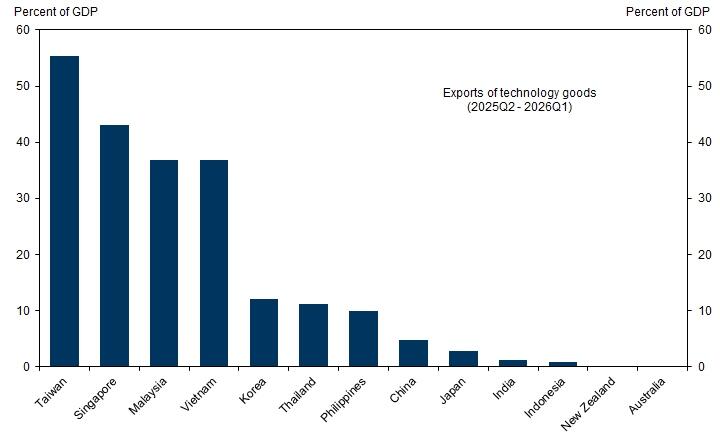
Goldman Sachs estimates that South Korea will see a fiscal windfall of about 5pp of GDP this year.
Tyler Durden
Wed, 05/27/2026 – 08:25