
Oil Tumbles As Tehran Pushes Draft Peace Framework While Sidestepping Uranium Question
Summary
- Iran only having ‘indirect’ US contacts while asserting that enriched uranium is ‘off the table’ for negotiations: state TV says Tehran has a draft of the initial unofficial framework for MOU with US.
- IRGC keeping up the rhetoric: warns that Iran would “turn the area from Chabahar to Mahshahr into a graveyard for aggressors” if the ceasefire collapses.
- CENTCOM: “Clearly the Iranians are trying to hedge their bets here and put more pressure on the US.”
- Iranian president: “The main battleground today is the economic war.“
- Tabriz International Airport in northwestern Iran– which sustained heavy damage from airstrikes during the peak of the aerial bombings – is officially operational again, bringing restored airports to 20 reopened.
Yes 50% · No 51%
View full market & trade on Polymarket
* * *
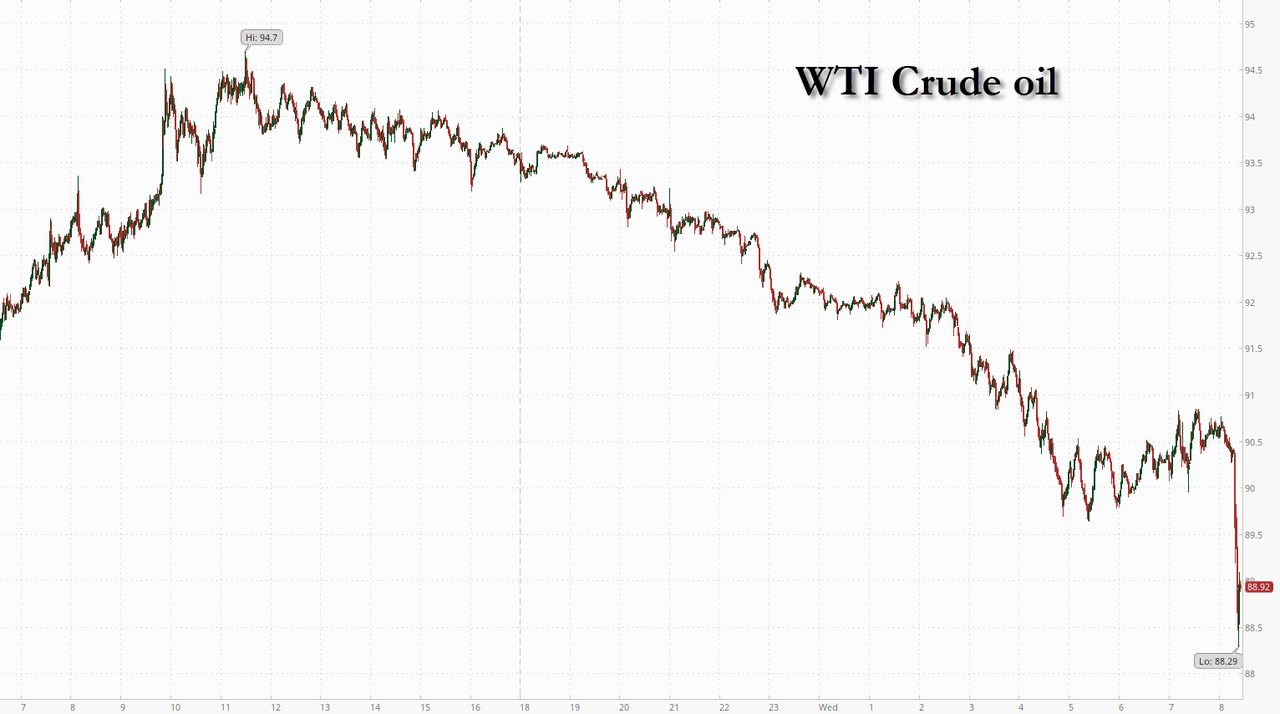
Oil Dumps on MOU Headlines
As for the status of talks, the below headlines present the latest (and noticeably absent is the enriched uranium question, or release of Iranian funds):
- Iran’s state TV says it has a draft of the initial unofficial framework for MOU with US
- According to draft MOU US military forces will withdraw from vicinity of Iran and lift naval blockade
- Iran’s state TV says in return, Iran has committed to restoring the number of commercial transit ships through Hormuz Strait to pre-war levels within one month
- Iran’s state TV says military vessels are not included in this draft agreement
- Iran’s state TV: A final agreement will be approved as a binding UN Security Council resolution if reached in 60 days.
- The Islamabad memorandum framework is still in progress, stating no action will be taken by Iran without “tangible verification.”
- If a final deal is reached within 60 days, this agreement will be approved in the form of a binding UN Security Council resolution.
- The management and route of ship traffic through Strait of Hormuz will be handled by Iran in cooperation with Oman.
Oil dumping on the headlines:
Iran Vows ‘Graveyard For Aggressors’ amid ‘Indirect’ US Contacts
Tehran is keeping the war rhetoric cranked to a maximum, but is also conceding that a return to full-scale war with the United States and Israel is ‘unlikely’ at this stage. The Islamic Republic says at this moment only ‘indirect’ contact with Washington is happening, as cited in Bloomberg.
The IRGC is seeking to dismantle any assumption that Iran is entering peace talks from a position of tactical submission. Speaking to the semi-official Tasnim news agency, Mohammad Akbarzadeh – the political deputy of the IRGC Navy – warned that any resumption of US kinetic activity would result in catastrophic casualties for Western forces.
Akbarzadeh touted that the armed forces remain at a level of total readiness, threatening that Iran would “turn the area from Chabahar to Mahshahr into a graveyard for aggressors” if the ceasefire collapses. “Our fighters today carry in their chests the urge for hand-to-hand battle with the enemy,” Akbarzadeh declared, writing off the prospect of a renewed Western assault due to what he assessed as the “weakness” of the American-led coalition.
Pentagon: Iran ‘Hedging its Bets’ in Hormuz Strait
The Pentagon has acknowledged that Iran is ‘hedging its bets’ amid Hormuz tensions:
Former CENTCOM Commander Gen. Joseph Votel said Iran’s reported effort to lay mines in the Strait of Hormuz suggests Tehran is “hedging its bets” and attempting to ramp up pressure on the U.S. amid ongoing negotiations.
“Clearly the Iranians are trying to hedge their bets here and put more pressure on the U.S., and what we saw here was CENTCOM detecting that and then taking military action to address it very, very quickly,” Votel said during a Tuesday appearance on Fox News’ “America Reports.”
Iranian source to DropSite:
“If the U.S. cannot give the money that belongs to Iran back to Iran, and the U.S. cannot put a leash on Netanyahu and stop him from going on a rampage in Lebanon, then it shows that this conflict has not ended,” Izadi says. “This is a test for Iran to see what’s going on with the other side.”
🎥 NEW: Jeremy Scahill reported this morning that Iranian officials say the U.S. has accepted Iran’s red lines in the latest revisions to the ceasefire declaration, but is asking for time to “manage domestic public opinion” before formally announcing acceptance of the interim… pic.twitter.com/Pmovw5sEKk
— Drop Site (@DropSiteNews) May 27, 2026
Enriched Uranium Not on the Agenda
And all the while Iranian leaders have continued to make clear they will not bow to the central Trump administration demand of transferring Iran’s highly enriched uranium out of the country – though there were prior unconfirmed reports that China could be an acceptable destination for some Iranian officials.
Speaking from the sidelines of an international security conference in Moscow, Ali Bagheri Kani, deputy secretary of the Supreme National Security Council, bluntly told Fars news agency: “This issue is not on the agenda of the negotiations.”
Iranian President Masoud Pezeshkian in fresh remarks is signaling that the conflict has simply migrated from an air and sea war to the global financial system.
Pezeshkian: Main Battleground Now the Economic War
Meeting with the Tehran Chamber of Commerce on Wednesday, Pezeshkian urged a structural overhaul of the country’s domestic market, calling for an immediate expansion of the private sector to act as an economic shield.
“The main battleground today is the economic war,” Pezeshkian stated, according to Tasnim. “We believe the more capable, agile, and active the private sector is, the stronger the country’s economic foundation will become, and the greater our national power will be in the face of external pressures and threats.”
Pezeshkian framed the Western shift toward sanctions and capital starvation as an admission of military failure by Washington and its Israeli ally. “After failing to achieve its objectives on the military front, the enemy has focused on damaging the country’s economic resilience and disrupting the livelihoods of the people,” the president added.
Indeed this is obviously what the US naval blockade on Iranian ports aims to accomplish, which Washington continuing to bet on some kind of mass anti-regime uprising, which has yet to materialize since the start of Operation Epic Fury.
20 Damaged Airports Across Country Reopened
To demonstrate its resolve and resiliency even while Washington tries to keep the economic chokehold on, Iranian civic workers continue to rebuild logistical infrastructure at rapid pace.
As the latest example, on Wednesday the Civil Aviation Organization announced that Tabriz International Airport in northwestern Iran- which sustained heavy damage from airstrikes during the peak of the aerial bombings – is officially operational again.
“The gateway to northwest Iran”…
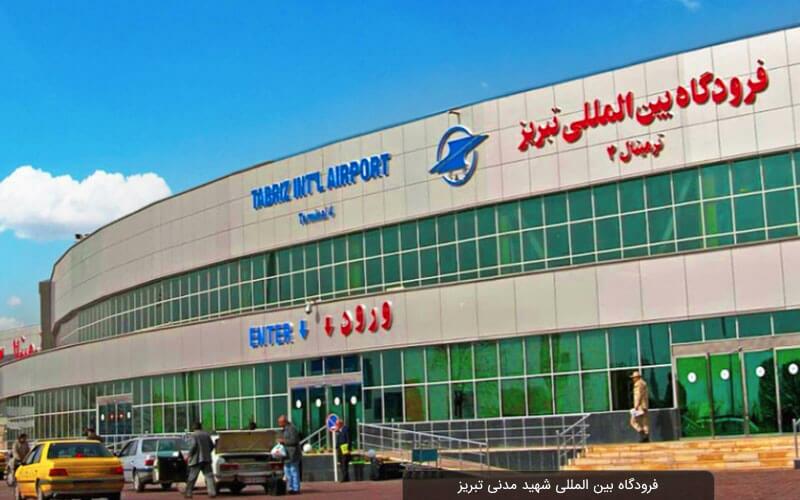
According to public broadcaster IRIB, domestic technical teams managed to bypass supply chain bottlenecks to restore the facility to full service. “Tabriz Airport, which was attacked during the recent war, has now been restored to activity by Iranian specialists and will reopen on Wednesday,” a spokesperson confirmed.
Tabriz joins a growing list of critical transit hubs rushing to normalize operations, according to Al Jazeera, while state media reports state that the total number of reopened airports across the country has now reached 20.
Tyler Durden
Wed, 05/27/2026 – 08:45