
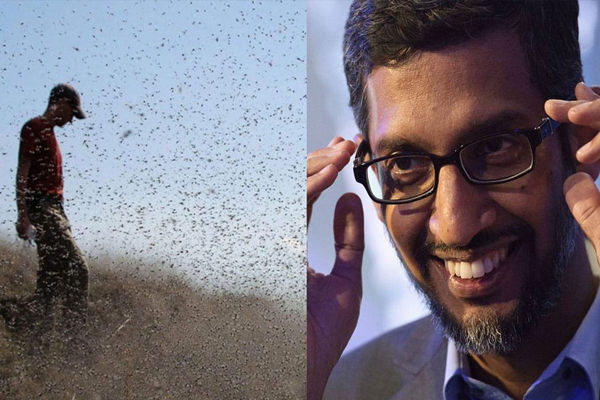
Google is quietly pushing forward with disturbing plans to release up to 32 million “specially treated” bacteria-infested “AI-bred” mosquitoes across California and Florida, raising fresh alarms about the growing influence of Big Tech over public health and environmental policy.
The proposal, currently under review by the Environmental Protection Agency (EPA), would allow the tech giant to unleash millions of laboratory-bred mosquitoes over the next two years as part of an experiment aimed at suppressing wild mosquito populations.
The plan is being advanced through Google’s little-known “Debug” initiative.
The project has spent more than a decade developing ways to manipulate mosquito populations using artificial intelligence, automation, and biological engineering.
If approved, millions of specially treated mosquitoes could soon be released into American communities.
AI-Bred Mosquitoes Carry Bacterial Infection
Google’s plan focuses on Culex mosquitoes, a species linked to the spread of West Nile virus and St. Louis encephalitis.
The company says it will release male mosquitoes infected with Wolbachia, a bacterium that is being used to interfere with mosquito reproduction.


When the infected males mate with wild females, the eggs fail to hatch, reducing mosquito populations over time.
Google says artificial intelligence and robotic systems would be used to breed, sort, and deploy the insects at an unprecedented scale.
Federal regulators are currently reviewing the proposal and accepting public comments before deciding whether to authorize the experiment.
Big Tech Moves Deeper Into Biological Engineering
The proposal highlights the increasingly blurred line between Silicon Valley technology companies and large-scale biological interventions.
For years, Google has quietly invested in mosquito-control technologies through its Debug project, far from the public spotlight.
Now the company is seeking permission to take those experiments directly into American neighborhoods.
Critics argue that once such programs are deployed at scale, the public has little say over the potential consequences.
Many are asking why technology corporations are increasingly involved in manipulating living organisms and ecosystems.
Gates-Backed Mosquito Programs Face Growing Backlash
Google’s proposal arrives as scrutiny intensifies over billionaire Bill Gates and his extensive network of mosquito-related projects around the world.
Reports have revealed that tens of millions of bacteria-infected mosquitoes are already being released every week in Colombia through initiatives backed by the Gates Foundation and the World Mosquito Programme.
Supporters claim such projects can reduce the transmission of diseases such as dengue fever.
Critics, however, warn that entire populations are being subjected to large-scale biological experiments without meaningful public consent.
The controversy has only grown after one of the world’s most ambitious mosquito-engineering projects suffered a major setback in Africa.
African Nation Shut Down Controversial Mosquito Project
Last year, Burkina Faso terminated activities connected to the Gates-backed Target Malaria initiative.
The project sought to develop genetically modified mosquitoes capable of altering wild insect populations.
Government officials cited concerns over biosafety, effectiveness, and national sovereignty when ordering the program halted.
Authorities also directed that remaining mosquito samples be destroyed.
The decision was viewed by critics as a major rebuke of efforts to reshape ecosystems through genetic engineering.


Once modified organisms are released into the environment, opponents warn, the consequences may be impossible to reverse.
Questions Mount Over Long-Term Consequences
As governments, billionaires, universities, and technology companies expand mosquito-manipulation programs across multiple continents, concerns continue to grow about the long-term ecological consequences.
Scientists have repeatedly acknowledged that mosquito populations play roles within broader ecosystems, even as efforts continue to suppress or alter them.
Critics argue that the rush to deploy increasingly sophisticated biological technologies is moving faster than public oversight.
Meanwhile, artificial intelligence is now being used to accelerate and scale these interventions.
For many observers, Google’s proposal represents another example of unelected corporate interests taking a leading role in experiments that could affect millions of people.
If regulators approve the plan, up to 32 million bacteria-infested mosquitoes could soon be released across parts of the United States, adding yet another chapter to the rapidly expanding world of billionaire-backed biological engineering projects.
In Case You Missed It:
Israeli terrorists targeting first responders in southern Lebanon (VIDEO)

Plandemic Update: Moderna Snags $50 Million Ebola Vax Contract
For breaking news from one of the most over the target and censored names in the world join our 100% Free newsletter at Newsletter, The best way to get the information you want.
Also follow us at Gab
Follow us on Gab.com , Like, comment, and subscribe.
Telegram, Join our Telegram chat
Shop Patriot and Detox the Deep State by shopping with our sponsors.
RedPillLiving.com, Home of Sleepy Joe – the world’s most powerful all natural sleep formula.
The Serapeum.com, The Hidden History of Man & The Mystery Babylon Religion of The Deep State.