
As Gulf States Plan Bypass Pipelines, US Military Is Quietly Helping Ships Cross Hormuz
Three months ago, just as the Iran war was getting started, we said it was surprising that UAE’s oil export terminal of Fujairah – already the Middle East’s largest bunkering terminal for tankers transiting the Strait of Hormuz and major loading point for Murban crude – was not a far bigger in terms of capacity and throughput as it bypasses the Straits completely, and predicted a “major infrastructure push here after the war.”
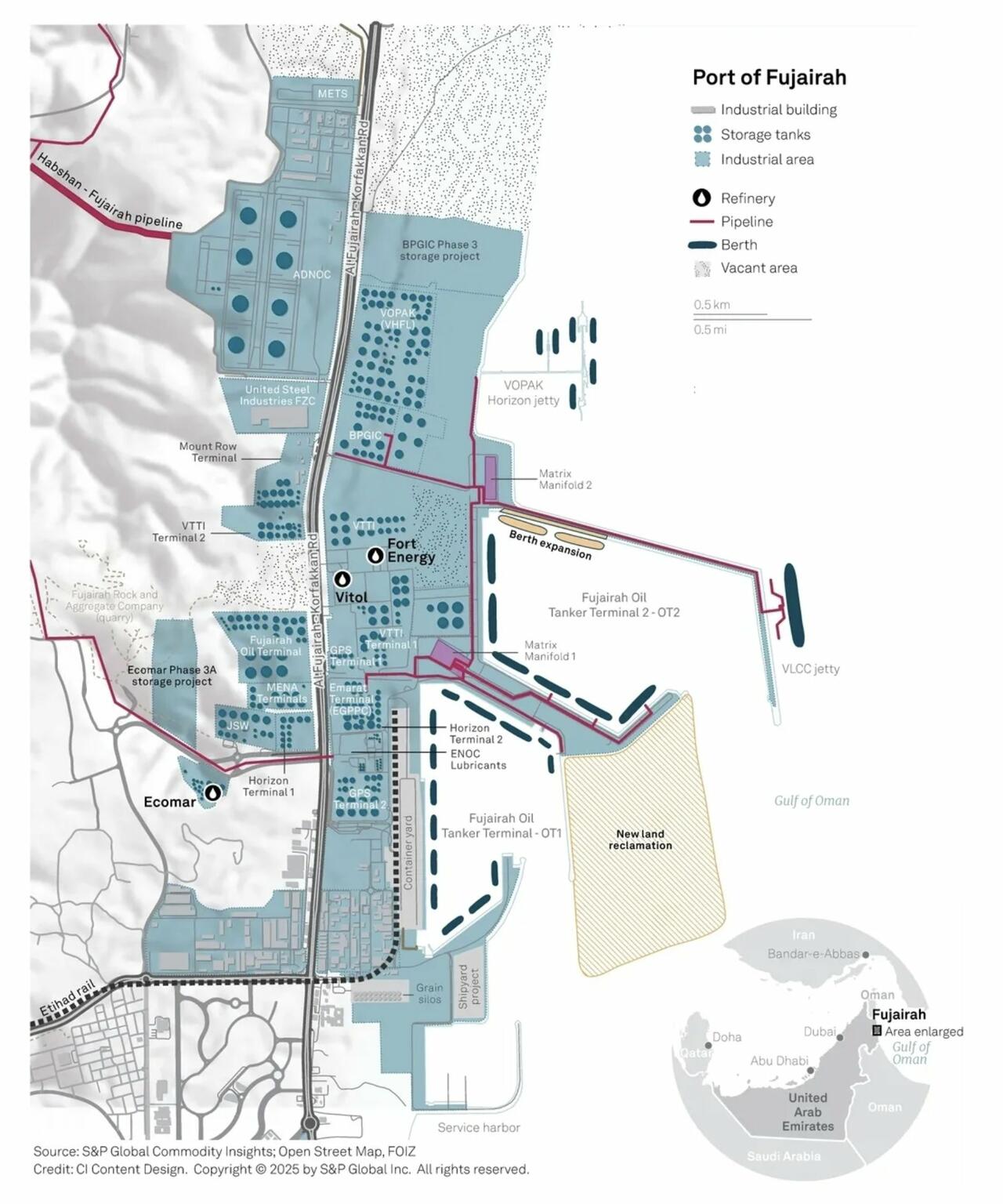
That, coupled with the fact that Saudi East-West pipeline was running at peak capacity of roughly 7mmb/d (including non-oil products), and one could see – we said – the urgency gripping the Gulf in finding alternatives to the Strait of Hormuz which has emerged as Iran’s biggest source of leverage in the war.
Fast forward to today when we get the latest confirmation that plans for Hormuz alternatives are indeed front and center, after the FT reported that gulf countries that export oil via the Strait of Hormuz are in talks about planning pipelines that would allow them to bypass the waterway should it remain largely closed.
Kuwait was among the countries talking to Saudi Arabia and the United Arab Emirates about potential pipelines across their countries that could connect Gulf oil production to global buyers, said Sheikh Khaled Ahmad Al-Sabah, managing director of international marketing at Kuwait Petroleum Corp.
“Kuwait is in dialogue with a lot of neighbouring countries, in talks,” Sheikh Khaled said at an event in London on Wednesday. The US-Israeli war against Iran and the Iranian threat to shipping through the Strait of Hormuz had made the case for pipeline projects, he said.
“Before, a lot of people thought ‘why are people building pipelines without using it?’ Yet now it shows the use of those pipelines.”
The Strait of Hormuz has been effectively closed (if to a lesser extent in recent days) to merchant shipping for more than three months after Iran started to use it as a point of leverage, and the US hit back with a blockade on Iranian ports. The Gulf states’ willingness to consider expensive infrastructure investments suggests they are looking for a contingency plan, now that Iran has proven its ability to hold the strait hostage.
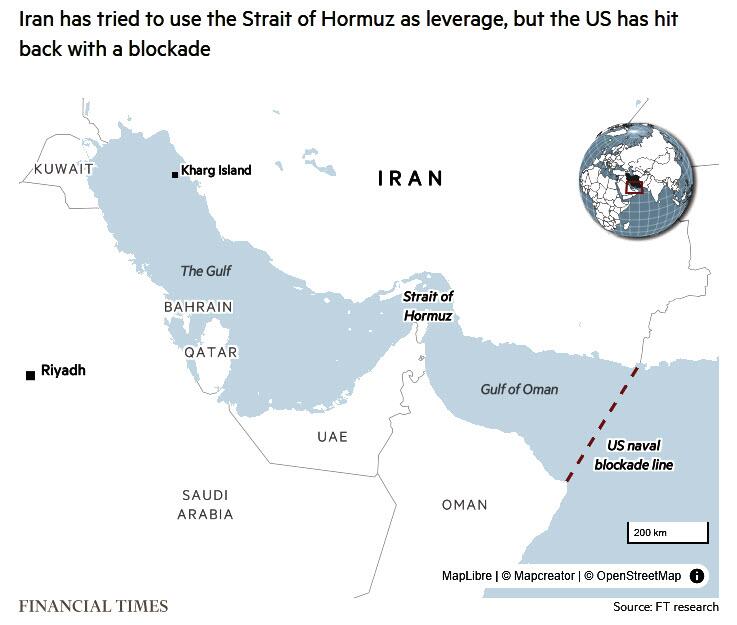
Of course, if the conflict were resolved and ships could pass freely through the strait again, support for expensive pipeline projects could dwindle. Then again, it does not appear that Iran is in any rush to do that.
Of the states affected, only Saudi Arabia and the UAE have pipelines that can move oil to ports outside the strait without passing through other countries. Both countries have maximized the use of these pipelines since the conflict began.
New pipelines would need to be built for other countries to use. According to the proposals under discussion, oil would typically load at ports in Saudi Arabia and the UAE and sail to destinations with access to pipelines that can pump the oil to ports outside the Strait of Hormuz.
According to Abu Dhabi National Oil Co (ADNOC) executive vice-president for trading Philippe Khoury, the UAE was considering building a “west-east pipeline” for crude. When such a project has been discussed in the past, it was seen as a way for fellow Gulf producers to bypass the strait, while the host country would receive a tolling fee.
But such projects have been talked about at various points in the past and failed to materialize. Many mutually beneficial projects between Gulf states have stalled because of concerns about over-reliance on neighboring states and the potential vulnerabilities as a result.
Still, the US-Israeli war on Iran has bolstered the case for such projects. The unpredictability of Iran’s actions meant Kuwait can no longer afford to rely on shipping through the strait, said Sheikh Khaled. Iran launched several attacks on Gulf targets overnight, including on Kuwait’s airport. Kuwait was also talking to Oman about potential oil storage sites on the other side of the strait, said Sheikh Khaled.
And as it prepares to find alternatives, the United Arab Emirates is considering building an additional pipeline for refined products that would bypass the Strait of Hormuz and carry fuels to the country’s east coast, BBG reported. ADNOC, which is already building a crude pipeline to double the capacity of oil it can pump to the port of Fujairah on the UAE’s eastern coast, may “potentially” build an oil products conduit, Khoury, said at S&P Global’s Middle East Petroleum & Gas Conference in London. The existing pipeline has helped the UAE continue to supply markets, offsetting the hit to oil revenue as Iran practically shut the normal route through Hormuz soon after the war began in late February.
The problem with all such pipeline bypass plans, is that they will not only cost tens of billions of dollars, they would take years to be completed. As such, the Strait remains fair game as the US and Iran vie for control, even though Tehran appears to have the upper hand in the current conflict.
Which is why we read with interest a Bloomberg note that US forces were helping ships leave Hormuz with a “quiet Project Freedom.”
A month after President Donald Trump announced (and then abandoned) a plan to escort commercial ships through the Strait of Hormuz, the US military is trying less public ways of protecting vessels in the vital waterway.
Rather than announcing an open challenge against Iran, the US is quietly coordinating with shippers willing to take a different approach. According to Bloomberg, citing evidence gleaned from US Central Command statements, shipping data and people with knowledge of the transits, ships are turning off transponders and sticking close to the Omani coast on the strait’s south to avoid Iranian mines, with the US military assisting if needed.
The latest evidence came Tuesday night amid a flareup between the US and Iran. Central Command issued a statement saying its forces shot down Iranian attack drones aimed at “civilian mariners that were rightfully transiting regional waters.” US forces also conducted “self-defense strikes” on an Iranian military ground control station.
Secretary of State Marco Rubio acknowledged the new campaign in a House Foreign Affairs Committee hearing on Wednesday, saying the US was shooting down Iranian drones aimed at commercial vessels and that Tehran was responding.
“What you’re seeing reports of — including last night — is the following: a ship will go through the route, particularly both the northern and southern route of Hormuz, those ships will come under attack, the US will respond to that attack by shooting down those drones,” Rubio told US lawmakers.
“At that point, the Iranians will respond to that by targeting some facility in the region in retribution,” he added. “On occasion, in order to protect our own forces, we don’t just strike the drones, we strike the people who launch those drones.”
The effort marks a change in tactic from Trump’s previous effort, dubbed Project Freedom, that he rolled out in early May. That initiative, unveiled with a social-media post and detailed in a formal White House briefing, provoked attacks from Iran and risked collapsing a fragile ceasefire between the two adversaries. Trump later said he was scrapping the idea after allies in the region asked him to back down.
The latest US push has no title and the administration has offered little public explanation. But it’s been accompanied by other signals that suggest the US is working with shippers in ways that officials have declined to specify.
Centcom, which has oversight over American military assets in and around the Persian Gulf, has shifted its tone to leave open that possibility. In a social media post late last month, Centcom denied as “FALSE” reports that the US Navy “has restarted escorting or assisting commercial vessels during transits through the Strait of Hormuz.” But after more evidence emerged in recent days that several vessels had gotten through, the command changed its messaging.
“Though US forces are not escorting, we continue to communicate and coordinate with commercial ships seeking to freely and safely transit the Strait of Hormuz, a critical international corridor for regional and global economies,” US Central Command’s public affairs director, Navy Captain Tim Hawkins, said in a statement on Monday.
Secretary of Defense Pete Hegseth alluded to the US effort over the weekend, saying traffic would eventually resume thanks to “what we’re able to do, and are doing — whether it’s known or unknown — in the strait.”
Two shippers said previously they were in touch with the US military, which advised them on how best to navigate the waterway, Bloomberg News reported earlier. When one vessel was approached by suspected Iranian fast attack boats on a recent transit, helicopters appeared and drove them away, according to the person with knowledge of that transit.
“If the commercial ships are hugging the coast opposite of Iran and turning off their AIS transponders, Iranian forces would need to use radar or spotters to detect the movement and direct drone or missile attacks,” said Bryan Clark, a senior fellow at the Hudson Institute. “The US Navy could detect these efforts and counterattack the Iranian units,” he said.
Steve Wills, a naval expert at the Navy League’s Center for Maritime Strategy, said the US military can coordinate protection for vessels using Navy ships equipped with a modern AEGIS command-and-control system that integrates air and missile defense as well as early warning E-2D aircraft to provide an overall picture of the area. That “makes possible a kind of distant but direct coverage” of the strait, Wills said.
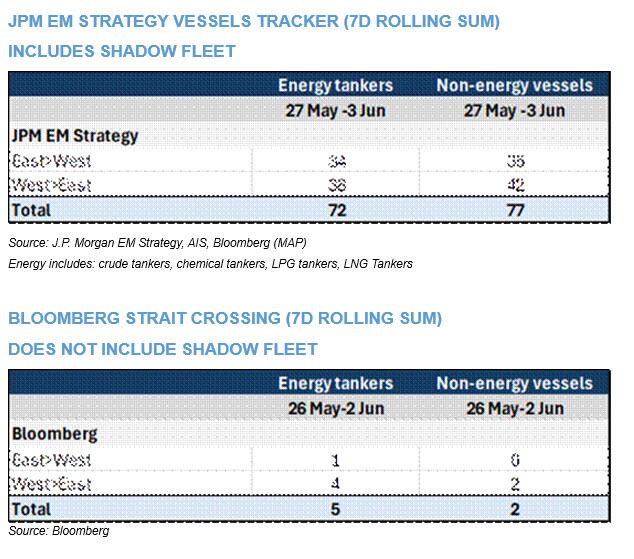
So has the US strategy paid off? Here there is some disagreement. According to Bloomberg, while some shippers are growing more optimistic about a pickup in traffic, ship-tracking data compiled by Bloomberg indicates that movement through the strait has been limited. Just two inbound commercial transits were observed on Tuesday morning, following two outbound ships on Monday.
Others, however, disagree. In its morning note, JPM’s Market Intel team said that its EM strategy team has the following to say on Middle East volumes:
- New higher equilibrium appears to be established in Strait with vessel crossings remaining in the c.25 per day mark for nearly a week, according to JPM EM Strategy methodology.
- Estimated energy exports continue to be very strong – around 3.6 mbd over the past two days and the 7DMA remaining around 2.5mbd. This has been driven by strong refined chemical tanker transits which have risen to more than 50% of pre-conflict levels.
- Reports that US are quietly coordinating with shippers to ensure safe transit without explicit escort.
Here, JPM suggests that Bloomberg’s data is showing muted transits as it can’t keep an accurate read of actual crossings due to AIS transponders being turned off during crossings.
More in the full JPMorgan report available to pro subscribers.
Tyler Durden
Wed, 06/03/2026 – 23:33