
The Democrats’ Hasan Piker Problem Is Getting Worse
The Democratic Party has so much going for it in the 2026 midterm election season, yet it looks like one man in particular might blow it for them. Hasan Piker, the 35-year-old left-wing influencer, is becoming a genuine electoral liability that could extend well beyond the races he’s personally gotten involved in, and according to a report from the Wall Street Journal, Democrats are trying to do something about it.
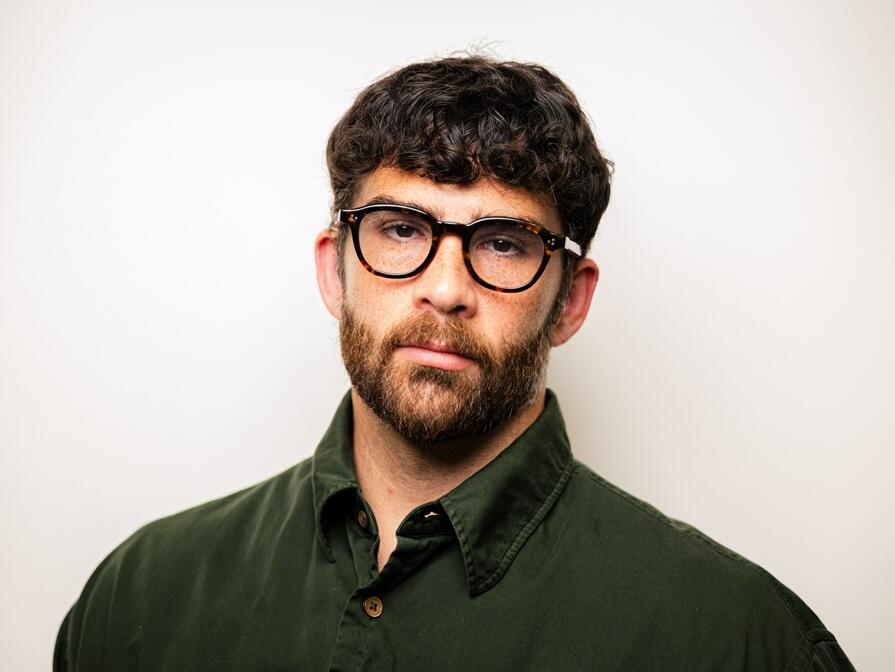
In Michigan, Piker has been campaigning alongside Democrat U.S. Senate nominee Abdul El-Sayed despite warnings from party operatives who would rather he didn’t. The two have continued campaigning together even as Democratic officials worry the association could bleed into contests in Texas, Georgia, Wisconsin and Maine, states where Piker hasn’t lifted a finger for any candidate. That’s the nature of viral notoriety. A candidate doesn’t need Piker in the room to become an issue because of him.
Piker built his following on livestreams that pull in an audience of millions, a platform he has used to deliver commentary that ranges from standard progressive fare to remarks widely considered to be antisemitic, particularly his treatment of Israel and its supporters. Piker rejects the antisemitism charge, saying his quarrel is with Israel and its defenders rather than with Jews.
In addition to his criticism of Israel, one of his most controversial remarks was that America “deserved 9/11,” a line he later claimed he should have phrased more carefully.
Even as his rhetoric becomes a liability for the party he’s trying to help, Rep. Alexandria Ocasio-Cortez (D-NY) and Sen. Bernie Sanders (I-VT) have aligned themselves with him, while others are drawing a line in the sand. Sen. John Fetterman (D-PA) and strategist James Carville both threatened to walk away from the party over Piker’s rising influence within it, though Carville later softened the threat.
Two primaries in two weeks offered the first real test. Even though El-Sayed won his Michigan Senate primary on Aug. 4, his margin of victory was smaller than polls predicted. A week later in Wisconsin, DSA-aligned Francesca Hong lost the gubernatorial primary despite polls showing her with a commanding lead. Notably, neither Ocasio-Cortez nor Sanders endorsed Hong, even as both went to bat for El-Sayed.
Piker rejects the idea that he’s dragging down Democratic candidates. “I don’t think that progressives have a harder time beating Republicans,” he told the Wall Street Journal. “I think that logic is flawed. It’s just somewhat untested.”
Despite his claim, the record on progressive and socialist candidates winning outside deep blue turf is thin to nonexistent. Progressive mayors run Los Angeles, Chicago, Seattle and New York City under Karen Bass, Brandon Johnson, Katie Wilson and Zohran Mamdani, and Democrats hold every governorship on the West Coast plus Massachusetts and Illinois. Every one of those wins happened on turf Democrats were always going to carry. The candidates who actually flipped competitive ground, Barack Obama and Joe Biden among them, ran as moderates first and only governed further left once in power. Piker’s theory requires competitive states to behave like safe ones. They haven’t yet, and nothing in this cycle suggests they’re about to start.
Republicans have been playing both sides of this. In Wisconsin, GOP-aligned super PACs spent millions on ads calling Hong “too liberal” – an attempt to hand her the nomination and an easier general election to their own candidate. Their opposition researchers have been just as busy with Piker. They’ve resurfaced a hostile exchange Piker had with a woman who identified herself as a refugee from a Marxist regime, along with his reaction to Hong’s primary loss, and both clips are now doing steady rotation in attack ads across multiple states. The combative instincts that built Piker’s audience are proving just as useful to the people trying to end Democratic careers as they were to the people who wanted him amplifying their own.
Carville’s walk-back and Fetterman’s hedge suggest party leadership understands the risk even if it can’t agree on what to do about it. AOC and Sanders embracing Piker points to a faction that either doesn’t see that risk or has decided it’s worth the trade. Both camps are operating inside the same party, running in the same midterms, sharing the same brand and trying to pull it in opposite directions.
The Democrat Party isn’t shaking Hasan Piker loose anytime soon, and the longer leadership avoids confronting that, the more permanent the association becomes. Every week they stay silent, Republicans bank another data point for their general election messaging. Democrats keep telling themselves this is a manageable problem, but it clearly isn’t.
Tyler Durden
Sun, 08/16/2026 – 21:35