
CXMT Becomes China’s Most Valuable Company As UBS Calls Apple Sourcing Report A “Key Catalyst”
Shares of ChangXin Memory Technologies (CXMT), China’s top DRAM maker, surged 12% to a record 61.80 yuan on Monday, lifting its market capitalization to 4.13 trillion yuan. The upside is because reports that Apple is considering using CXMT memory chips, alongside continued momentum across chip stocks following last week’s gains in SanDisk and Micron.
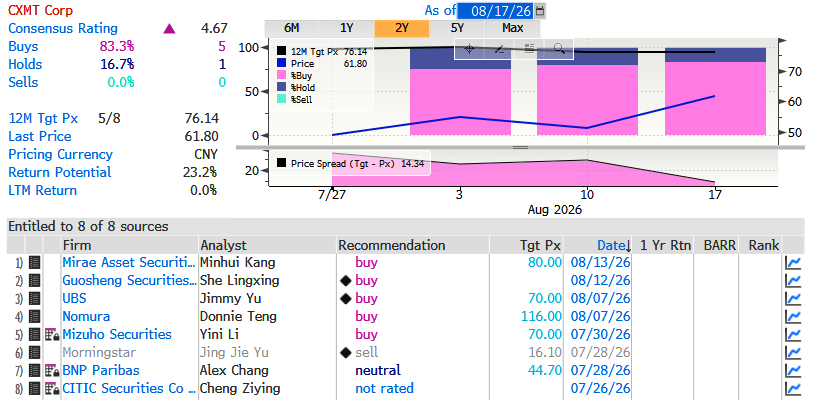
UBS analyst Jason Milao, who covers CXMT (now China’s most valuable company) with a “Buy” rating and a 70 yuan price target, wrote in a note earlier that CXMT’s gains on Monday were primarily driven by the “key catalyst” of Apple sourcing optionality.
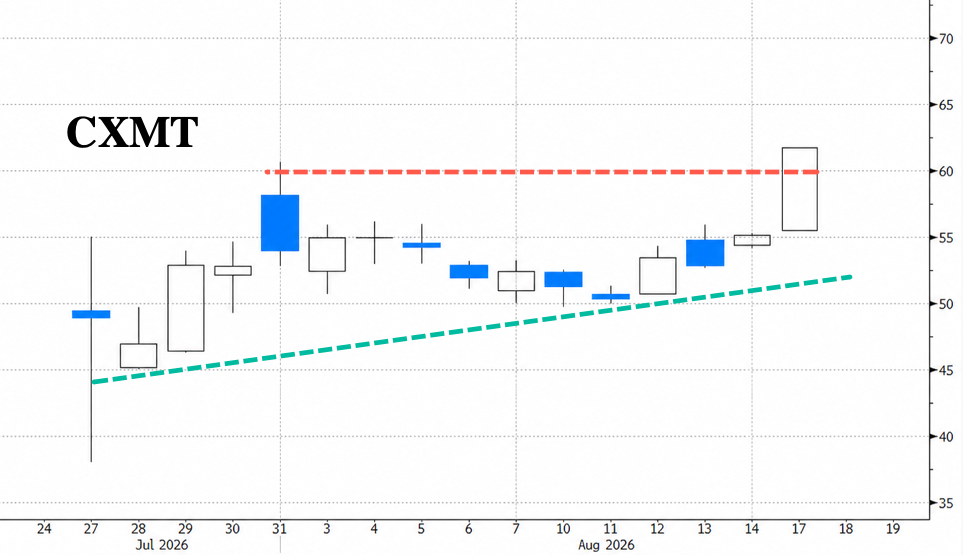
The Apple sourcing optionality for CXMT memory chips stems from multiple reports by The Wall Street Journal, which said Apple has considered using memory chips from a company blacklisted by the Pentagon over alleged ties to the People’s Liberation Army amid a global memory shortage. The WSJ released an interview with U.S. Commerce Secretary Howard Lutnick on Saturday morning, who said the Trump administration does not recommend that Tim Cook’s company use CXMT as a chip substitute.
Milao continued:
China A-shares traded higher Monday morning, with the CSI 300 up ~0.8%. Tech rallied as CXMT jumped 9% on Apple sourcing optionality.
Across the broader AI compute chain, H1 results have been solid, albeit largely in line, with Foxconn, Cambricon, and Hygon all delivering earnings. The setup continues to support the AI hardware trade.
He added:
Meanwhile, CXMT’s rally has created additional room for the broader China tech trade. The move provides investors with a fresh anchor for domestic substitution, memory tightness, and AI hardware exposure, helping to attract capital into other high-beta technology names as the market rotates away from domestic economy-related sectors.
Analyst recommendations tracked by Bloomberg show 5 “Buy” ratings and 1 “Neutral,” with a 12-month price target of 76 yuan.
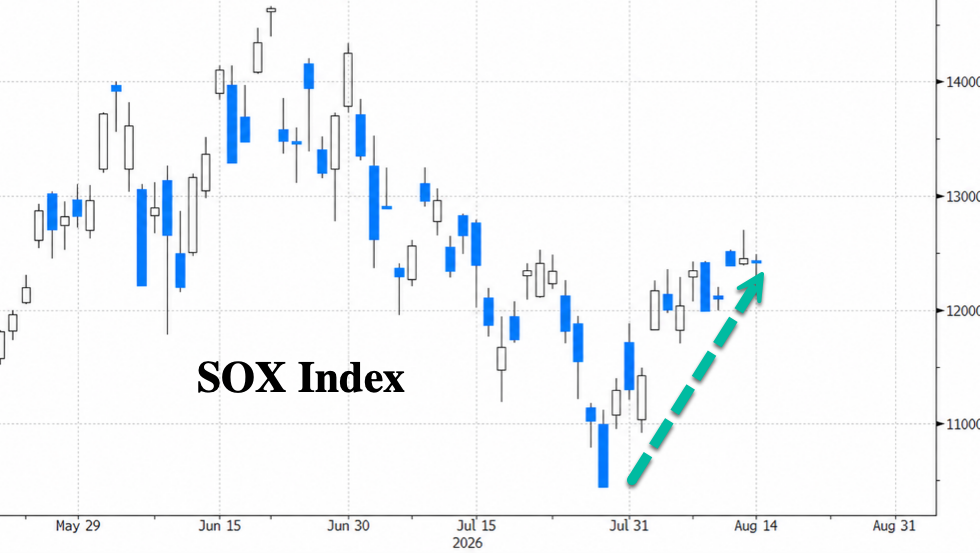
The PHLX Semiconductor Sector Index (SOX) has rebounded in recent weeks following a six-week drawdown.
Broader semiconductor stocks in Asia advanced, with SMIC and Hua Hong gaining more than 7% in Hong Kong. Tencent and Alibaba, meanwhile, have tumbled roughly 25% and 14%, respectively, this year as investors question AI monetization and China’s soft consumer backdrop.
Tyler Durden
Mon, 08/17/2026 – 07:45