
Temporary Protected Status Ends For 13 Nationalities
Authored by Troy Myers via The Epoch Times,
A court on Aug. 18 effectively ended Temporary Protected Status (TPS) for the last of 13 nationalities that the Department of Homeland Security (DHS) targeted during President Donald Trump’s second term.
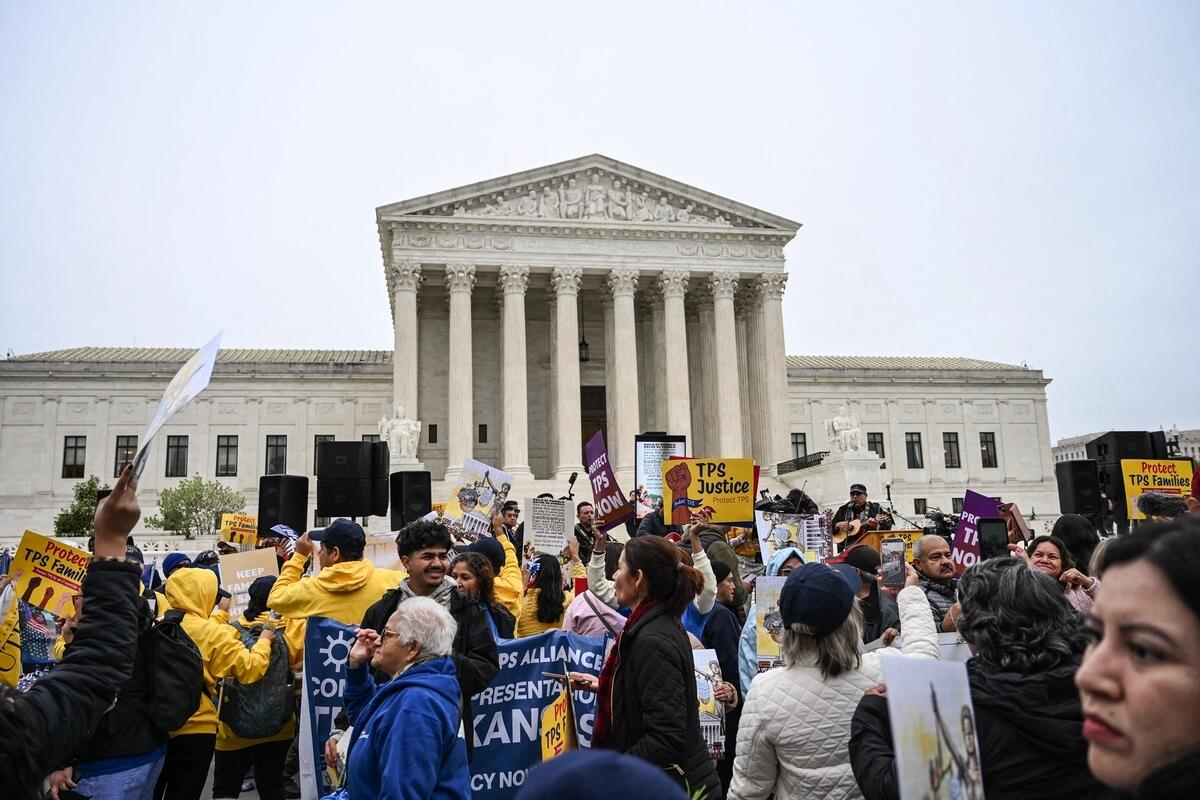
In total, more than a million foreign nationals living in the United States with such deportation protections are now up for removal.
The 13 countries included Haiti, Syria, Yemen, Afghanistan, Cameroon, Nepal, Honduras, Nicaragua, Venezuela, South Sudan, Burma, Somalia, and Ethiopia.
In June, the Supreme Court allowed Trump to end the status for Syrians and Haitians and did so with reasoning that applied to cases involving other nationalities as well. Some lower courts initially resisted Trump’s revocations, but by Aug. 18, each of those judicial blocks had fallen.
Here’s what we know about what this means and what’s next.
Are Mass Deportations Coming?
DHS and legal experts say the more than one million foreign nationals previously covered by TPS are now, technically, illegal aliens.
The first deportation flight to Haiti since the Supreme Court ruling departed on Aug. 20, carrying more than 160 individuals. Among those removed were former TPS holders and Haitians who served prison sentences in the United States, according to Haitian officials.
Neama Rahmani, a former federal prosecutor who worked on immigration issues, told The Epoch Times that few options remained for the foreign nationals to challenge their deportations.
“That designation is gone. That protection disappears,” Rahmani said. “Now, that doesn’t mean a million people get deported. … They still have to go through the normal removal proceeding.”
He said that some could self-deport or be removed under orders that were in place before they received protected status.
DHS did not respond to requests for more information on enforcement of the TPS revocations for more than a million foreign nationals.
After the Aug. 18 decision, DHS urged foreign nationals to self-deport – take a free flight home and a $2,600 check – or be removed.
“For decades, TEMPORARY Protected Status was used as a [de facto] amnesty program. Those days are OVER. Those with terminated TPS are now in our nation ILLEGALLY. They must leave now or be swiftly DEPORTED,” said the DHS on X.
Court Battles
The DHS secretary has authority to decide when a country merits a TPS designation.
The secretary is also required to periodically review and extend or revoke the status, which is meant to be granted for countries affected by armed conflict, environmental disasters, or other extraordinary or temporary dangerous conditions. If the DHS secretary finds that conditions in a designated country no longer warrant protected status, they can terminate it.
Lawsuits seeking to block the terminations, which were done under then-DHS Secretary Kristi Noem, alleged the administration failed to follow proper procedures, including reviewing conditions in these countries, before terminating the protections.
Some judges agreed, before the Supreme Court issued a decision over protections for Syrians and Haitians in which a majority of justices agreed with the administration’s argument that federal judges lacked authority to review the department’s TPS determinations. They noted a section of the Immigration and Nationality Act that bars judicial review and clarified that it applied even to procedural challenges, like those brought under the Administrative Procedure Act.
While some countries’ terminations were already in effect, others were still blocked when the Supreme Court ruled.
Some of the lower court judges overseeing those remaining cases were accused by DHS of dragging their feet in issuing orders that comply with the high court’s ruling.
DHS special counsel James Percival began posting on X a daily reminder of each judge who had not followed the Supreme Court precedent. He singled out District Judge Brian Murphy, who oversaw Ethiopia’s case, for waiting more than 50 days to lift his administrative stay on the country’s TPS termination.
Although the final judicial block fell on Aug. 18, appearing to be the last breath of the legal challenges against TPS terminations, there remains a small chance that at least one case could be revived.
Lawyers jointly representing Nepalese, Honduran, and Nicaraguan former TPS holders are attempting to amend their initial lawsuit with a new bare animus claim alleging that the Trump administration’s efforts to end protected status were unconstitutional “because they were motivated by explicit animosity and a desire to harm TPS holders,” an Aug. 20 court filing said.
Lawyers for the federal government argued in their own court filing that the plaintiffs “do not have any prospect of victory.”
They pointed to an Aug. 7 decision in Burma’s TPS lawsuit that rejected a similar attempt to amend the challenge with a bare animus claim.
“There is a distinction between bare desire to harm TPS holders and animus against TPS policy,” wrote District Judge Matthew Kennelly of the District Court for the Northern District of Illinois. “The Supreme Court’s reasoning in [the Syria and Haiti case] points to the latter, not the former.”
District Judge Trina Thompson for the Northern District of California, overseeing the Nepal, Honduras, and Nicaragua case, had not ruled on the matter at the time of this publication.
Judge Murphy, overseeing Ethiopia’s case, denied the plaintiff’s motion to postpone termination of TPS but granted their motion to amend their complaint with a new ultra vires claim, arguing then-Secretary Noem acted beyond her authority in ending protected status.
Regardless, Rahmani said he believed any further challenges or appeals would likely have very little success considering the Supreme Court’s decision.
“They can sue, but they’re probably gonna lose,” he said. “It’s been pretty clear the executive branch can remove these protections.”
How TPS Was Granted
Protected status can be designated for six, 12, or 18 months at a time and must be periodically reviewed by the DHS secretary to ensure a country is still experiencing armed conflict, environmental disasters, or other extraordinary or temporary conditions.
Some of the 13 countries were initially granted TPS due to armed conflict, like a bloody civil war in Syria that prompted the United States to grant its citizens protected status in March 2012.
Other countries were designated under TPS after devastating natural disasters, including a 7.0-magnitude earthquake in Haiti in 2010, a 7.8-magnitude earthquake in Nepal in 2015, and Hurricane Mitch that ravaged Honduras and Nicaragua in 1998.
Somalia remained under protected status the longest out of these 13 countries – since September 1991. Three decades of armed conflict and instability warranted extensions of TPS across multiple U.S. administrations.
About 170,000 Salvadorans living in the United States are set to become the 14th nationality to lose their deportation protections on Sept. 9. The country has remained under TPS since March 2001 after catastrophic earthquakes.
The Debate
Advocacy groups and Democratic lawmakers have criticized the Trump administration’s efforts, arguing that some of the 13 countries remain war-torn and unsafe for their nationals to return to. Some judges who oversaw TPS cases wrote words critical of the policy changes in new orders to overturn their previous blocks.
District Judge Allison Burroughs, overseeing Somalia’s case, noted in her order lifting her previous block that Somalis once under TPS face a humanitarian crisis in their home country. She described the foreign nationals as “productive members of our communities who have lived here for years, built a life here, worked here and raised their families here.”
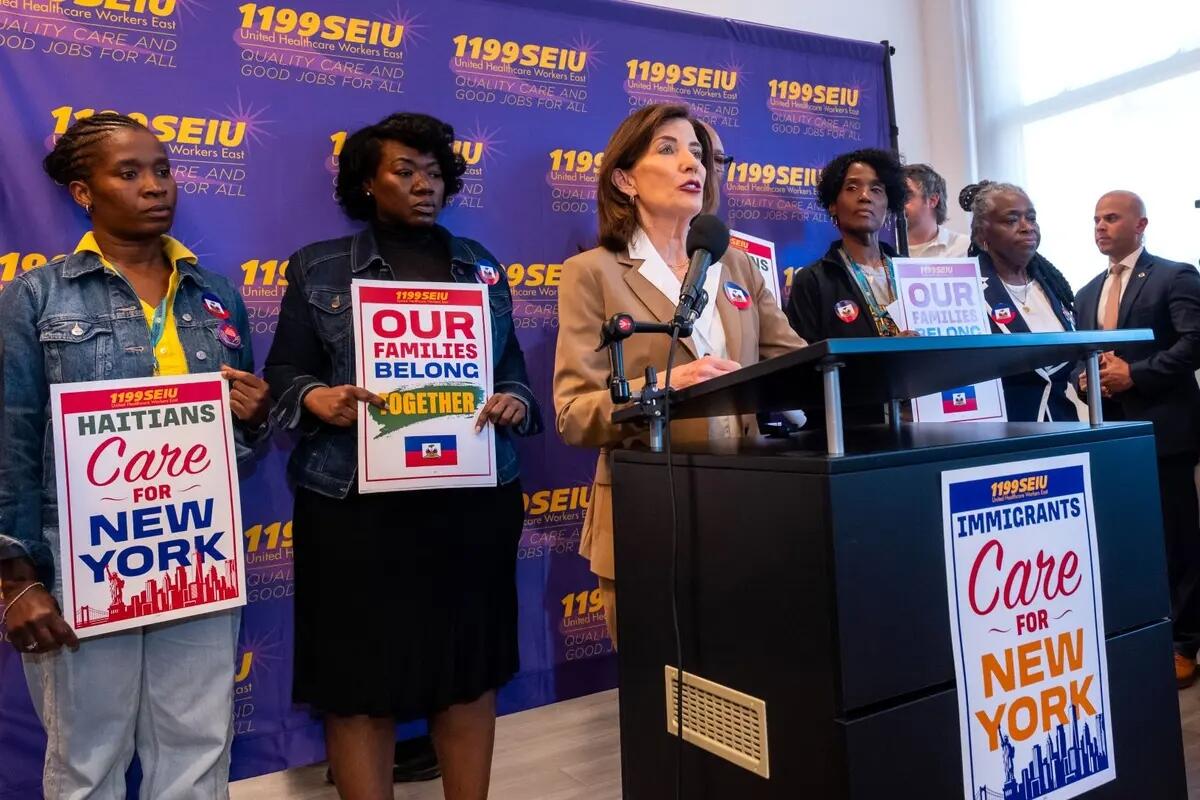
New York Gov. Kathy Hochul wrote a letter to DHS Secretary Markwayne Mullin, urging him to reinstate protected status. She said the deportation of foreign nationals from the state’s workforce will have a “heavy impact” on a myriad of industries.
“By knowingly and cruelly forcing thousands of families to leave our country and return to their home countries, regardless of any ongoing or worsening humanitarian crises, the White House is committing a reckless and inhumane act,” Hochul wrote.
Rep. Ayanna Pressley (D-Mass.) demanded that the Senate return to session to pass a bill that would extend TPS specifically for Haiti, where she said, in an Aug. 21 post on X, has an “ongoing humanitarian crisis.”
The lower chamber already passed the legislation earlier this year in a 224-204 vote.
Meanwhile, federal officials have said TPS is meant to be temporary and has never been designed as a pathway to obtaining permanent U.S. citizenship.
Foreign nationals could attempt to claim asylum, Rahmani noted, which is very difficult to do now in the United States.
Asylum claims are designated for foreign nationals with a well-founded fear of persecution or torture in their home countries.
Rahmani said some foreign nationals could fight their deportation on the grounds that they are married to an American citizen – as long as it’s a “bona fide marriage” and not fraudulent.
Marriage is the quickest and easiest way for a foreign national to gain status, he said.
Some may self-deport, taking DHS’s offer of a free flight and a $2,600 check, Rahmani said, but others may continue living in the United States “under the radar,” as enforcing the end of TPS for more than a million foreign nationals will take time.
“I expect that a lot of people who don’t have legal status to be here, they’ll continue to remain here, live in the United States unlawfully,” Rahmani said. “It’ll be up to DHS to find them, apprehend them, and remove them.”
Tyler Durden
Sun, 08/23/2026 – 15:10