Evergrande Founder Gets Life But Homebuyers, Suppliers Bear The Costs Of China’s Property Collapse
Authored by Michael Zhuang via The Epoch Times,
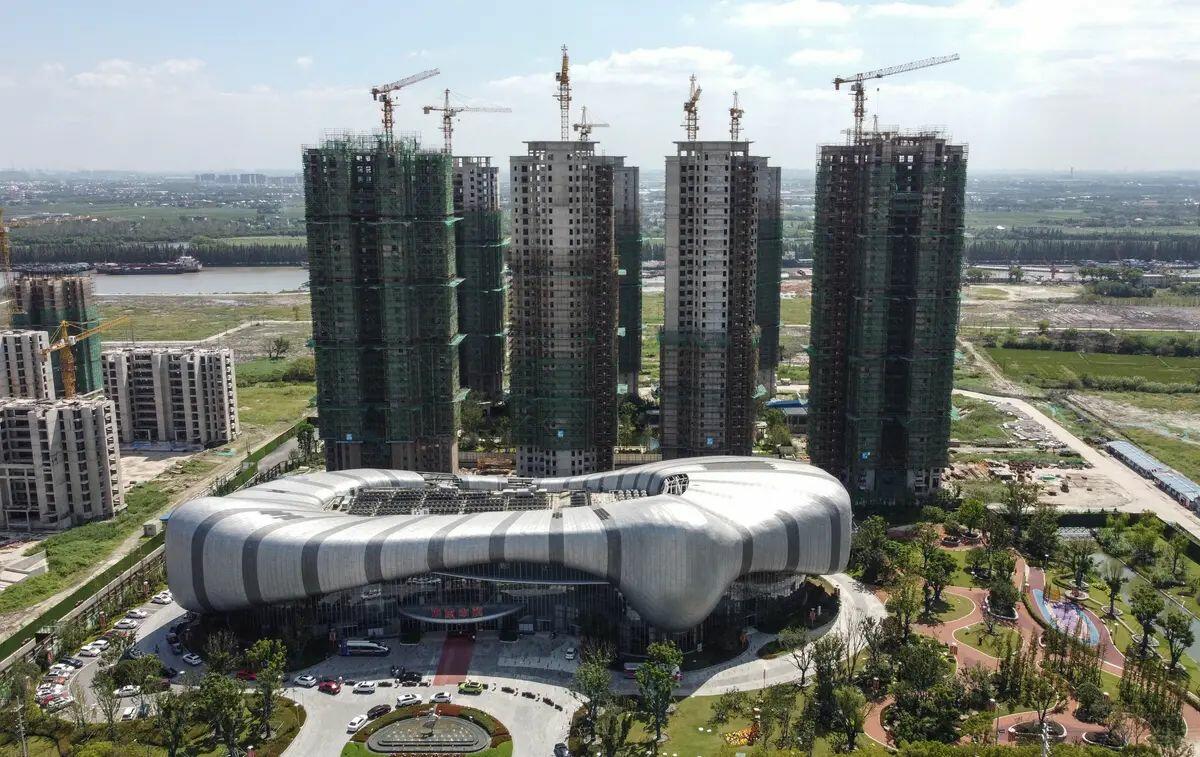
The sentencing of China Evergrande founder Hui Ka Yan to life in prison has brought a legal reckoning for one of the country’s most spectacular corporate collapses. However, for hundreds of thousands of homebuyers, investors, and other creditors, the ruling does little to resolve the financial losses left behind by the property giant.
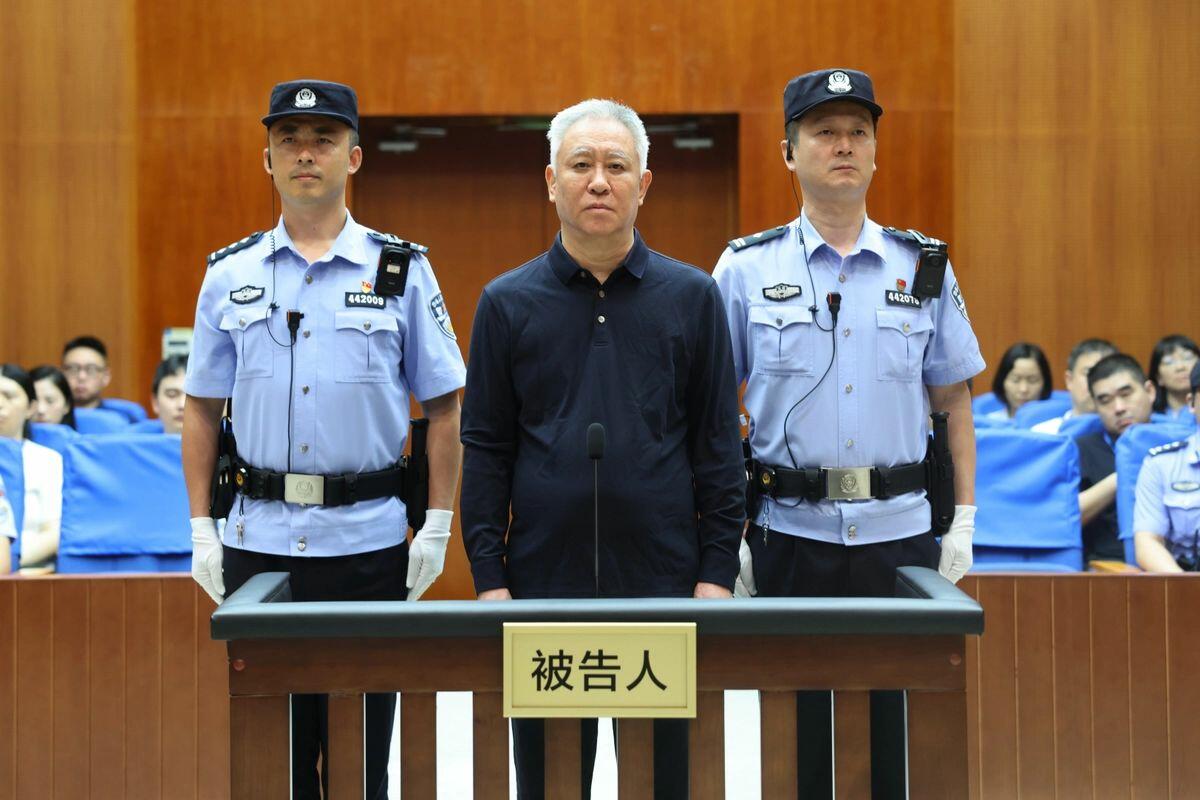
Hui, the founder and former chairman of China Evergrande Group, was sentenced on Aug. 20 after being convicted of crimes including fundraising fraud and embezzlement. His personal assets were confiscated, while Evergrande and its property subsidiary were fined a combined 15.82 billion yuan ($2.35 billion).
Chinese authorities also ordered the continued recovery of illegal proceeds and repayment of losses where funds remain insufficient. Fifty-six other people involved in related Evergrande cases, including Hui’s two sons, were given prison sentences ranging from 18 years to one year and 10 months, along with fines or asset confiscations.
Separately, on Aug. 21, the Guangzhou Intermediate People’s Court accepted a bankruptcy-liquidation application against Evergrande Real Estate Group and appointed a liquidation team as administrator, according to an official court bankruptcy notice. Creditors are being directed to file claims in that proceeding.
The penalties, however, do not automatically compensate the people who lost money when Evergrande collapsed.
Evergrande reported total liabilities of 2.437 trillion yuan at the end of 2022, including 721.021 billion yuan in contract liabilities, of which 664.244 billion yuan related to property development. Reuters later cited Gavekal Dragonomics as estimating that Evergrande’s advance payments from homebuyers were equivalent to about 600,000 housing units.
Davy Jun Huang, a U.S.-based economist and former columnist for Chinese state media outlet CNTV, told The Epoch Times that Hui’s life sentence answers the question of who committed crimes, but does not answer who should bear responsibility for Evergrande’s enormous debts and unfinished projects.
“These are two completely different questions,” Huang said. “The harsher Hui Ka Yan is punished, visually it feels like the problem has been solved, but in reality, the houses will not automatically be completed because of this, and creditors’ money will not be recovered because Hui Ka Yan has been sentenced.”
The question of who ultimately absorbs Evergrande’s losses is likely to remain more consequential for ordinary Chinese than Hui’s punishment.
Who Will Pay?
Evergrande’s collapse has left losses spread among several groups, including homebuyers, suppliers, banks, investors, and other creditors.
Huang argued that the fines imposed on Evergrande and its property subsidiary do not themselves amount to direct compensation for homebuyers or unfinished projects. An official Supreme People’s Court summary adds an important qualification: restitution for losses takes priority over enforcement of fines and confiscation, while illegal proceeds are to be recovered and any shortfall is subject to restitution. Huang argued that the losses from Evergrande had effectively been distributed throughout society among homebuyers, suppliers, and investors.
This has fueled broader debate over whether the regime should use other revenues associated with the property sector to compensate victims.
Huang said such demands were reasonable from both legal and economic perspectives. He pointed to the U.S. government’s 2008 intervention in Fannie Mae and Freddie Mac as an example of the government assuming responsibility when a major part of the housing finance system was threatened.
China’s regime, he said, played multiple roles in the property boom, as the dominant supplier of land, regulator, and major beneficiary of property-related revenue, but did not assume the corresponding losses when the market collapsed.
“When real estate was rising, the government used land-sale revenues, land-transfer taxes, and layers of extraction to squeeze out the last penny,” Huang said. “When the real estate bubble burst, under the Chinese Communist Party’s (CCP) political model, the government would not bear any of the losses.”
Suppliers Face Steep Losses
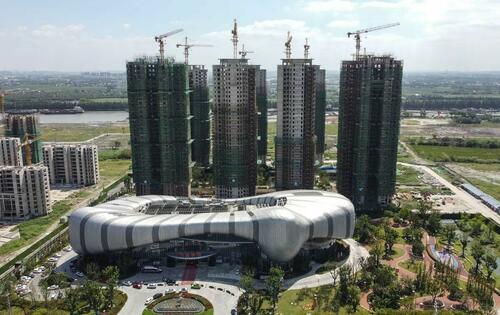
The impact of Evergrande’s collapse extends well beyond unfinished apartment complexes.
Xu Zhen, a senior professional in China’s capital markets, told The Epoch Times that China’s local governments were among the biggest beneficiaries of Evergrande’s expansion. He estimated that local governments collected roughly 1.2 trillion to 1.7 trillion yuan ($180 billion to $250 billion) in land-sale revenues and taxes directly associated with Evergrande between 2016 and 2021.
That money had already entered regime coffers and would not be affected by Evergrande’s bankruptcy or Hui’s imprisonment, Xu said.
Xu also argued that state finances would benefit from the penalties. That point is subject to the judgment’s express restitution priority, which can affect the order in which recoveries are enforced.
Banks initially benefited from lending to Evergrande but later became creditors themselves. Some of their claims were eventually sold at steep discounts after the company’s collapse. Xu cited a claim held by China Minsheng Bank that was ultimately sold for roughly 13.5 percent of its original value.
Homebuyers have faced a different kind of loss – years of waiting while continuing to carry mortgages on homes they may not be able to occupy.
However, Xu identified suppliers as the group that suffered the most severe financial damage.
Under a 2023 Supreme People’s Court interpretation, qualifying consumers who bought homes for residential use can, if statutory conditions are met, assert delivery or refund claims ahead of construction-price priority claims, mortgages, and other claims. Construction contractors and secured creditors otherwise retain separate priority rights. Evergrande’s June 2023 interim results reported 1.05657 trillion yuan in trade and other payables, including 596.17 billion yuan in construction-material payables.
The debts affected thousands of small and medium-sized companies, many of which had limited bargaining power and few legal resources.
Some construction contractors and materials suppliers collapsed after failing to collect commercial bills issued by Evergrande. In the liquidation of an Evergrande project company in Zhanjiang, ordinary creditors ultimately received a recovery rate of about 0.69 percent, according to Chinese financial reports; Reuters also cited the figure in April 2026.
Evergrande said its targeted wealth-management financing products totaled approximately 92.1 billion yuan, with about 34 billion yuan in unpaid principal and interest as of the end of 2022. Separately, Reuters reported in 2021, citing an Evergrande Wealth sales manager, that more than 80,000 people had bought wealth-management products that raised more than 100 billion yuan over five years.
Evergrande’s shares have also been delisted, leaving many retail investors with substantial losses.
A Boom Built on Political Ties
The collapse has also revived questions about how Evergrande grew so rapidly in the first place.
Taiwan-based Japanese journalist Akio Yaita, a prominent critic of the CCP, told The Epoch Times that the company’s downfall was not simply the result of excessive leverage and a bursting property bubble. He said it exposed deeper problems in China’s system of political and business relationships.
As long as entrepreneurs maintained strong political connections, Yaita said, access to land, regulatory approvals, and financing becomes much easier. Rising property prices then allowed companies to expand rapidly.
However, such a model was inherently vulnerable to changes in political power, he said.
“China’s system makes it difficult to produce people like Konosuke Matsushita, YK Pao, and Morris Chang, who build corporate culture and industrial foundations over decades, and it is also difficult to produce entrepreneurs like Elon Musk and Jensen Huang, who rely on technological innovation to change the global industrial landscape,” Yaita said.
Instead, he said, the system was more likely to produce entrepreneurs who rose rapidly through political connections and then fell just as quickly when those political relationships changed.
Huang described Evergrande’s rise as a form of mutually beneficial cooperation between business and the regime.
During the property boom, he said, developers helped local governments generate land revenue and economic growth, while banks expanded lending and met credit targets. The interests of developers, banks, and government officials were therefore aligned.
Huang said he visited Evergrande’s headquarters in 2018 to give a lecture on policy analysis and forecasting and warned Hui that the company should stop expanding after 2018. Hui and the company did not heed the warning, he said.
That does not absolve Evergrande or Hui of responsibility, Huang said.
However, the collapse illustrates a broader problem. According to Xu, private property developers can become highly dependent on a system in which land and access to capital are heavily controlled by the state.
“From an employee to a scapegoat is the fate of private real estate owners under the CCP’s monopoly over land and capital,” Xu said. “Hui Ka Yan is a typical example.”
“If you do well, the CCP lets you gain both fame and fortune; if you do badly, it makes you a prisoner,” he said.
Hui’s imprisonment therefore does not end the questions raised by Evergrande’s collapse. For the company’s former customers and creditors, the larger issue remains who will ultimately bear the cost and whether any of the money and homes lost in the collapse can be recovered.
Tang Bing and Luo Ya contributed to this report.
“`
Tyler Durden
Sun, 08/23/2026 – 22:45