
The Exodus Continues… Britain’s 3rd Largest Taxpayer Escapes To Greece
Britain’s highest taxpayers have been drifting offshore since the non-dom regime was scrapped in April 2025 and inheritance tax was extended to worldwide assets.
This shift is already visible on the Sunday Times lists: six of the 2026 Tax List’s top 100 (including Revolut’s Nik Storonsky) had left in the previous year, the compiler noted that one in nine names on that list were no longer UK-resident, and the companion Rich List dropped dozens of foreign billionaires while recording a sharp rise in British nationals now based in Dubai, Switzerland and Monaco.
But, the latest news is likely the most disturbing to the increasingly socialist government as the UK’s 3rd largest taxpayer – hedge fund founder Chris Rokos – is set to leave.

The star trader paid a stunning £330 million ($447 million) in taxes last year…
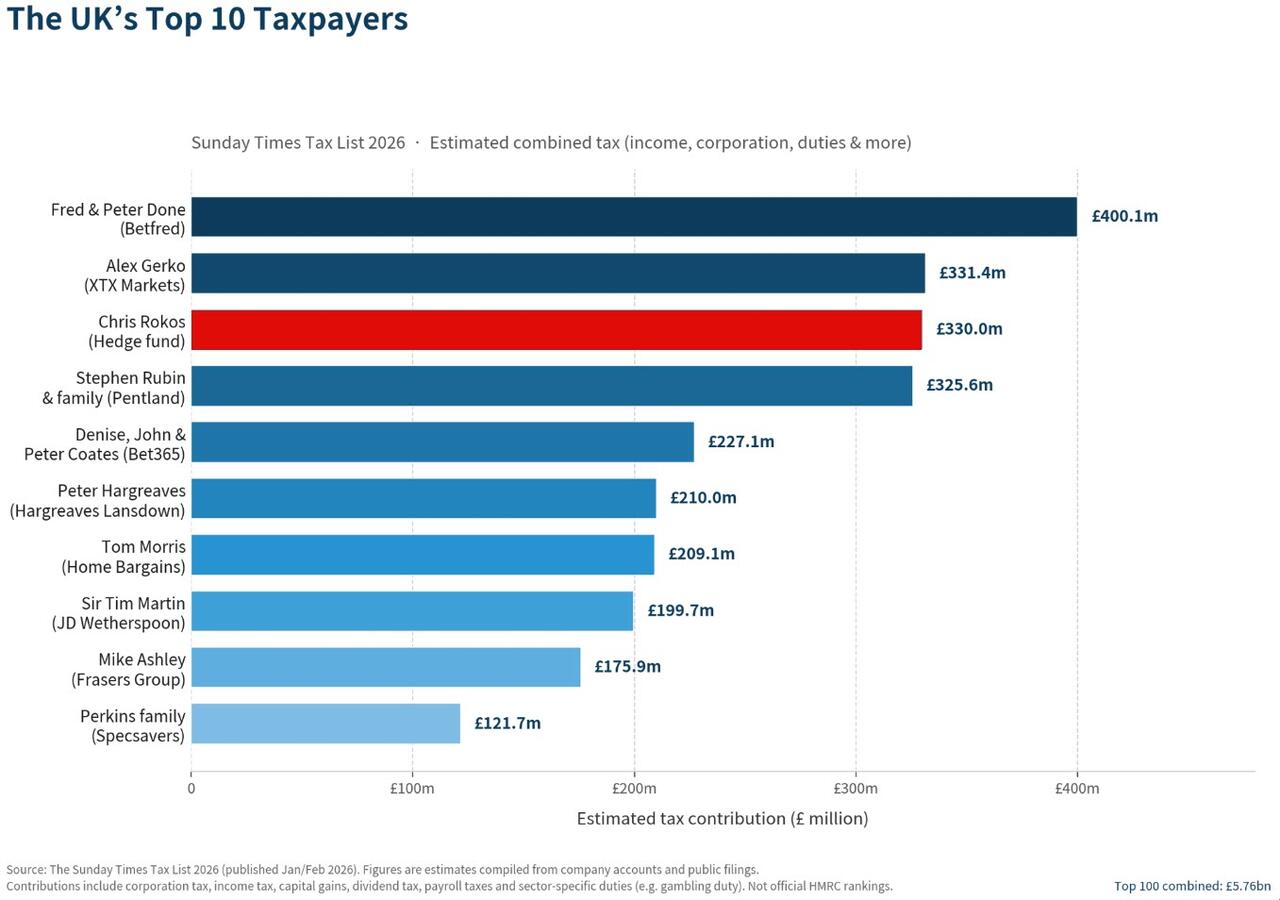
That’s one hell of a hole for Burnham and his buddies to fill.
As Bloomberg reports, Rokos is the latest in a string of high-profile financiers and business leaders that have opted to leave.
Since winning the general election in 2024, Labour has targeted wealth with taxes on non-domiciled residents, inheritance on family farms and businesses, private equity and private school fees.
At her last budget, former chancellor Rachel Reeves introduced a tax on homes worth more than £2 million.
With a net worth of about $4 billion according to the Bloomberg Billionaires Index, Rokos is among the UK’s most prominent figures in finance.
The Rokos Capital Management founder is switching his residency to Greece, people with knowledge of the arrangement said.
Rokos will also open an office in Athens as part of the move, one of the people said, asking not to be identified because the details are private.

Greece offers a 15-year high-net-worth investor regime.
Italy operates a similar 15-year system, but after recent increases, it has set the flat tax at €300,000 on foreign-sourced income.
Greece has also sought to lure fund managers and private equity executives, adopting new tax rules this summer designed to prevent double taxation.
If the highest taxpayers keep leaving – as Rokos’s reported move to Greece underlines – Labour’s bet that abolishing non-doms and tightening inheritance tax would raise more money starts to look fragile, because a thin slice of people already supplies a large share of income-tax receipts.
The government then faces an awkward choice: accept a smaller tax base and tighter budgets, or raise rates on the mobile and immobile alike and risk accelerating the outflow it is trying to tax.
Tyler Durden
Tue, 09/08/2026 – 04:15