
Don’t Raise Rates Based On A PCE That Will Be Re-Written September 30th
Authored by Richard Roberts via RealClearMarkets,
The Federal Open Market Committee votes on interest rates September 16.
Two weeks later, on September 30, the Bureau of Economic Analysis will revise the PCE price index, the inflation measure the Fed targets, back to 2021 and publish the August reading in the same release.
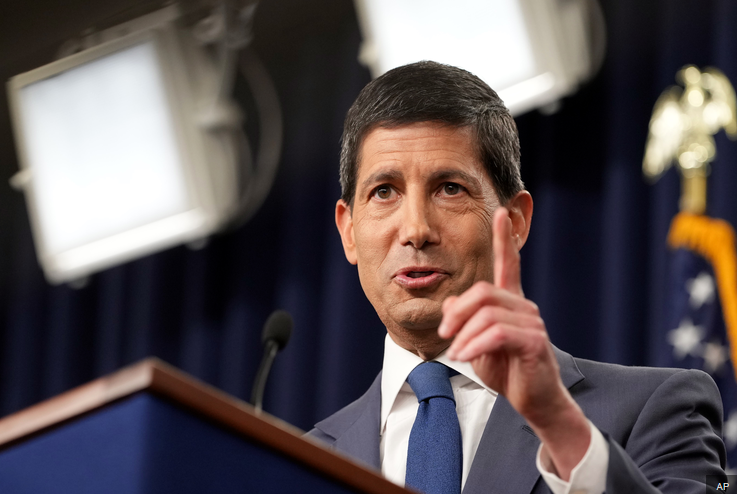
Governor Christopher Waller has already said which way one of the changes is expected to go. On September 3 he said the change in the way the Commerce Department measures fees paid to stock-market traders and related professionals could lower 12-month PCE inflation by a few tenths of a percentage point. He called it “a welcome measurement correction.”
Three FOMC voters — Beth Hammack, Neel Kashkari and Lorie Logan — dissented in July in favor of a quarter-point increase. The Committee held 9 to 3.
So the inflation number being used to argue for higher rates is the number about to be rewritten.
Two Ways To Be Wrong
There are two possible mistakes here, and they do not cost the same.
Raise on the 16th and be wrong, and the Fed has tightened on a reading the government changes 14 days later. It is a credibility problem that would be hard to explain.
Wait, and be wrong, and the Fed can raise rates at its next meeting, on October 28.
That is six weeks.
If the revision confirms the hawks’ case, their argument will be stronger in October than it is today, and it will rest on a number the government has just updated and is prepared to defend.
One mistake is hard to explain. The other costs six weeks.
Nothing This Month Forces The Choice
The case for urgency is being assumed more than demonstrated.
Core PCE inflation is too high at 3.3 percent. But it is not accelerating.
On Waller’s own figures, three-month annualized core PCE inflation has fallen steadily, from 4.76 percent in February to 3.05 percent through July. He acknowledged that the level remains above the Fed’s 2 percent goal, and called the fall “a considerable improvement.”
The Dallas Fed’s trimmed-mean measure, which removes the largest price changes in both directions, was running at roughly 2.3 percent over the same 12 months.
That is not proof that inflation is already at target. It is evidence that the underlying trend is less alarming than the headline core number suggests.
And some of the difference comes from categories whose measurement is unusually difficult.
Waller has singled out nonmarket services prices because they are imputed rather than drawn from actual transactions. He said those prices have long been a problem for him, and that excluding this one factor, underlying inflation is doing better than the core numbers suggest.
The pending BEA change goes directly at one of these problems. Legal services is priced today with a consumer index the Bureau itself says has produced “erratic changes that cannot be corroborated.”
That matters because this is not a case in which the Fed is choosing between today’s number and the possibility that the number might someday change.
The government has already scheduled the change.
Sit Tight
By October 28 the Committee will have something it does not have on September 16: the revised historical series and the August reading together.
The case for a quarter-point increase will be stronger or weaker on a number somebody is willing to defend.
None of this says rates are too high.
It says something narrower. When the government is about to rewrite the inflation series on which the decision rests, waiting one meeting is not indecision. It is the more defensible policy choice.
The 30th comes first. Then vote.
Tyler Durden
Sun, 09/13/2026 – 12:50