
BYD’s EU Invasion Deepens Germany’s Auto Industry Crisis
The rise of right-wing populism in Germany comes as globalist policies backfire and crush Europe’s industrial powerhouse. The nation’s auto industry is in shambles, with layoffs and production cuts, after European leaders had the brilliant idea of letting cheap Chinese EVs flood the struggling continent.
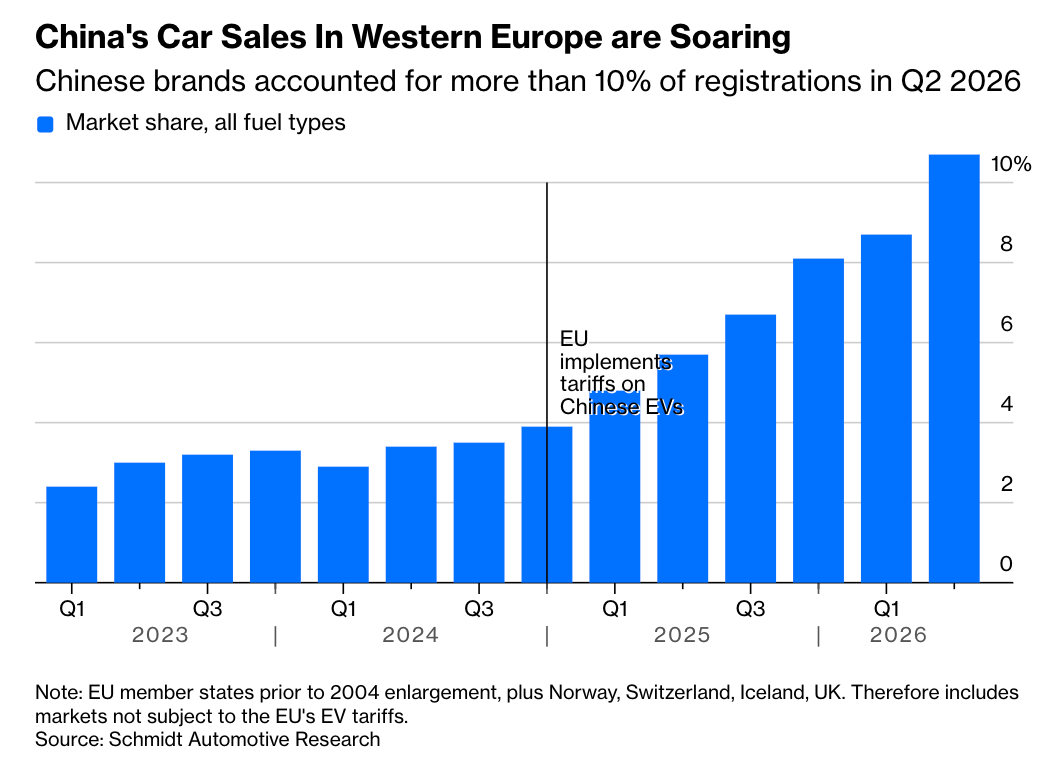
Bloomberg cites new data from Schmidt Automotive Research showing Chinese brands accounted for 10.7% of Western European car sales in the second quarter, up from 3.4% two years earlier, highlighting how BYD Motors’s cheap $34,000 EV is quickly taking market share from domestic brands.
Chinese EVs in the EU have seen quarterly registrations surpass those of Japanese brands. Citigroup analyst Harald Hendrikse estimates Chinese brands could capture 30% of the EU market by 2035 without additional protective measures.
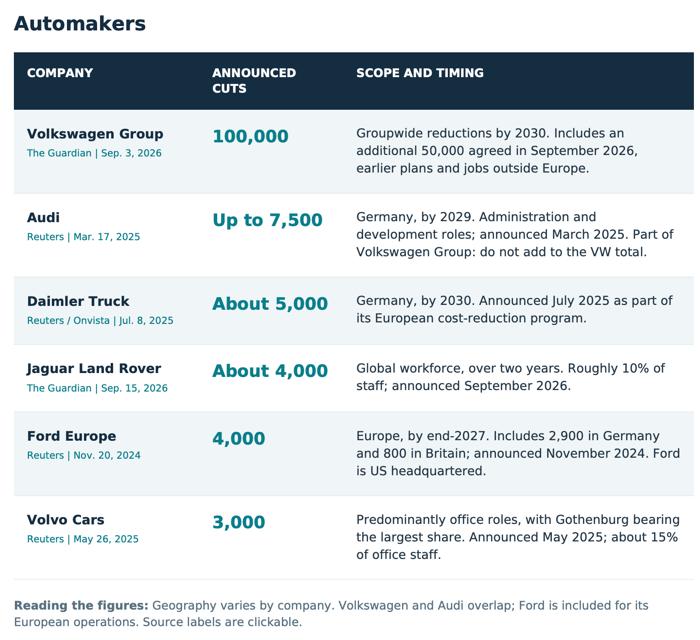
The immediate result of the flood of Chinese EVs on the continent has been restructuring news from Volkswagen that upwards of 100,000 jobs could be cut by the end of the decade. More recently, Jaguar Land Rover plans to cut 10% of its workforce.
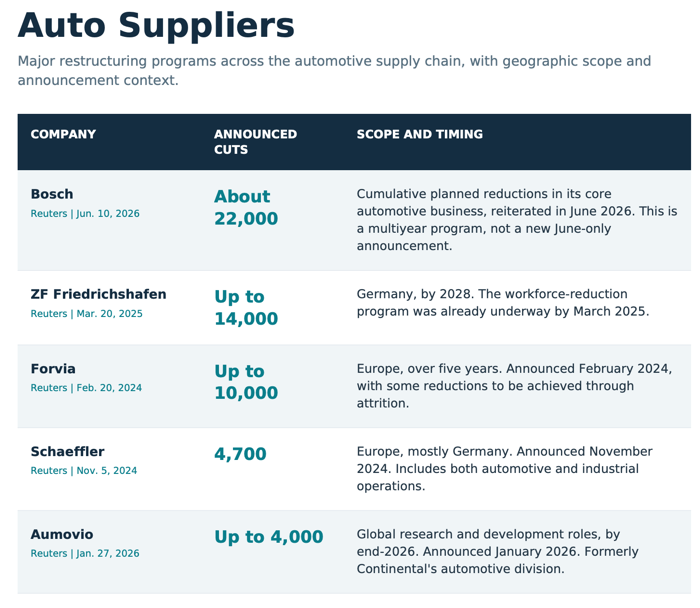
Beyond automakers, the ripple effect of layoffs is impacting parts supplier companies:
European Auto Job Cuts
Auto Suppliers Job Cuts
Germany, previously resistant to tougher trade barriers, is preparing tariffs on Chinese hybrids as it watches its industrial base erode, stoking the rise of Alternative für Deutschland as German political elites betray working-class folks.
Protection could give domestic brands time to restructure. Still, China’s dominance in batteries and rare earths gives Beijing potential means to retaliate, complicating Europe’s effort to preserve its automotive industrial base.
The quick erosion of Europe’s automotive industry is a national security risk for the continent because its factories, skilled workforce and supplier networks underpin the continent’s capacity to produce weapons. At a time when the Russia-Ukraine war escalates and the Middle East conflict spreads, a diminished industrial base in Europe ahead of a much-needed rearmament supercycle is just bad news for EU defenses.
Tyler Durden
Tue, 09/15/2026 – 07:45