
Lockheed Fast-Tracks Secretive AIM-260 Missile As Pentagon Pushes To Expand Production
Lockheed Martin has signed a framework agreement with the Pentagon to accelerate production and delivery of the AIM-260 Joint Advanced Tactical Missile, bringing a closely guarded air-to-air weapons program further into public view. The announcement Thursday sets the foundation for a multiyear procurement contract, which remains subject to congressional approval.
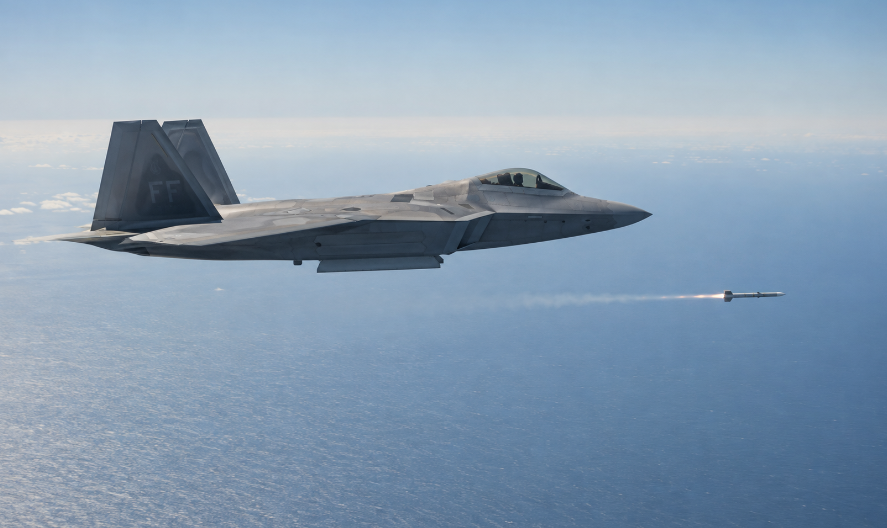
The company says the missile offers greater range and effectiveness than existing air-to-air weapons and is compatible with aircraft including the F-22 Raptor and F-35 Lightning II. It did not disclose a production target, delivery schedule, contract value or precise performance specifications. The announcement establishes a commitment to expand production, not a publicly measurable timetable for doing so.
Reuters reported that the program is intended to address increasingly capable Chinese long-range air threats, including those associated with the J-20 fighter. Although the weapon has spent years under tight secrecy, Thursday was not its first public appearance: images emerged in May. The production push also comes amid broader pressure on American and allied missile inventories following the Iran conflict.
That context makes two separate questions important: what the missile can do, and how many can actually reach operational units. A performance advantage has limited practical value if manufacturers cannot supply enough weapons, replace expended stocks or support additional customers.
Australia is already preparing to become one of those customers.
Canberra announced on August 6 that it would invest almost A$736 million to acquire the AIM-260 through the U.S. government’s foreign military sales system. The planned integration sequence starts with Australia’s F/A-18F Super Hornets, followed by its F-35A fighters and EA-18G Growlers. Australia’s government says it will become the first country outside the United States to operate the weapon.
The Australian announcement describes the acquisition as a way to extend engagement range and improve interoperability with American forces. It does not specify a missile quantity or delivery date, although Marles has said the weapon will not be available before 2033, and a December 2025 U.S. approval covered up to 450 missiles in a package valued at about $3.16 billion.
Lockheed’s industrial expansion extends beyond the AIM-260.
In a separate announcement Thursday, the company said GM Defense had delivered an initial batch of housing components for the PAC-3 Missile Segment Enhancement interceptor just 22 days after the companies signed a formal contract. That agreement was signed August 6, with the first components delivered August 28. These were components for a different missile program, not completed interceptors or AIM-260 deliveries.
Lockheed says it is investing between $8 billion and $9 billion to expand munitions production across more than 20 American sites. Planned construction and expansion would increase its munitions production and warehousing space by almost 50%, according to the company. The GM partnership uses commercial casting and machining capabilities to supplement the defense supply chain.
Taken together, the announcements point to an effort to address both weapons performance and manufacturing throughput. Bringing commercial suppliers into missile production could widen the industrial base, although a fast initial component delivery does not establish the sustained output of an entire weapons program.
The funding line is already moving: the administration’s fiscal 2027 request seeks $2.9 billion for the missile, up from $894 million this year, Bloomberg reported in April.
Tyler Durden
Thu, 09/17/2026 – 20:30