
Global Food Prices Hit Three-Year High As War, Chokepoint Chaos And El Nino Spark Perfect Storm
The UN Food and Agriculture Organization’s Food Price Index climbed to a three-year high in July, extending its upward trajectory as conflicts across Eurasia (the Black Sea and the Hormuz chokepoint) disrupt critical trade routes and mounting El Niño risks threaten global harvests.
The United Nations Food and Agriculture Organization’s FAO Food Price Index, which tracks monthly changes in the international prices of a basket of globally traded food commodities, averaged 131.09 last month, up .6% from the previous month, led by gains in grain, sugar, and vegetable oils.
Wheat surged 5.8% during the month to a two-year high, while corn climbed 3.6%. Vegetable oil prices reached their highest since June 2022, while meat and dairy prices declined, according to the FAO.
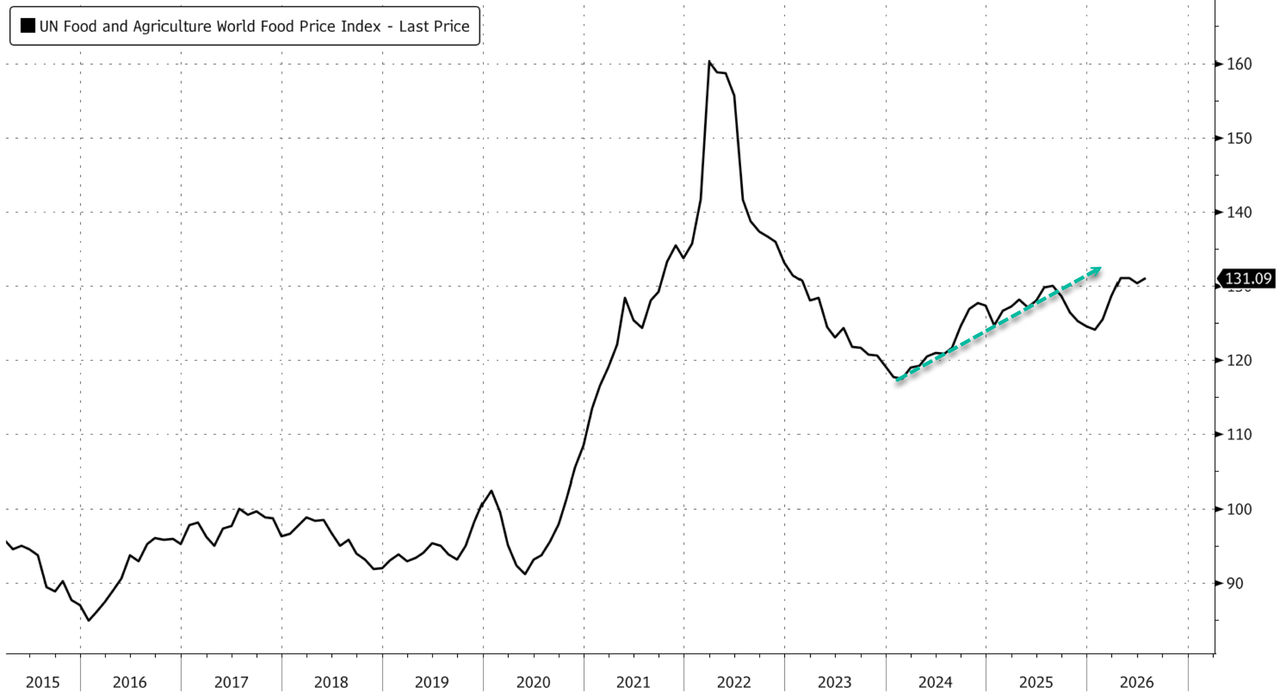
Fueling the price surge is the widening Russia-Ukraine war in the Black Sea, where attacks are increasing and threaten critical bulk-shipping corridors. Disruptions through the Strait of Hormuz are also pushing food prices higher by raising energy, fertilizer, and transportation costs. Layered on top of all this are deteriorating crop conditions in major growing regions across the world as El Niño risks mount, a threat that has been flagged for many months.
“Chances of a very strong El Niño are rising. Risks are concentrated in select EMs, with inflationary and fiscal pressures likely to outweigh growth risks. We view El Niño as a key sovereign credit risk, particularly for countries with weak fiscal buffers,” Morgan Stanley analyst Emma Cerda wrote in a recent note.
Earlier this week, UBS analyst Sreedhar Mahamkali identified five long-term forces likely to keep global food inflation “structurally higher” above its pre-pandemic average of about 2.5%.
“While food inflation globally has fallen from the COVID peak, a new debate is emerging: is the c2.5% LT average obsolete?” the London-based managing director and equity-research analyst said.
Mahamkali’s first and most important long-term driver of elevated food prices is that “climate risk is global,” and the number of institutional desks warning about El Niño is certainly on the rise. Read the full report here.
Perhaps Bank of America analyst Robert Ohmes will be proven right about his warning in mid-June (Read Here) that another food price spike could arrive in supermarkets this fall. He said that grocery inflation “may be on the way,” citing a blended index of wages, diesel, and commodity costs.
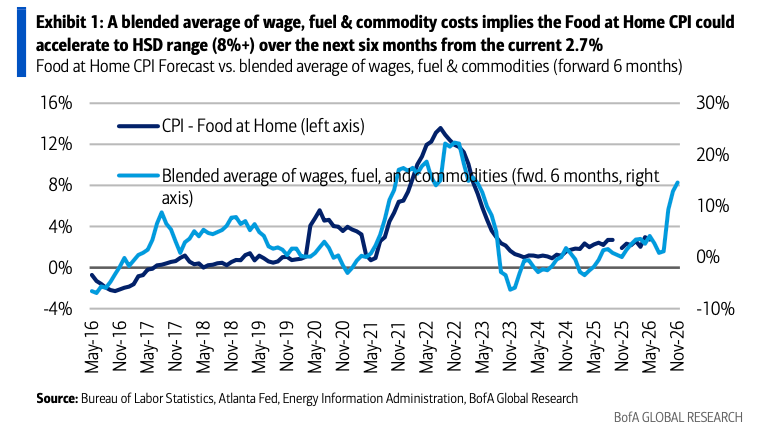
Putting it all together, the theme is clear: multiple pressures are converging across the global food supply chain, tilting the balance of risks toward higher prices. That is already visible at the supermarket, particularly in beef, even as chicken and pork remain comparatively affordable. Egg prices, meanwhile, have collapsed, but fresh warnings from Mexico suggest that avocados could be the next grocery staple to surge.
For households, the best hedge may be to strengthen their own local food supply chains, whether by planting a backyard garden, buying directly from nearby farms, or building relationships with local farmers and cattle ranchers.
Tyler Durden
Fri, 08/07/2026 – 07:45