US Blocks Regular $500 Million Cash Pallets Flown To Iraq, Over Pro-Iran Militias
In confirmation of some early reporting we featured at the start of this week, The Wall Street Journal has verified something that Iraqi officials themselves were denying just days ago: the US is blocking Iraq’s regular dollar shipments in order to pressure it’s Iran-backed militias.
“The Trump administration has suspended U.S. dollar shipments to Iraq and frozen security cooperation programs with its military, escalating the pressure on Baghdad to dismantle powerful Iranian-backed militias,” said Iraqi and US officials interviewed in the report.
Pallets of cash and the Middle East should ring familiar, stretching from the Bush-Cheney years to even the Obama years (and Iran sanctions relief as part of the original nuclear deal). In this case, like with the Obama/Iran deal saga before, this is actually Iraq’s own oil revenue money.
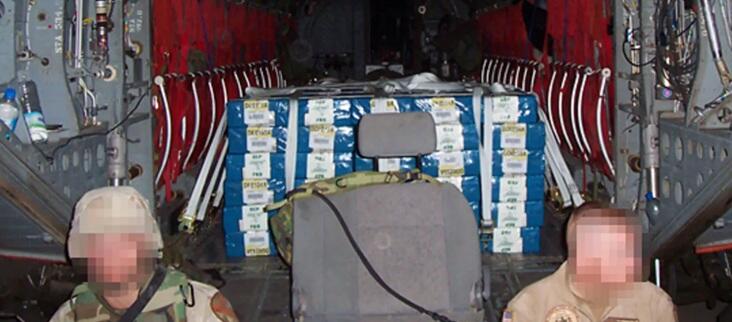
In this latest case, a US military plane carrying a half-billion dollars has been delayed on its regularly scheduled delivery.
“A cargo-plane delivery of nearly $500 million in U.S. banknotes, the proceeds from Iraqi oil sales from Federal Reserve Bank of New York accounts, was blocked recently by Treasury Department officials because of U.S. concerns about the militias,” WSJ continues, citing the officials.
The publication details, “It was the second scheduled shipment of dollars to the Central Bank of Iraq delayed by the U.S. since the start of the Iran war in late February, the U.S. and Iraqi officials said.”
During the height of the March fighting between Iran and Israel, several American facilities across Iraq came under attack, even including the US Embassy in Baghdad’s Green Zone. Typically these were drones, or rocket fire, and Erbil and northern Iraq in particular came under heavy fire.
To review from the backgrounder we previously featured: since 2003, a decision issued by Coalition Provisional Authority (CPA) head Paul Bremer has required that all Iraqi oil revenues be paid into an account at the US Federal Reserve Bank of New York, giving the US the ability to control how many US dollars are returned to the CBI.
From that point until today, the Iraqi Ministry of Finance has had to submit funding requests to the US Treasury, which then approves or denies them based on its own criteria.
This monthly transfer of US dollars, flown into Baghdad in pallets of hard cash, determines Iraq’s ability to pay for basic needs such as salaries, food, and medicine.
Whenever Washington believes that Iraq is not aligned with US regional goals, including enforcing economic sanctions on Iran, Baghdad’s major trading partner and a source of natural gas for electricity production, these fund transfers can be delayed or reduced.
The US halted $13 billion in annual cash shipments to Iraq to pressure Baghdad to act against Resistance groups, the second such suspension since the start of the war on Iran.
— Al Mayadeen English (@MayadeenEnglish) April 22, 2026
Currently the Coordination Framework (CF), which is the largest Iran-aligned parliamentary bloc of Shia parties, is racing to pick a new prime minister for the country – but reportedly neither of the two main candidates are acceptable to Washington.
There’s a huge lasting irony to the Iraq war and the Bush-Cheney legacy. The US overthrow of Baathist Sunni Saddam Hussein effectively handed the country over to pro-Tehran leadership. And the US has been dealing with the fallout in the region from the ‘Shia axis’ ever since.
Tyler Durden
Wed, 04/22/2026 – 20:55