
U.S. Deploys Ukrainian Acoustic Sensors, Interceptor Drones At Prince Sultan Air Base
Last month’s Iranian drone strike on Prince Sultan Air Base in Saudi Arabia appears to have inflicted a costly toll on U.S. forces in the region. The attack destroyed a U.S. Air Force E-3 Sentry Airborne Warning and Control System aircraft and damaged multiple KC-135 refueling tankers, highlighting a major gap in U.S. air defenses against cheap attack drones.
Nearly a month after the drone strike on Prince Sultan Air Base, and following multiple reports that Ukrainian drone forces had been shifted into the region, Reuters confirmed Wednesday morning that the U.S. has deployed Ukrainian counter-drone technology to defend against Iranian-developed Shahed drones.
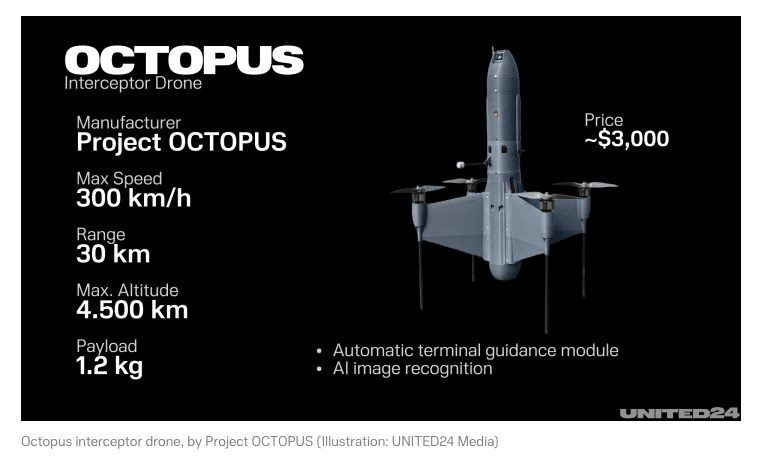
At the center of this new security effort to fortify the airspace above Prince Sultan Air Base against low-cost Iranian one-way attack drones is Sky Map, a Ukrainian command-and-control platform used to detect incoming drones. The coordinated response to Shaheds is the use of interceptor drones.
“There have been longstanding gaps in U.S. air and missile defense coverage around the world,” said Timothy Walton, a senior fellow at the Washington-based Hudson Institute think tank. “This has been well understood. However, it hasn’t been addressed.”
Ukrainian drone experts reportedly traveled to the base in recent weeks to train U.S. personnel on Sky Map and the use of interceptor drones.
Sky Fortress, the Ukrainian company behind Sky Map, has been active extensively in the Eastern European theater, with more than 10,000 acoustic sensors deployed to detect Russian drone attacks.
The bigger story here is that Ukraine is emerging as a major dealer of the latest low-cost weapon technology forged through four years of war with Russia:
-
Zelensky Goes Full “Lord Of War” As Ukraine Pitches Battle-Tested War Robots To Highest Bidder
-
Zelensky’s Interceptor Drones Deployed Across Eurasia, Now Shooting Down Iranian Shaheds
Our assessment is that, if we had to get granular, passive acoustic counter-drone detection will become a standard layer of air defense for U.S. military bases, data centers, critical U.S. infrastructure, and government buildings in the years ahead. As cheap attack drones proliferate, adopting passive acoustic sensing systems for early warning will help close the air-defense gap against them. Just wait until these early-detection systems are paired with ‘micro’ sentry guns and fully automated AI kill chains.
Tyler Durden
Wed, 04/22/2026 – 21:45