
Brazil Election Polls Too Close To Call, But Polymarket Gives Bolsonaro Clear Lead
Brazil’s presidential race is entering the final stretch ahead of Sunday’s first-round vote.
HSBC strategists led by Nicole Inui wrote in a note that the latest polls show socialist President Luiz Inácio Lula da Silva slightly ahead of right-wing Senator Flávio Bolsonaro, though the race remains neck and neck.
Both candidates remain statistically tied. If no candidate wins more than 50% of valid votes, the two will face a runoff on October 25.
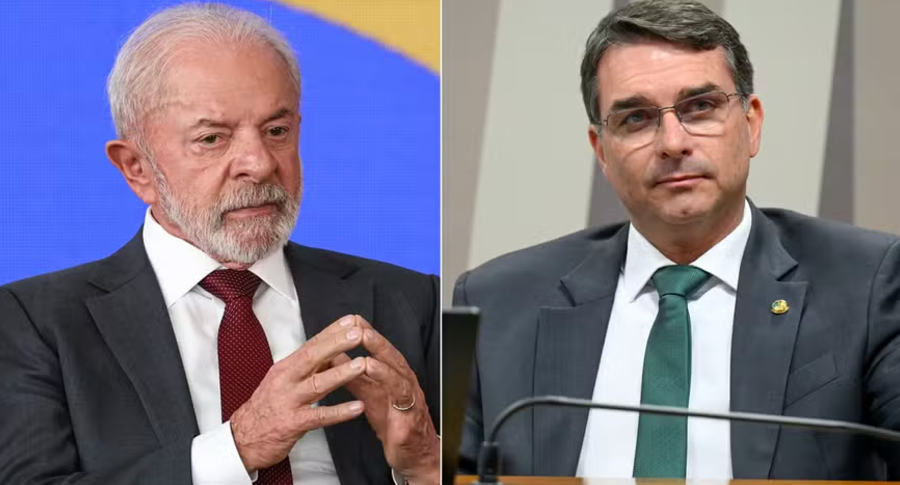
“Brazil’s presidential elections are entering their final stretch with first round elections to be held Sunday, 4 Oct. If no candidate wins more than half of the valid vote, a run-off will be held on 25 Oct,” Inui wrote in the note.
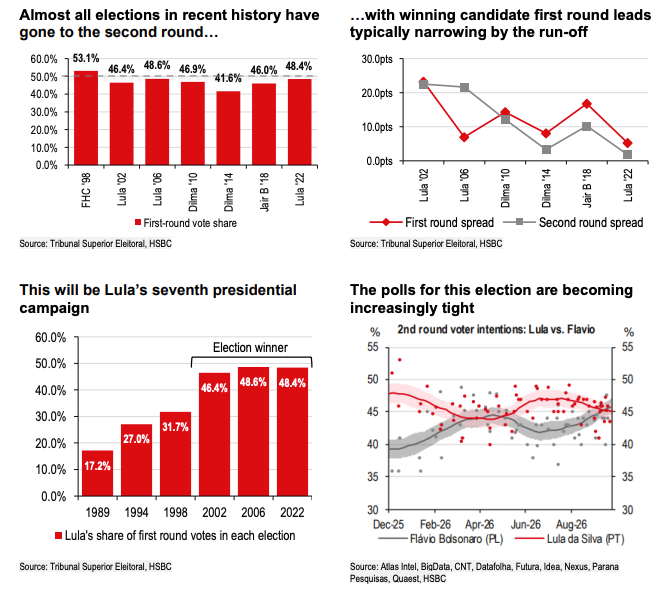
Inui continued, “If no candidate wins more than half of the valid vote , a run-off will be held on 25 Oct. First-round election results could be a major market-moving event, we think. The key variable is the margin between the leading candidates. Latest polls point to a tight margin of 5ppts between current president Lula da Silva (PT) vs. Senator Flávio Bolsonaro.
“A narrower lead for President Lula or stronger performance by third-party candidates could add to policy change expectations, which could support risk-on sentiment. However, history suggests some caution: since 1989, every first-round winner has secured the presidency in the run-off of elections,” the analyst said.
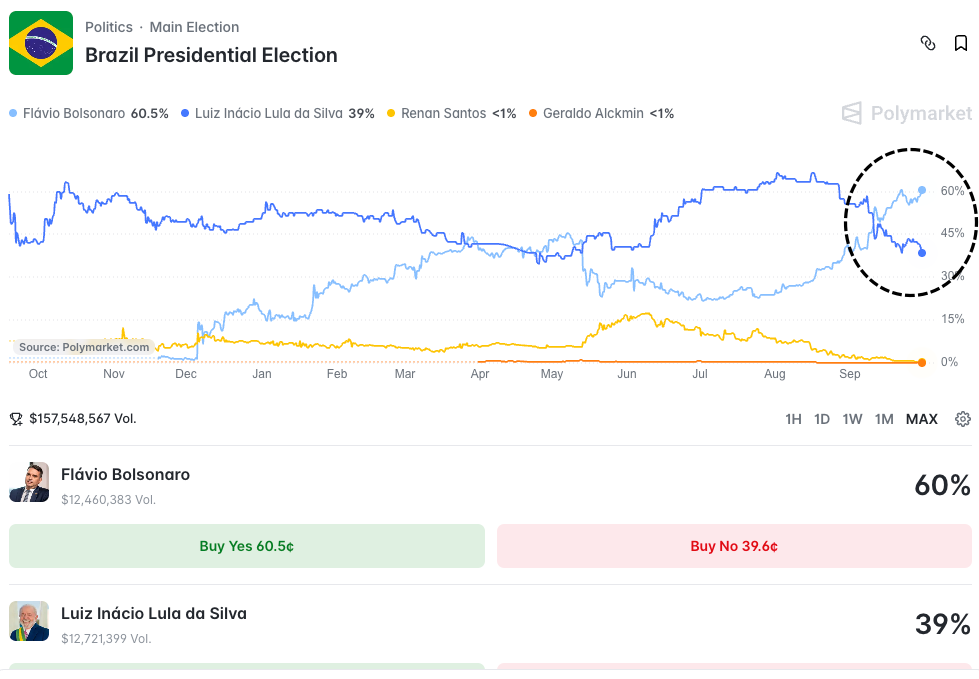
However, Polymarket bettors see a clearer favorite, giving Bolsonaro a 60% chance of winning, compared with 39% for Lula.
Here’s more from HSBC analysts on market impacts:
What to look out for:
Brazil heads to the polls on 4 October, with a second round scheduled for 25 October if no candidate wins more than 50% of valid votes. Recent polling is pointing towards a highly competitive presidential race, with neither candidate expected to garner enough votes to win in the first round. Since 1989, all but one went to a second round. Leading candidates received between c42-c53% in the first-round vote and all went on to eventually win. In other words, first round winners prevailed and they won the first round by c42%-49%. In the last election cycle, the margin of victory was the tightest in recent history at 1.8ppts (50.9% for Lula vs 49.1% for Bolsonaro), with Lula’s vote share only increasing by 2.5ppts between rounds, compared with c9-15ppts for winners in previous five runoffs. This is a useful benchmark for a highly polarized election, we think, especially considering there are no relevant left-wing candidates besides Lula in the first round.
Initial upside, not necessarily sustained
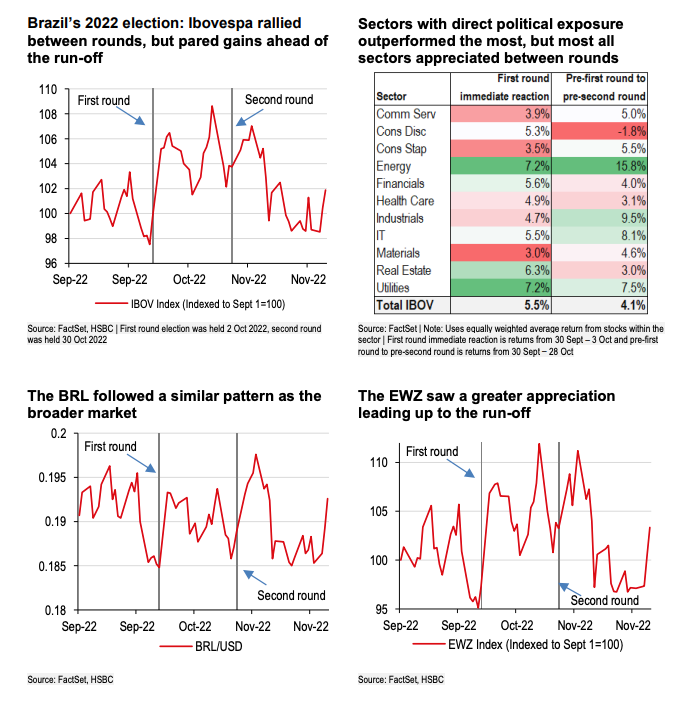
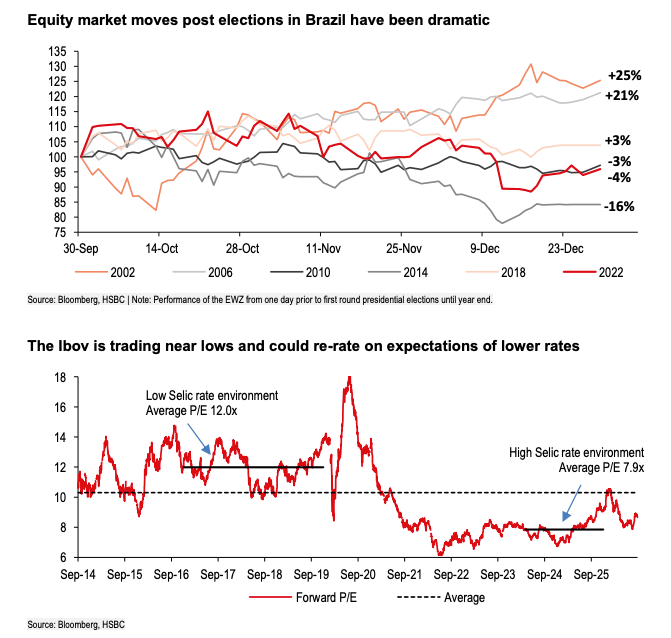
In the first trading session following the 2022 first round election, the IBOV surged 5.5%, while real strengthened against the dollar. In the 2022 elections, privatization hopes drove the largest immediate gains in SOEs at the time (Copasa, Sabesp, Cemig), and interest rate futures immediately fell, with consumer discretionary accounting for 50% of the top 10 performers. The move likely was attributed to Bolsonaro’s stronger-than-expected (vs polls) first round results and the composition of the incoming Congress, which together reduced the policy risk premium investors had considered before the vote. However, the Ibovespa came down from its highs leading up to the second round, declining 1.4% from the close after the first round, but still 4.1% above pre-first-round level. The BRL and iShares MSCI Brazil ETF (EWZ Index) followed a similar pattern, but the EWZ saw greater appreciation from 1 September 2022 than the Ibovespa around the run-off. Leading up to the run-off, reduced perceived risks of government intervention continued to support utilities and energy, which retained gains, while consumer discretionary’s initial rally faded as interest rate futures rose again.
A similar story could occur for 2026. An outsized reaction could occur immediately after 4 October if investors mark down the perceived fiscal/policy-risk premium based on a tight first round outcome, like what occurred in 2022, but would not necessarily extend into a three week straight rally. Subsequent price action would depend on polling, endorsements, campaign economic proposals, the congressional result, and the long end of the Brazilian rates curve. We believe a first round result associated with lower long-term fiscal risk would likely produce a broader domestic risk-on trade, with SOEs, domestic cyclicals, and bond proxies potentially experiencing the most upside. If first round results are tighter than in the prior elections, equity markets could react positively on expectations of fiscal consolidation ahead.
And post-election results? We see asymmetric returns for equity markets
We expect an initial knee-jerk reaction following the run-off as markets reassess the likelihood of fiscal consolidation under the incoming administration. A result that increases confidence in a more credible fiscal path could drive a relatively rapid rerating through lower-end yields, tighter risk premia, and stronger performance in domestic cyclicals and bond proxies where valuations are sensitive to fiscal and rate outlooks. Conversely, a result that reduces expectations for fiscal consolidation could trigger an initial derating, but we see some valuation support limiting the downside in parts of the market. Many election sensitive names including Petrobras are already trading close to historical trough valuations on an EV/EBITDA basis, leaving less room for further multiple compression Petrobras, 16 Aug. And Banco do Brasil is trading at a P/B of 0.7x and a 69% discount to Itau, close to a historic high, Brazilian Financials, 14 Sept.
Given the close race, we would emphasize segments that can participate in a relief rally without requiring an aggressive risk stance. Lower-beta yield names and selected bond proxies appear better placed to capture upside from lower long-end rates while offering more resilience if the market reaction is short lived. Politically exposed names and higher beta domestic cyclicals could outperform in a market-friendly scenario, but they would also be more sensitive to any reversal in fiscal expectations.
Polls suggest the race remains too close to call, while Polymarket odds point to Bolsonaro as the favorite.
Tyler Durden
Wed, 09/30/2026 – 23:55