
America Can Print Money… But It Can’t Print The Missiles It Needs
Authored by Nick Giambruno via International Man,
THAAD is one of the military-industrial complex’s most expensive boondoggles – and most Americans have never heard of it.
The Terminal High Altitude Area Defense (THAAD) system ranks among America’s most advanced ballistic-missile defenses. It aims to intercept ballistic missiles during their terminal phase, as their warheads reenter the atmosphere from space and descend toward their targets.
According to the GAO, it took decades and roughly $12.5 billion in research and development to get THAAD off the drawing board. Today, each interceptor costs an eye-watering $13 million. So every time the US military fires a THAAD interceptor at an incoming ballistic missile, taxpayers spend at least $13 million – and each engagement can require more than one interceptor.
The system had troubled origins.
After a string of failed tests in the 1990s, THAAD looked like it might become an expensive embarrassment.
The failures triggered reviews, redesigns, and mounting questions over whether the Pentagon was throwing good money after bad.
After years of improvements, THAAD entered operational service. Yet despite the billions spent developing it, the US military has acquired just eight batteries – not much of a vote of confidence in the system.
In short, THAAD is expensive – and it is no panacea against ballistic missiles.
Yet THAAD remains a key part of the front-line defense protecting US forces and allies in the Middle East from Iranian ballistic missiles. Few systems can do what THAAD attempts: track and destroy an incoming warhead as it reenters the atmosphere from space and plunges toward its target.
THAAD can intercept conventional ballistic missiles, but maneuvering hypersonic weapons pose a much tougher challenge. Iran has developed missiles that can maneuver at hypersonic speeds during the final stage of flight, making them harder for missile-defense systems to track and destroy. Even the Houthis in impoverished Yemen claim to field missiles with similar capabilities.
At the start of the June 2025 war, analysts estimated that the US had around 534 THAAD interceptors in its global inventory. By the end of the conflict, some estimates put the stockpile near 400, though the US military does not disclose the actual number for obvious reasons. In less than two weeks of fighting, the US burned through roughly 25% of its THAAD interceptor stockpile.
In other words, the US fired around 134 THAAD interceptors during the June 2025 conflict. At roughly $13 million per interceptor, that puts the cost above $1.7 billion – despite an interception rate well below 100%.
It’s also crucial to understand the state of THAAD production. The US will not receive new interceptors until 2027. Even then, current production capacity stands at just eight per month.
That was the state of THAAD – a crucial part of US and allied missile defense – when war with Iran erupted again in February 2026. That war continues today.
The US military does not disclose its THAAD inventory, but months of combat appear to have pushed the stockpile to dangerous levels. The 12-Day War in June 2025 consumed around a quarter of the US supply, with no new deliveries to replace those losses. Since February 2026, a longer and more intense war has drained the stockpile further.
And interceptor losses tell only part of the story. Iran has demonstrated that it can strike US missile-defense infrastructure across the Middle East with precision missiles and drones, putting THAAD batteries, radars, and other equipment at risk.
When you put it all together, it’s not hard to see the problem. Even if THAAD performs as intended, the US cannot sustain this rate of interceptor consumption for long. Months of combat have strained the missile defenses protecting US forces and allies in the region. If another round of intense fighting starts, there is a real possibility they could find themselves almost naked in front of Iranian ballistic missiles.
Iran still has thousands of long-range drones and ballistic missiles in its arsenal – and can replenish them at a much faster rate than the US can replace the interceptors needed even to try to shoot them down.
And that brings us to the real problem…
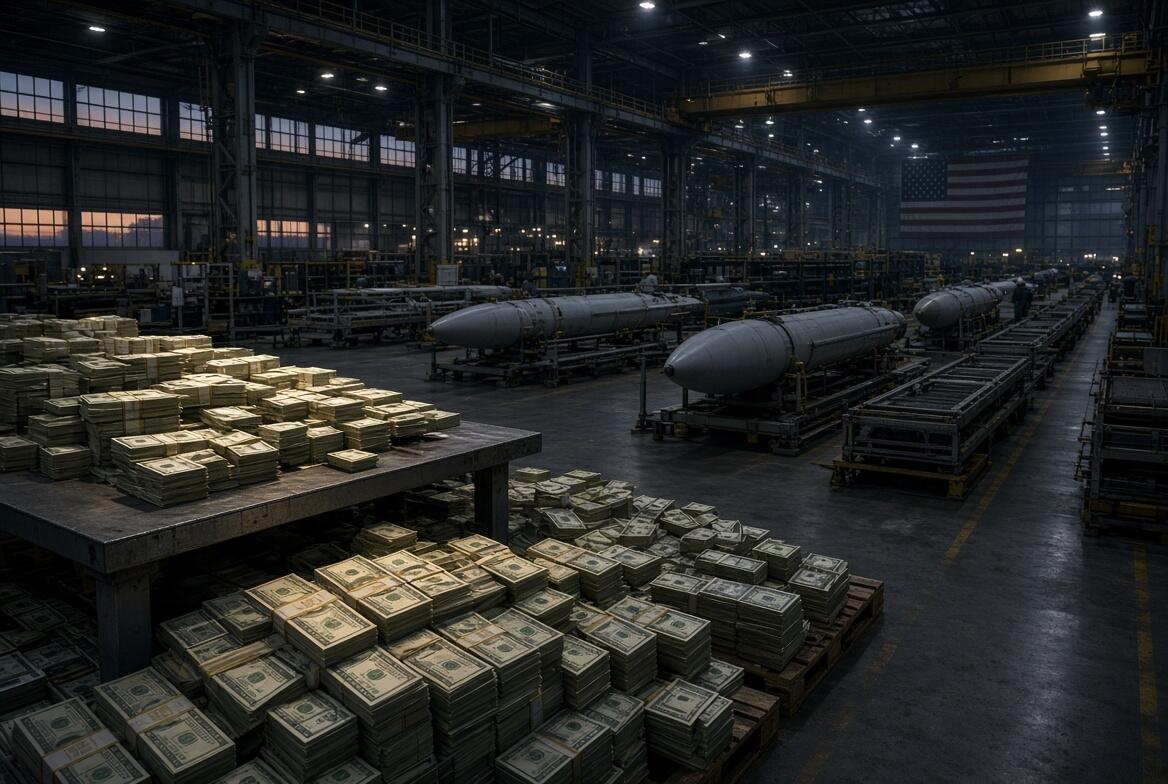
The bottleneck isn’t money…
As the leader of the world order and issuer of the world’s reserve currency, Washington can print or borrow more than any other country on the planet.
The real bottleneck is physical production capacity – factories, skilled labor, rocket motors, electronics, and the critical minerals needed to build the interceptors.
Congress can appropriate another $10 billion overnight. It cannot build a rare-earth processing plant, missile factory, or trained industrial workforce overnight.
That is where rare earths enter the story.
Modern weapons systems like THAAD depend on small quantities of rare earths and other critical minerals for high-performance magnets, guidance systems, sensors, actuators, electronics, and other components.
The amounts involved can look trivial next to the cost of the finished weapon.
A missile-defense system worth $150 million can depend on critical-mineral components worth only tens of thousands of dollars. But take away those materials, and the $150 million system becomes an expensive collection of parts that cannot do its job.
That makes rare earths one of the strangest choke points in the global economy. In short, rare earths have become indispensable to the US military and the modern American economy.
Measured in dollars or tonnage, the rare-earth market looks small. Yet this tiny physical market sits underneath trillions of dollars of economic value – from advanced weapons and aircraft to semiconductors, electric motors, robotics, data centers, and other high-tech industries.
Think of it as an inverted pyramid.
At the top sit trillions of dollars of military hardware, technology companies, industrial equipment, and economic output.
At the bottom sits a sliver of obscure elements that most investors could not name.
Remove that sliver and parts of the pyramid start falling apart.
And China controls much of it.
That dominance did not happen by accident. China spent more than three decades building mines, processing capacity, engineering expertise, equipment, supply chains, and manufacturing know-how around rare earths.
The West went in the opposite direction.
For decades, the US and Europe embraced the cheapest available supply while environmental restrictions, permitting obstacles, high costs, and public opposition made domestic production less attractive. China built the industrial base while the West consumed its output.
Now Washington wants to reverse that process.
But opening a mine solves only one piece of the problem.
The US also needs processing facilities to separate rare-earth elements from ore. It needs plants that turn those materials into metals and alloys. It needs factories that manufacture high-performance permanent magnets. It needs specialized machinery, engineers, metallurgists, chemists, technicians, and workers who know how to operate the entire chain.
In some cases, China also leads in the equipment and processes needed to perform those steps.
You cannot recreate 30 years of accumulated industrial knowledge with an executive order and a pile of money.
And China has shown that it understands the leverage this gives Beijing.
During its trade confrontation with Washington, China tightened controls over exports of critical minerals and processed materials. The message was hard to miss: the US may control the world’s reserve currency, but China controls physical inputs that parts of the American industrial and military machine cannot function without.
That exposes a weakness few investors appreciated until recent years.
The US can create dollars. It cannot create dysprosium, terbium, neodymium magnets, processing plants, or experienced engineers with a keystroke.
Washington now understands the problem. The Pentagon has poured money into domestic critical-mineral projects, and the US government has pushed defense contractors to remove Chinese materials from their supply chains.
That will create opportunities, but it will not solve the shortage in time to meet today’s military needs. Building a Western rare-earth supply chain will take years, while war is consuming weapons faster than American factories can replace them.
That mismatch between what Washington can spend and what American industry can produce is the heart of the problem.
The THAAD shortage exposes a much larger problem. Washington can create as many dollars as it wants, but it cannot print the resources, factories, or skilled workers.
The consequences will reach far beyond the battlefield. Inflation, shortages, and political turmoil could threaten your savings and personal freedom.
Tyler Durden
Wed, 09/16/2026 – 06:30