
Are iPhones Dialing Up The Birth Dearth?
Authored by Thaddeus G. McCotter via American Greatness,
When I call you up, your line’s engaged
I have had enough, so act your age
We have lost the time that was so hard to find
And I will lose my mind
If you won’t see me . . .
Time after time
You refuse to even listen
I wouldn’t mind
If I knew what I was missing
—The Beatles, “You Won’t See Me”
As one heads into senescence, the milestones begin to fade in the rearview mirror. Yet every now and again, something jars the memory to refocus your recognition of such milestones and on how time has truly flown.
Recently, I was reminded that nearly an entire generation of Americans has been born after the introduction of the iPhone in 2007. As a Gen Xer born before the introduction of the answering machine, I felt the weight of my sixty years, along with a gnawing anxiety about the future.
No, not because I won’t be around all that much longer. Despite the myths of the ubiquitous cult of youth promoted by our callow commercial culture, the increasing aches and pains accompanying my journey into old age are an insistent reminder that no one lives forever. Rather, my concern is how few Americans will be born to replace me and the other older members of our aging nation.
As reported by Elise Winland in Zeale News, a new study suggests the 2007 introduction of the iPhone has played a significant role in the declining U.S. fertility rate.
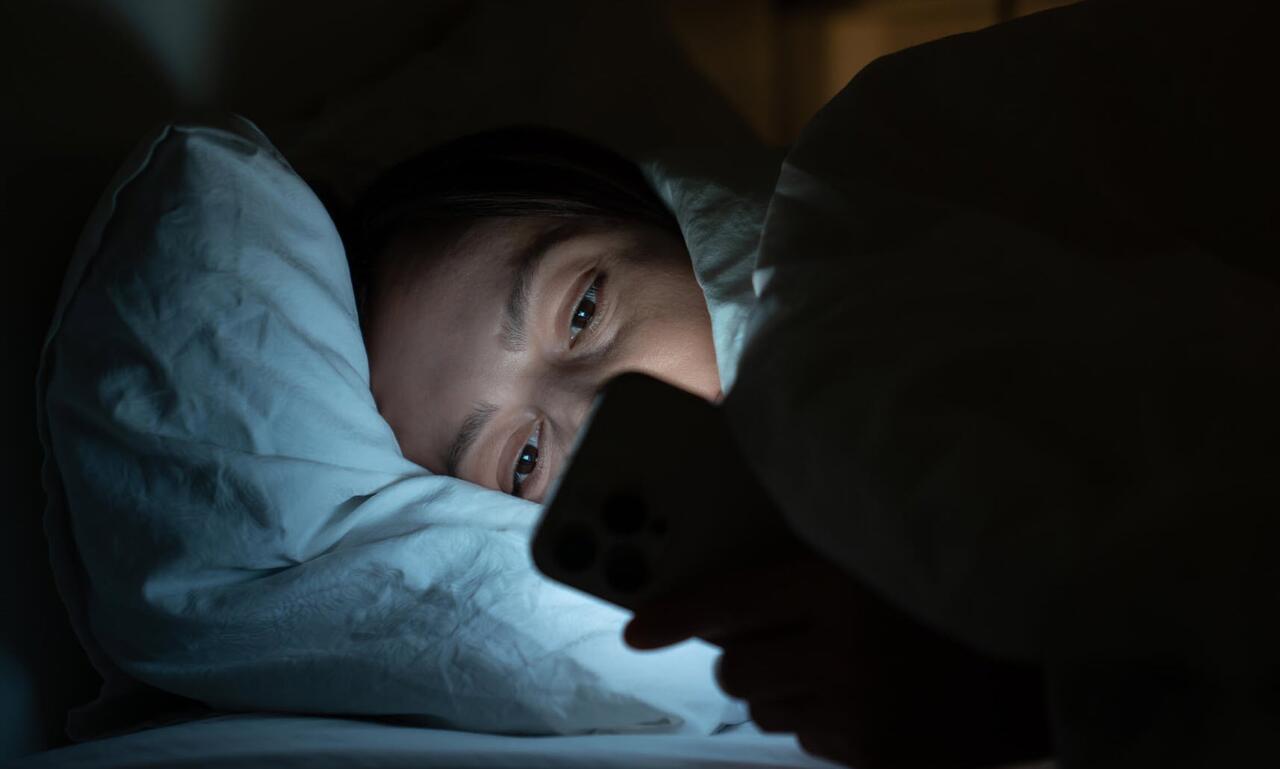
Written by Caitlin K. Myers and Ezekiel Hooper and issued by the National Bureau of Economic Research (NBER), the title of the working paper says it all: “Is the iPhone Birth Control? Causal Evidence from AT&T’s 2007–2011 Carrier Monopoly.”
The study’s methodology is straightforward, as are its implications for our nation. As succinctly explained by Ms. Winland: “The paper draws on a natural experiment created by Apple’s exclusive deal with AT&T. When the iPhone launched in June 2007, it was available only on AT&T’s network until February 2011, giving researchers a way to compare areas with different levels of early iPhone access.”
While this deal was fortuitous for the researchers, the consequences were disastrous for the nation’s birth rate. According to Myers and Hooper:
The diffusion of the iPhone deepened the decline in births among women under 30 while suppressing the rise in births among older women. Overall, the diffusion of the iPhone explains 33–52% of the decline in the general fertility rate among women aged 15–44. National-survey evidence on time use and sexual behavior is consistent with the iPhone reducing in-person interactions, increasing pornography use, and reducing sexual frequency.
Importantly, Myers and Hooper are not asserting that the iPhone is the sole cause of the steep decline in America’s birth rate, which they cite as having dropped by 22 percent since 2007, again, the year of the iPhone’s introduction. For, as Winland notes, the researchers believe the nation’s record low birth rate of 53.1 births per 1,000 women ages 15 to 44 “cannot be fully explained by the common explanations such as the Great Recession, increased access to contraception, rising housing and childcare costs, and delayed marriage.”
The researchers do argue that “studies imply that access to the iPhone reduced births by 4.5–8.0% at ages 15–19 and 3.2–6.6% at ages 20–24, with statistically significant but smaller declines among older cohorts.” (It is worth noting that the iPhone had a salubrious impact on reducing teen pregnancies; however, the enduring detrimental effects stemming from the loss of social interaction and its accompanying skills will be carried into the future by today’s teens.)
Anyone with a cursory acquaintance with Marshall McLuhan’s work will see his dictum, “the medium is the message,” at work here. Every new technology affects human beings, both in how they interact with that technology and in how they subsequently interact—or fail to interact—with other people by using it.
The math—specifically subtraction—is elementary: by spending more time in your virtual cocoon, you have less time for interacting with real human beings. One must therefore consider how much of the iPhone’s contribution to the birth dearth stems from the technology’s unconscious effects on its users. Indeed, unlike, say, birth control or a career choice, the iPhone is not being used deliberately to delay or prevent pregnancy. Rather, the birth dearth is exacerbated because the iPhone user is more rapt with the device and the stimulation it provides than by another person. After all, there are only so many hours in the day—and night.
Meanwhile, the birth rate continues its decline. It is an indicator of national health. An optimistic, future-oriented nation has at least a replacement birth rate, if not a growing one. A declining nation has a declining birth rate. In America today, the atomization of our citizenry and its accompanying anomie continue apace, as algorithmically personalized prison cells push us out of gen pop and into solitary confinement. Thus does the insidious, circular logic of the siren song of decline become the mantra: life is unfair, inequitable, and horrible, so it is better—in fact, virtuous—not to bring a new life into this morass of meaninglessness.
The result of this is the declining birth rate found in both the United States and Europe, where the apostles of postmodernism hold sway, filling the perceived vacuity of modernity with a creed that holds the most “tolerant” belief is to believe in nothing—including one’s inherited civilization. A postmodern generation taught to loathe itself does not care to procreate. For what better way to reject the meaningless future than by making sure there are no succeeding generations to perpetuate it?
While my bachelor’s degree is only in political science, and despite all the technological advances during my lifetime—including the internet, social media, AI, and the answering machine—I nonetheless feel confident in declaring, “You can only make a baby in the real world.”
A healthy nation prizes real life over a virtual world. It doesn’t have a birth dearth. And I’m inclined to believe it has more answering machines—or at least call waiting—and fewer smartphones.
I had to interrupt and stop this conversation
Your voice across the line gives me a strange sensation
I’d like to talk when I can show you my affection
Oh, I can’t control myself . . .
Don’t leave me hanging on the telephone
Hang up and run to me
Oh, hang up and run to me.
—Blondie, “Hanging on the Telephone”
Tyler Durden
Sat, 06/20/2026 – 23:20