China’s Memory-Chip Challenger Faces A Test Of How Far US Curbs Can Reach
ChangXin Memory Technologies is approaching a turning point.
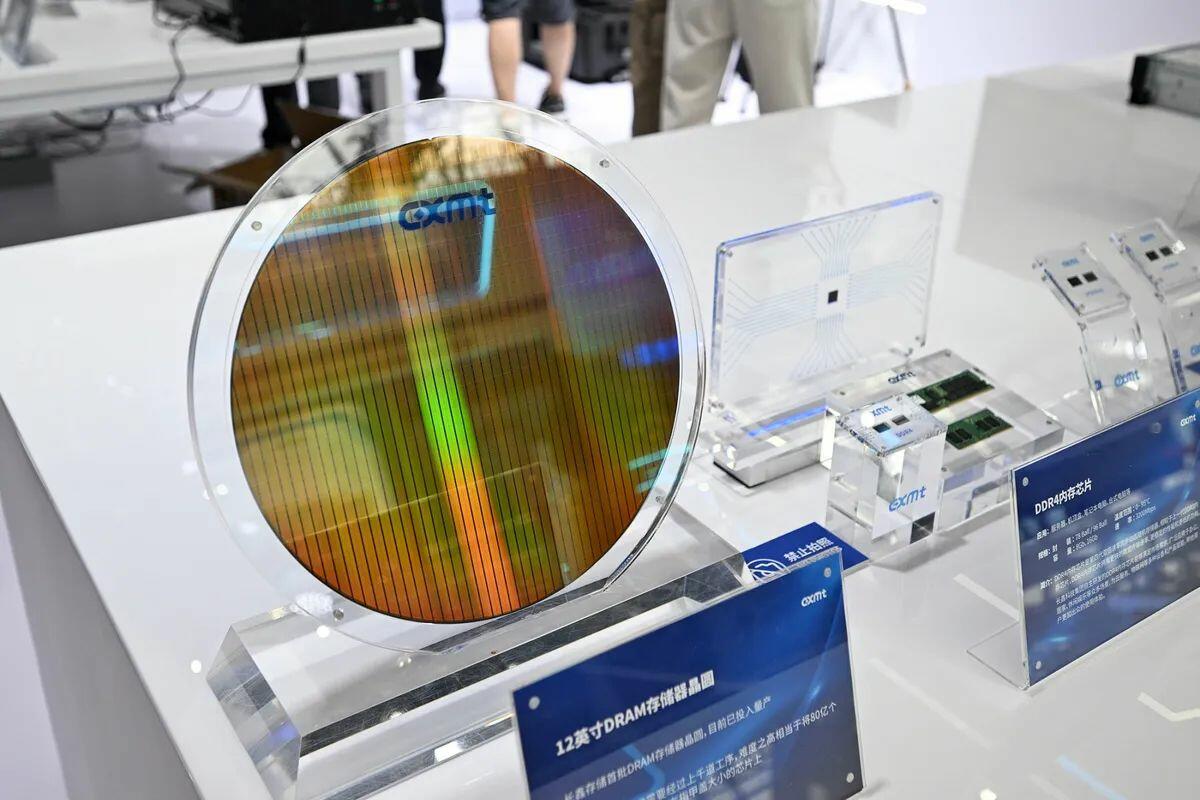
The Chinese memory-chip maker has advanced far enough to draw interest from some of the world’s largest technology companies, including Apple Inc., which has considered using its chips. But the same growth that has raised CXMT’s commercial standing has also made it a more prominent target in the widening technology confrontation between Washington and Beijing.
The Pentagon has blacklisted the state-backed company over alleged links to China’s military. In South Korea, prosecutors have accused several former Samsung Electronics employees of leaking proprietary information to CXMT. The company’s expansion is also being watched closely by US officials seeking to prevent Chinese semiconductor manufacturers from gaining access to advanced equipment and expertise.
CXMT’s success will depend not only on whether it can narrow the technological gap with Samsung, SK Hynix and Micron Technology, but also on whether it can continue expanding without provoking restrictions severe enough to disrupt its supply chain.
That challenge has shaped the company from its earliest days.
CXMT broke ground on its first factory in Hefei in 2017, as another Chinese memory-chip project, sFujian Jinhua, was running into mounting pressure from the US. Washington’s actions ultimately derailed Jinhua’s rise, creating a cautionary example for Chinese semiconductor companies with global ambitions.
According to Taiwanese think tank DSET, cited by Bloomberg, Jinhua’s collapse helped CXMT secure funding from both central government-linked and private investors. It also taught the company to proceed more carefully around the boundaries of US policy.
“This incident not only brought CXMT both central and private investment but also helped the company learn from Jinhua’s downfall and carefully navigate around US red lines,” DSET said.
That caution has become increasingly important as Washington has broadened its efforts to restrict China’s access to advanced semiconductor technology.
In October 2022, the administration of President Joe Biden imposed sweeping export controls covering high-end chips, manufacturing equipment and technical expertise. The measures were intended to slow China’s progress in artificial intelligence, supercomputing and other strategically sensitive fields.
CXMT remains unable to obtain the most advanced lithography systems used by its foreign competitors. Its access is largely limited to deep-ultraviolet equipment, which is less capable than the extreme-ultraviolet machines used by Samsung, SK Hynix and Micron to produce their most advanced memory chips.
That constraint is particularly significant in high-bandwidth memory, or HBM, a class of chips that has become critical to artificial-intelligence infrastructure. HBM allows advanced processors to move large quantities of data rapidly, making it essential to the systems used to train and operate generative AI models.
Samsung, SK Hynix and Micron dominate the global market for those products. CXMT is trying to close the gap without access to the same manufacturing tools, placing greater pressure on its engineering capabilities and domestic suppliers.
Its strategy has been to reduce exposure to Washington by building a supply chain increasingly centered on Chinese companies. A domestic network can make CXMT less vulnerable to direct US controls, while also supporting Beijing’s broader campaign to replace foreign semiconductor technology with local alternatives.
The approach does not eliminate CXMT’s dependence on overseas equipment and expertise. China still lacks domestic substitutes for some of the most sophisticated tools used in chip production. But CXMT’s progress suggests that export controls have not stopped Chinese companies from improving less advanced manufacturing processes or expanding production at scale.
The company has climbed to fourth place in the global memory-chip market, behind Samsung, SK Hynix and Micron. It remains substantially smaller and less technologically advanced than those rivals, but its emergence has begun to challenge an industry structure that has long been dominated by three companies.
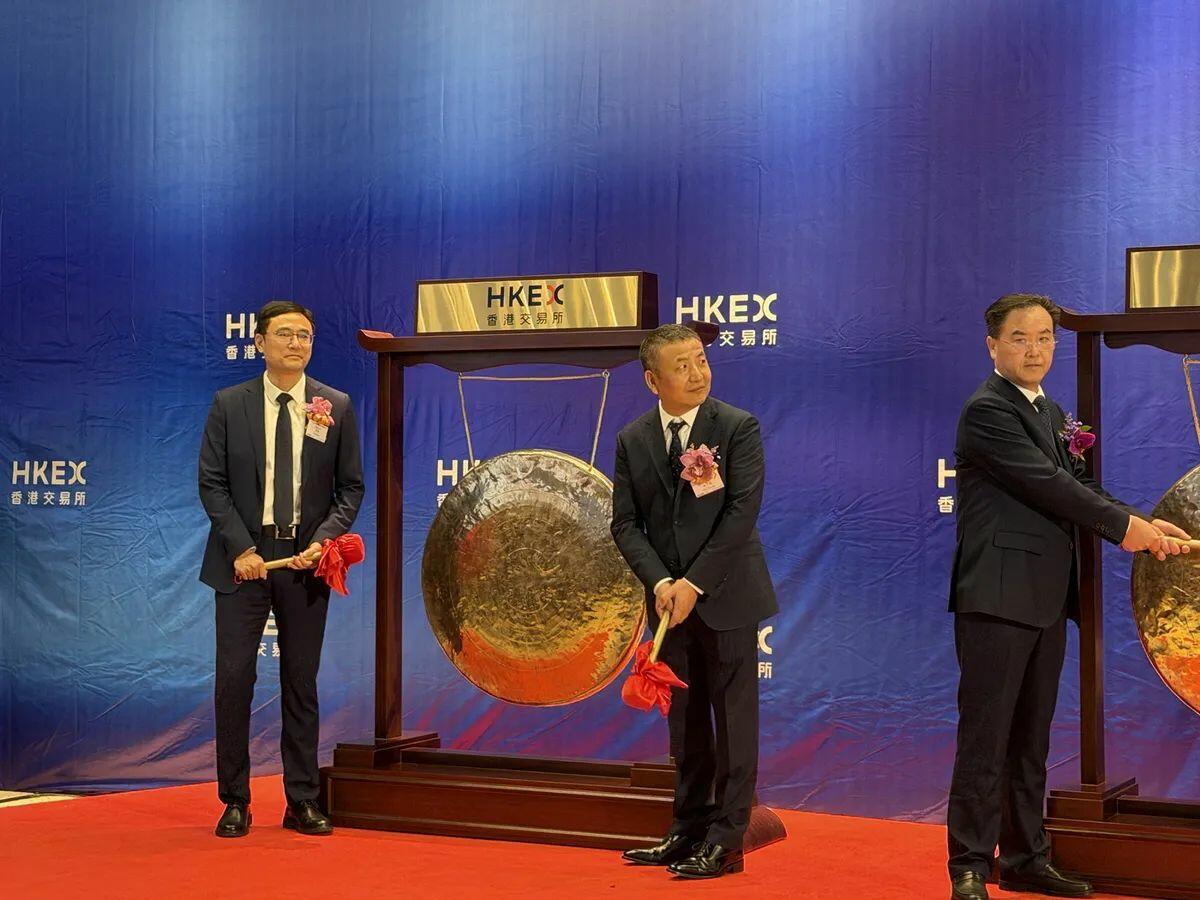
CXMT is considering using about 30 billion yuan, or $4.4 billion, from a planned initial public offering to upgrade its technology and expand research and development, according to its listing application.
That investment would support Beijing’s goal of securing a larger role in a sector increasingly treated as a foundation of economic and military power. Memory chips are essential to smartphones, computers and data centers, and the artificial-intelligence boom has made advanced products even more strategically valuable.
“Memory is a critical component in the AI infrastructure, and the US and China are the only two countries fueling the infrastructure boom,” said He Hui, a Shanghai-based semiconductor research director at Omdia, in a comment to Bloomberg.
China’s restrictions on Micron have also created a commercial opening for CXMT. With one of the three dominant global suppliers facing limits in the Chinese market, domestic customers have stronger incentives to consider a local alternative.
“There are only three players – Samsung, SK Hynix and Micron, and China sanctioned Micron years ago, so this provides a great opportunity for CXMT,” He said.
The company’s founder, Zhu Yiming, brought experience from both the American and Chinese technology sectors. He studied at Tsinghua University and the State University of New York at Stony Brook before leaving doctoral study to work in the chip industry.
In 2004, Zhu founded the company that would become GigaDevice in a garage in Milpitas, California, with $100,000 in angel investment. When the startup ran short of money, a manager at Tsinghua University’s incubator offered funding on the condition that Zhu relocate it to China.
He moved to Beijing with slightly less than $1 million and formally launched GigaDevice in 2005. The company later became a major chip designer and listed in Shanghai in 2016.
By then, Zhu was preparing the venture that would become CXMT. His background helps explain the technical and commercial foundations of the company, but CXMT’s current importance extends far beyond its founder.
The company is now a test of two competing strategies.
For Beijing, CXMT is evidence that sustained financing, domestic procurement and industrial policy can produce a viable alternative to foreign chip suppliers. For Washington, its rise raises questions about whether export controls are containing China’s technological progress or merely encouraging Chinese companies to build around them.
CXMT’s growing profile increases both its opportunities and its risks. Interest from customers such as Apple would validate its technology and give it greater international credibility. But deeper integration into global supply chains would also expose the company to more scrutiny over ownership, security and intellectual property.
The Pentagon blacklist and the South Korean leak allegations show how quickly commercial progress can become a geopolitical liability.
CXMT does not need to overtake Samsung, SK Hynix or Micron to alter the global market. Establishing a dependable Chinese source of memory chips would reduce Beijing’s reliance on foreign manufacturers, strengthen domestic equipment suppliers and weaken one source of US leverage.
Tyler Durden
Mon, 07/13/2026 – 17:20