
El Nino Crushes Atlantic Hurricane Activity, Lowest Since 1941
The peak of the Atlantic hurricane season arrives next Thursday, yet by this point the basin would normally have produced multiple systems tracking through the Caribbean, the Gulf of America, and the open Atlantic. This year, however, a strengthening El Niño and record vertical wind shear are tearing apart disturbances before they can rapidly intensify.
Bloomberg reports that only five short-lived tropical storms have formed this season, and none has intensified into a hurricane. The Atlantic has not recorded so little activity at this point in the season since 1941.
“We’re crushing all sorts of shear records this year,” said Phil Klotzbach, lead author of Colorado State University’s annual seasonal forecast. “The models are so anemic on storm development coming up in the next 10 days too.”
Forecasters and researchers are tracking accumulated cyclone energy, or ACE, which measures the combined strength and duration of tropical storms and hurricanes during a season.
“We currently have an ACE of 4.4,” Klotzbach said. That is the lowest since 1941. A low ACE indicates that storms have generally been weak or short-lived, reflecting the fact that no tropical disturbance has intensified into a hurricane.
For the US energy complex, the absence of hurricane activity is great news. Gulf Coast refineries, offshore platforms, pipelines, and LNG export terminals have avoided precautionary shutdowns, allowing facilities to operate near full capacity as the global refined-products crisis deepens. This has been a boon for US producers as the country exports record volumes of crude oil and diesel.
Still, a lull in tropical activity does not entirely rule out the possibility of a destructive late-season storm, as roughly 12.5 weeks remain before the season ends on November 30.
Meanwhile, Southern California and Hawaii are bracing for potential impacts from tropical systems over Labor Day weekend.
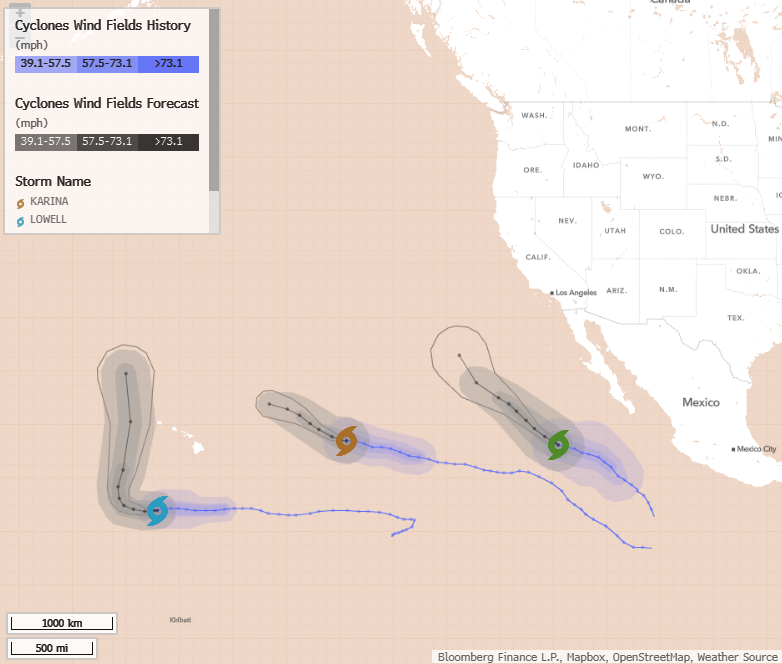
“It just seems like it’s one storm after another out there because of the atmospheric conditions and the water being pretty warm,” Robbie Berg, a warning coordination meteorologist at the National Hurricane Center, told the outlet, referring to the activity in the Pacific.
El Niño Impacts
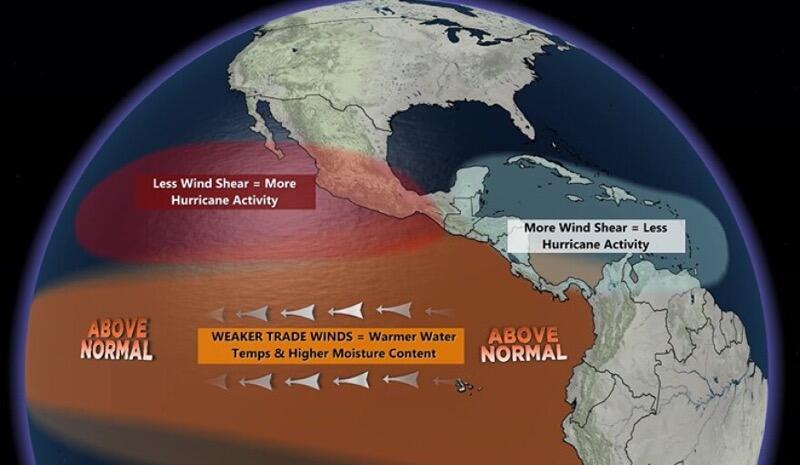
“For an El Niño year, this is what we would expect,” Berg said.
Tyler Durden
Fri, 09/04/2026 – 18:50