Fiber-Optic Kamikaze Drone Found In Mexico Signals New Drone Threat South Of Border
The global proliferation of low-cost suicide drones is setting off alarm bells across the US military and among national security officials and experts. The race to harden high-value assets in the homeland, from military bases and airports to power substations, crude oil refineries, stadiums, and data centers, is already underway as officials fear the next major threat could come from a cheap drone equipped with a warhead.
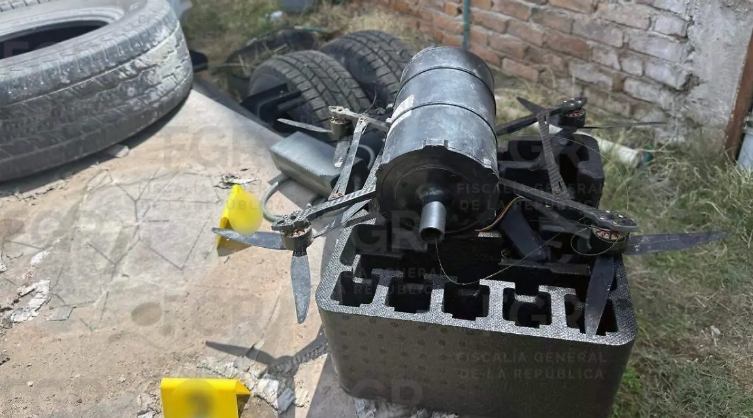
The latest warning that Ukrainian-style drones are just south of the US-Mexico border comes from a new report by the Mexican newspaper El Sol de Durango, which states that Mexican federal forces discovered an unjammable fiber-optic kamikaze drone during a raid on a compound.
The raid took place at a compound in the Dolores del Río neighborhood, located deep inside north-central Mexico, about 500 miles from the US border and about 560 miles from Mexico City by road.
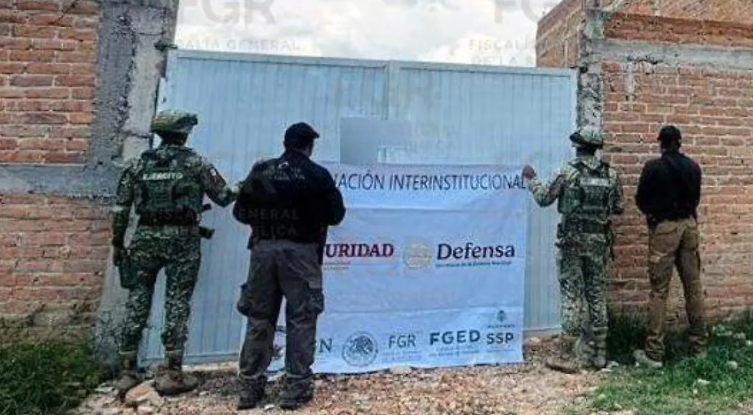
The Mexican Army and National Guard secured the perimeter of the compound, while Durango’s regional federal prosecutor’s office and other law enforcement agencies found the fiber-optic suicide drone, guns, ammunition, ATVs, and other vehicles.
From the local outlet:
The operation stemmed from a citizen complaint received by the Attorney General’s Office (FGR ) through the Single Window for Attention (VUA), in which a member of the National Guard (GN) reported potentially criminal activity at the aforementioned address. In response, the Federal Public Prosecutor (MPF) requested and executed a search warrant for the location.
During the operation , supported by agents of the Federal Ministerial Police (PFM) and the Criminal Investigation Agency (AIC), authorities seized an explosive device , two magazines and 78 rounds of ammunition of various calibers, a drone, two ATVs, and four vehicles . The perimeter was secured by personnel from the Mexican Army ( Sedena ) and the National Guard (GN).
The importance of this find is that fiber-optic kamikaze drones, once largely confined to major war zones across Eurasia, from the Russia-Ukraine conflict to the Gulf area, now appear to be spreading worldwide.
Even more troubling, this drone was found roughly 500 miles south of the US-Mexico border. The discovery points to one unavoidable conclusion drawn from today’s conflict zones: the US must supercharge the hardening of high-value assets against this drone threat (read here).
Military bases, airports, power substations, refineries, ports, data centers, and other critical infrastructure are entering a whole new risk environment in which cheap drones can cause outsized damage.
We recently penned a note for readers on how to profit from the “asymmetric warfare boom.” Read the note here.
Tyler Durden
Thu, 07/09/2026 – 23:00