
Gas Turbine Shortage Sends AI Developers Back To Boilers And Steam
Elon Musk recently warned that “turbines are sold out through 2030,” saying SpaceX and Tesla would probably need to make turbine blades and vanes internally.
ELON MUSK: “Turbines are sold out through 2030. In order to bring enough power online, SpaceX and Tesla will probably have to make the turbine blades and vanes internally. There are only three casting companies in the world that make these, and they’re massively backlogged.” pic.twitter.com/YlKHznBXhK
— DogeDesigner (@cb_doge) August 29, 2026
SpaceX is preparing a factory in Bastrop, Texas, to tackle that casting bottleneck, and Musk says bringing production in-house could get gas turbines online up to 18 months sooner.
This is where it becomes important to be specific as to which type of turbines he is referring to…
POWER Magazine reports that data center operators are pairing industrial boilers with steam turbines to bypass the gas turbine backup. Applied Digital CEO Wes Cummins stated gas turbines ordered today might not arrive until 2032.
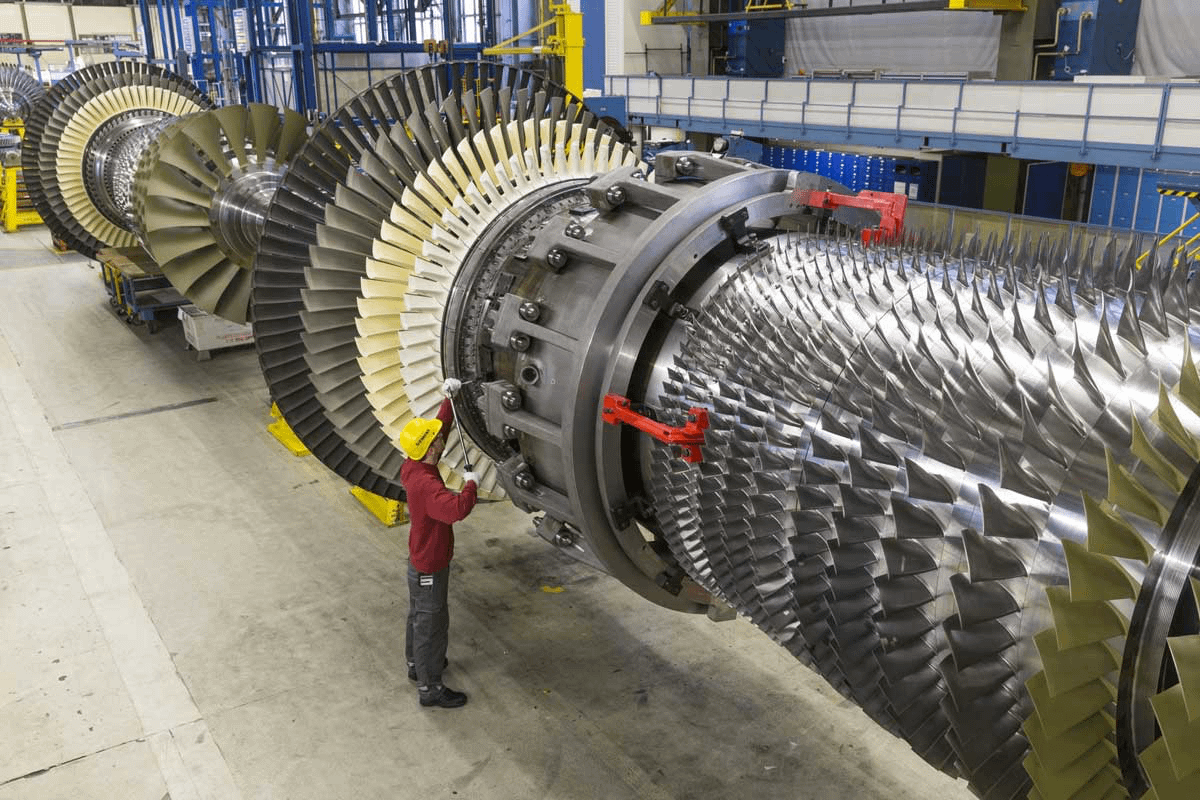
Not all turbines are equal. Gas turbines are designed to handle high temperatures and loads, which require extremely unique alloys and manufacturing techniques. Steam turbines handle relatively lower temperatures and allow for a wide range of alloys to be used.
Don’t be fooled by the names, though. Both the gas turbine and the steam turbine are ultimately running on natural gas piped directly to the site.
The gas turbines would take the fuel supplied directly and generate electricity from it. Steam turbines require an intermediate step where the gas supply will be burned on site to boil water, which will be used to spin the turbine for electricity production.
Steam turbines and boilers enjoy an older, more established supply chain capable of ramping production up and down quickly, which is why POWER quotes Rentech Boiler Systems as being able to manufacture and deliver a packaged boiler within a year.
Babcock & Wilcox is already seeing significant interest in the new approach with a $2.4 billion agreement with Base Electron to supply 1.2 GW of generation for Applied Digital’s AI campuses. B&W is providing boilers for the on-site power plant with operations anticipated in 2028.
Existing nuclear and new natural gas remain the most prominent answers to the data center power question. As we covered recently, Google is securing nuclear supply in Finland with a 22-year agreement with Fortum.
The ultimate goal of most of the hyperscalers is to eventually find their facilities powered 100% by renewables and/or nuclear energy, with the fossil fuels serving as the bridge in the meantime.
Tyler Durden
Mon, 09/14/2026 – 05:45