
Jobs Huge Miss: Sept Payrolls Plunge To Just 29K, Below All Estimates As July Revised Negative
In our jobs preview post, we told readers to “beware a bond squeeze as august seasonals reverse” and boy were we right: yields are tumbling from 5.22% to 5.16%, a new weekly low, as all those record TSY shorts get bigly squeezed following what was a big miss in the September jobs print which tumbled from a downward revised August (as we said it would be) 133K vs 162K originally to just 29K.
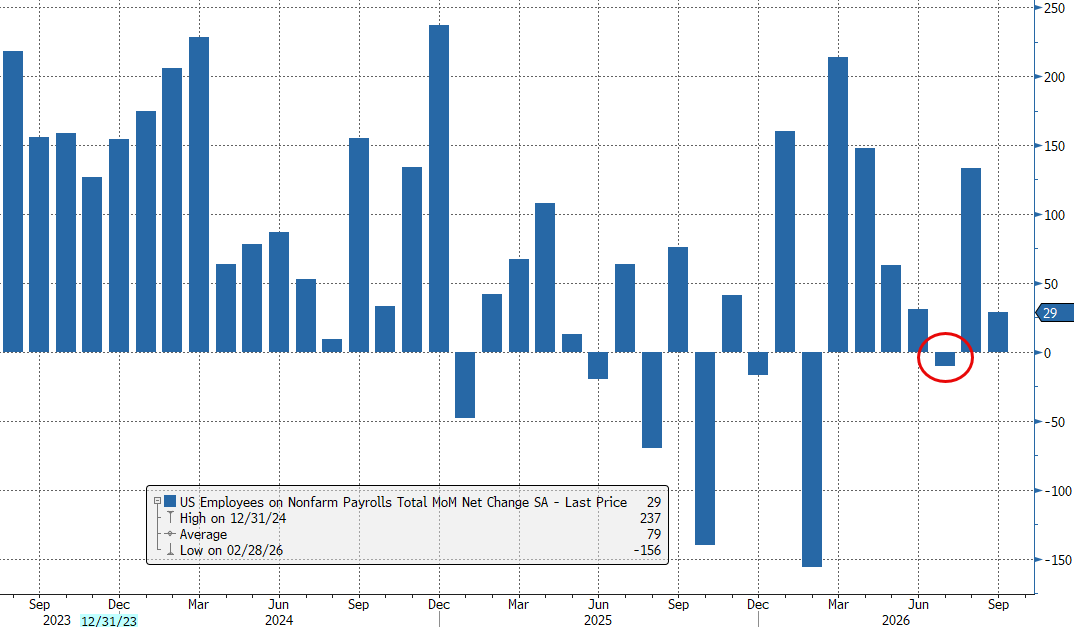
It wasn’t just August that was revised down by 29,000, from +162,000 to +133,000: July was also revised down by 31,000, from +21,000 to -10,000. This means that the original negative print of -23K, and which was revised up to 31K last month, is now once again negative and that had the Fed known this, it most likely would not have hiked last month. With these revisions, employment in July and August combined is 60,000 lower than previously reported.
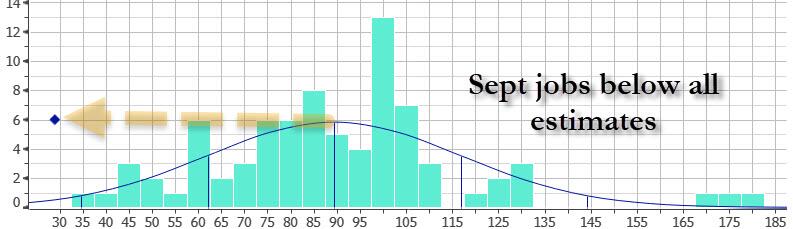
More notably, the 29K job print was below all estimates, which is amusing since August was originally above all estimates, but has since been revised sharply lower and just in line.
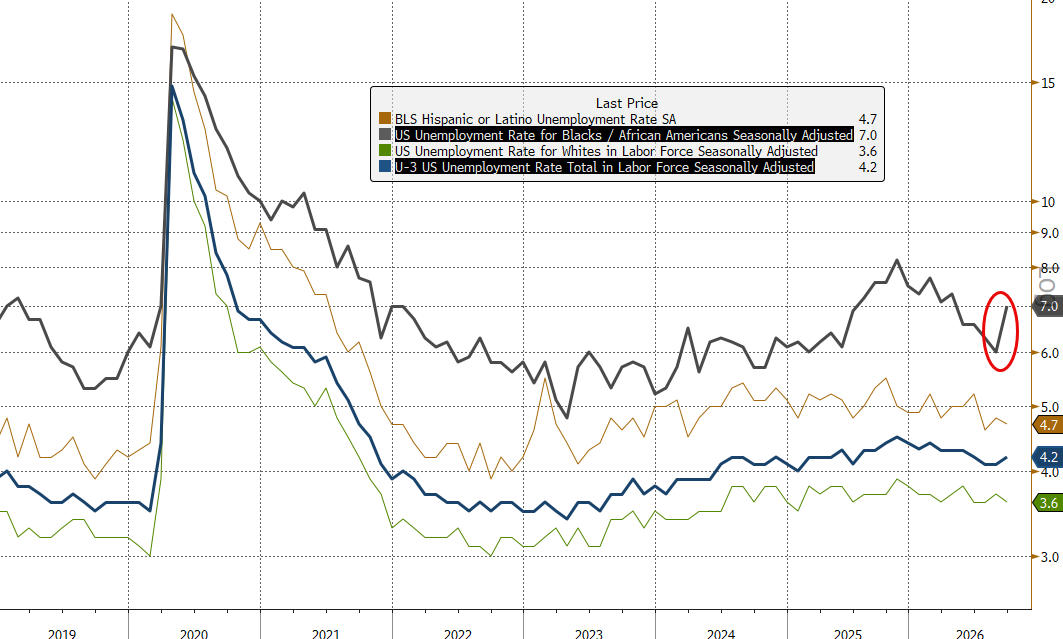
While the headline payrolls print was a big miss, the unemployment rate actually rose to 4.2%, from 4.1%, and above estimates of an unchanged print, as the number of unemployed workers rose to 7.109MM from 7.031MM, up 78K, while the labor force rose by 485K to 170.262MM. Among the major worker groups, the unemployment rate for people who are Black (7.0 percent) jumped in September. The jobless rates for adult men (3.9 percent), adult women (3.6 percent), teenagers (14.5 percent), and people who are White (3.6 percent), Asian (2.9 percent), or Hispanic (4.7 percent) showed little change over the month.
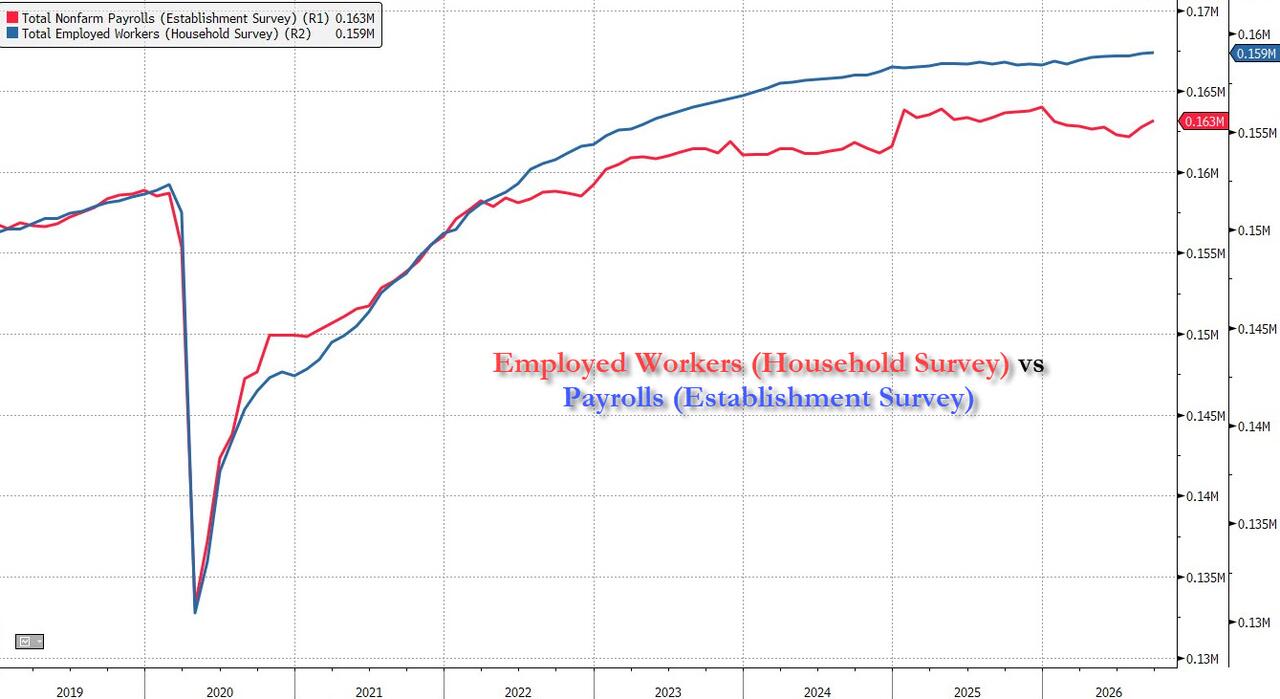
As for the specific reason why the unemp rate rose despite the drop in payrolls, that’s because the Household Survey showed a 406K surge in the number of employed workers, the second highest since Jan 2025 (only August’s 569K was higher)…
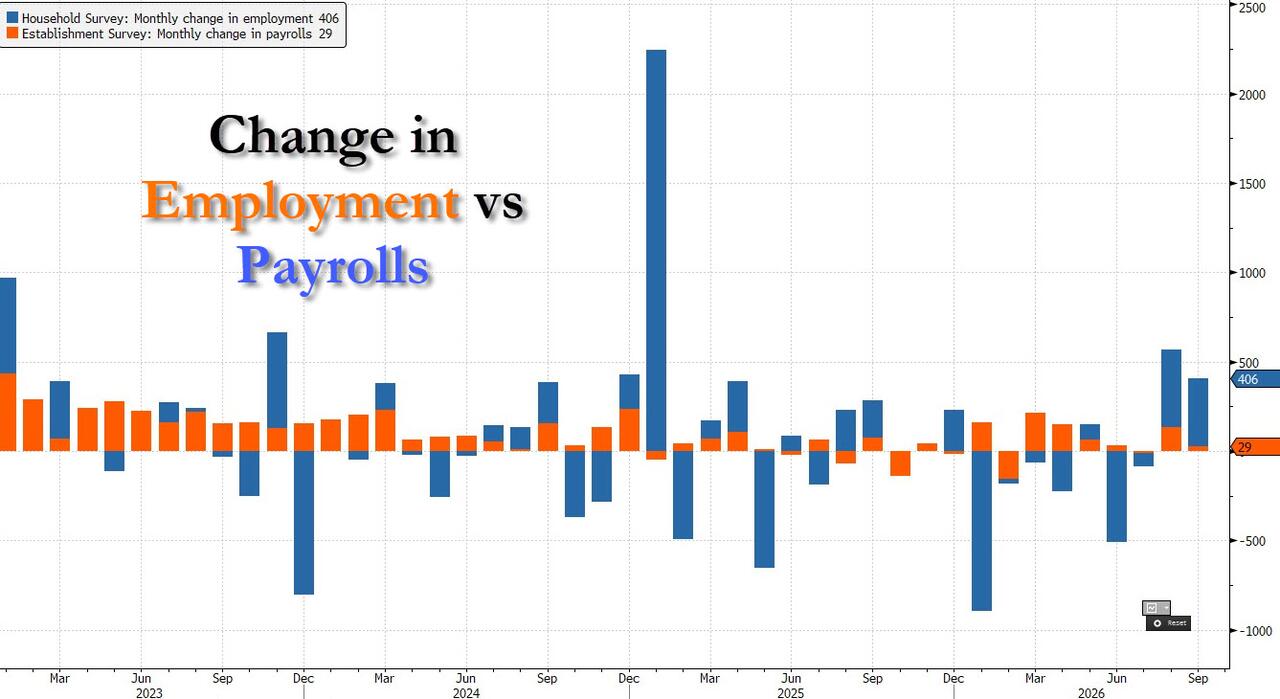
… which pushed the total number of employed workers to 163.152MM, the highest since January.
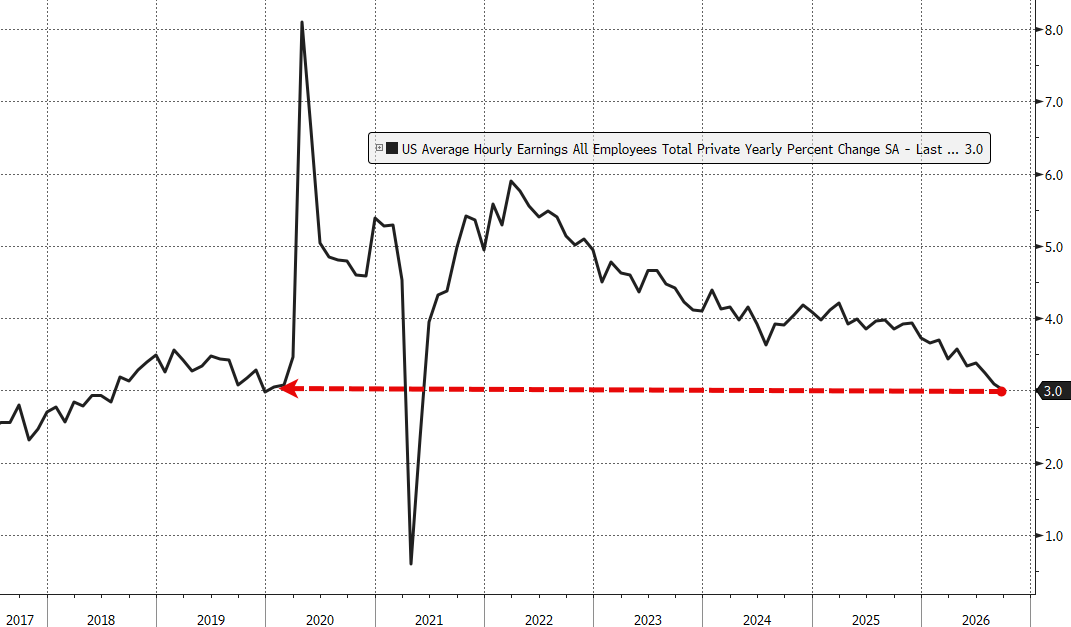
There was some more relief on the inflation front as average hourly earnings rose just 0.1%, below the 0.3% expected, which pulled the annual wage growth to just 3.0%, down from 3.1%, and below estimates of an unchanged print.
Developing.
Tyler Durden
Fri, 10/02/2026 – 08:49