Strategic Autonomy Is Running Dry
By Bas van Geffen, senior macro strategist at Rabobank
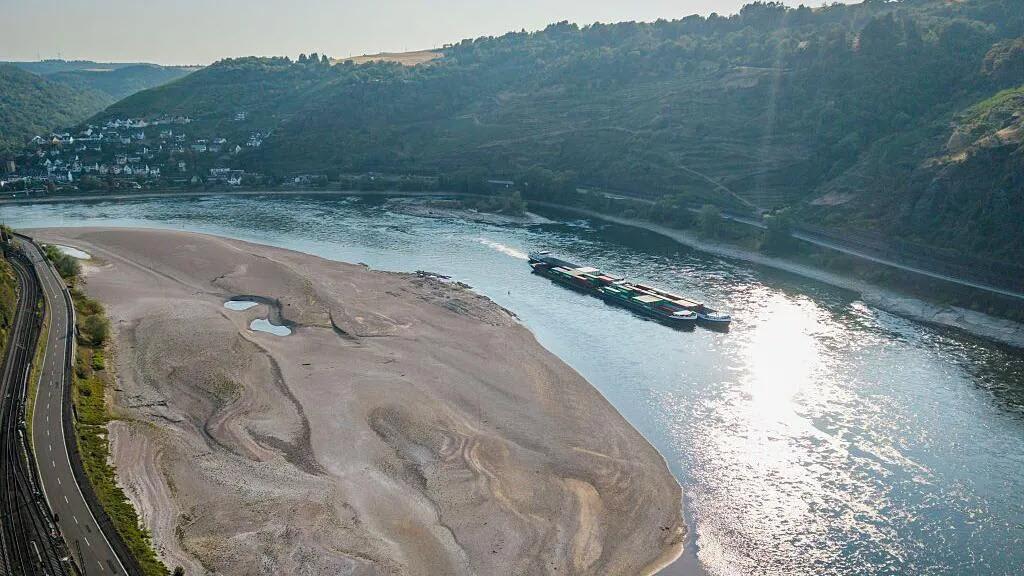
Yesterday, my road cycling took me along the Lek River, which branches off from the Rhine. I frequently ride the path along this river, but the Lek was almost unrecognisable in the distance and what is normally part of the riverbed has now run dry.
It’s a very tangible reminder of numbers we’ve recently been watching on our screens: Upstream, at Kaub, the water level in the Rhine has fallen to historical lows. And a new heatwave that is due to hit Europe, is bound to make matters worse: current forecasts see the level drop to less than 5 centimetres above the station’s zero mark by the end of the week.

Ships were already forced to reduce the amount of cargo they carry, but soon they may be unable to sail the entire river. The drought is effectively splitting this key piece of infrastructure into two halves between Cologne and Frankfurt. Inland shipping costs have surged, and companies are scrambling to find alternative transport for resources and finished product. This, as diesel prices in Germany have largely rebounded in the last month.
Concerned about the impact for local industry, several German Bundeslander are suspending Sunday driving bans for trucks and lorries. Indeed, the hit to economic activity will be noticeable.
But these droughts also underline that a once-convenient shipping route is becoming unreliable. Higher shipping costs and possible disruptions of key supplies add to high energy costs and other headwinds facing German industry. And although Germany has earmarked billions for the revitalization of key infrastructure, this will probably be insufficient to remedy the issue.
That’s a problem for Brussels’ strive to regain strategic autonomy – and a physical challenge for European plans to revive key industries and build new ones on European soil.
European –and American– plans to move critical industries back home are increasingly causing geopolitical friction. This is, after all, a zero-sum game where China in particular stands to lose.
Beijing realizes this too. China recently broadened its travel restrictions to include experienced engineers with knowledge of critical technologies such as rare-earth processing, solar panels or battery technologies. Those who “may endanger technological security” can be barred from leaving the country. The tightened rules must prevent that these engineers help companies set up production lines in rival countries.
These restrictions may clash with the European Commission’s planned Industrial Accelerator Act, which requires that large foreign investments in Europe’s critical industries generate knowledge transfers and local research & development.
In markets, the joint Japanese-US intervention in the JPY exchange rate is starting to lose its grip on the currency. The prospect of further FX interventions continues to provide some support, but USD/JPY is gradually drifting higher, and the currency has and it has reversed about half of the peak-to-trough move versus both EUR and USD.
As we noted last week, these FX interventions may prop up the currency temporarily, but it will probably not last unless there are structural improvements in the yen’s fundamentals. Last week, we also learned that the government’s plans are unlikely to do this in the near-term.
Interest rate differentials are also weighing on the currency, and the central bank is signalling that it may remedy this to some extent. Sources within the Bank of Japan told reporters that policymakers could raise rates again in September. The comments follow a relatively hawkish write-up of the July meeting.
The Australian dollar also slipped briefly after today’s RBA decision. The central bank kept its policy rate unchanged as expected, but traders read some dovish language in the statement, and the downward revisions to the bank’s growth and inflation forecasts.
However, RBA Governor Bullock corrected that in her press conference. She commented that policymakers debated whether to hold or to hike, adding that it is “quite possible” that the RBA needs to hike rates again. Monetary policy is currently seen as “a bit restrictive” and domestic demand has slowed in line with expectations. But, according to the governor, the domestic economy is still operating above capacity. So, consumer spending growth and the economy need to slow further for capacity pressures to ease sufficiently to return inflation to target on the projected timeline.
As our Australia strategist noted prior to today’s meeting, the RBA seems to hope that the three rate hikes since the start of the year will be sufficient to dampen domestic demand. However, we are not entirely convinced that it is. Accordingly, we forecast that the central bank will have to raise rates once more, in November
Tyler Durden
Tue, 08/11/2026 – 11:30