
These Are The Cities Where Burglaries Spike In The Summer
For years, homeowners have been told that summer is prime time for burglaries as families leave for vacations and homes sit empty. But a new analysis of FBI crime data suggests that advice only tells part of the story, according to Moneygeek.
After examining burglary reports from 74 of the nation’s largest cities between 2022 and 2024, researchers found that while burglary rises modestly during the summer nationwide, the pattern varies dramatically depending on where you live. In many parts of the country, summer really is burglary season. Along much of the West Coast, however, the opposite is true.
Overall, burglaries were just 5.6% higher during June through August than during the rest of the year, far less than the large seasonal spikes often suggested by conventional wisdom. More importantly, that national average masks major regional differences.
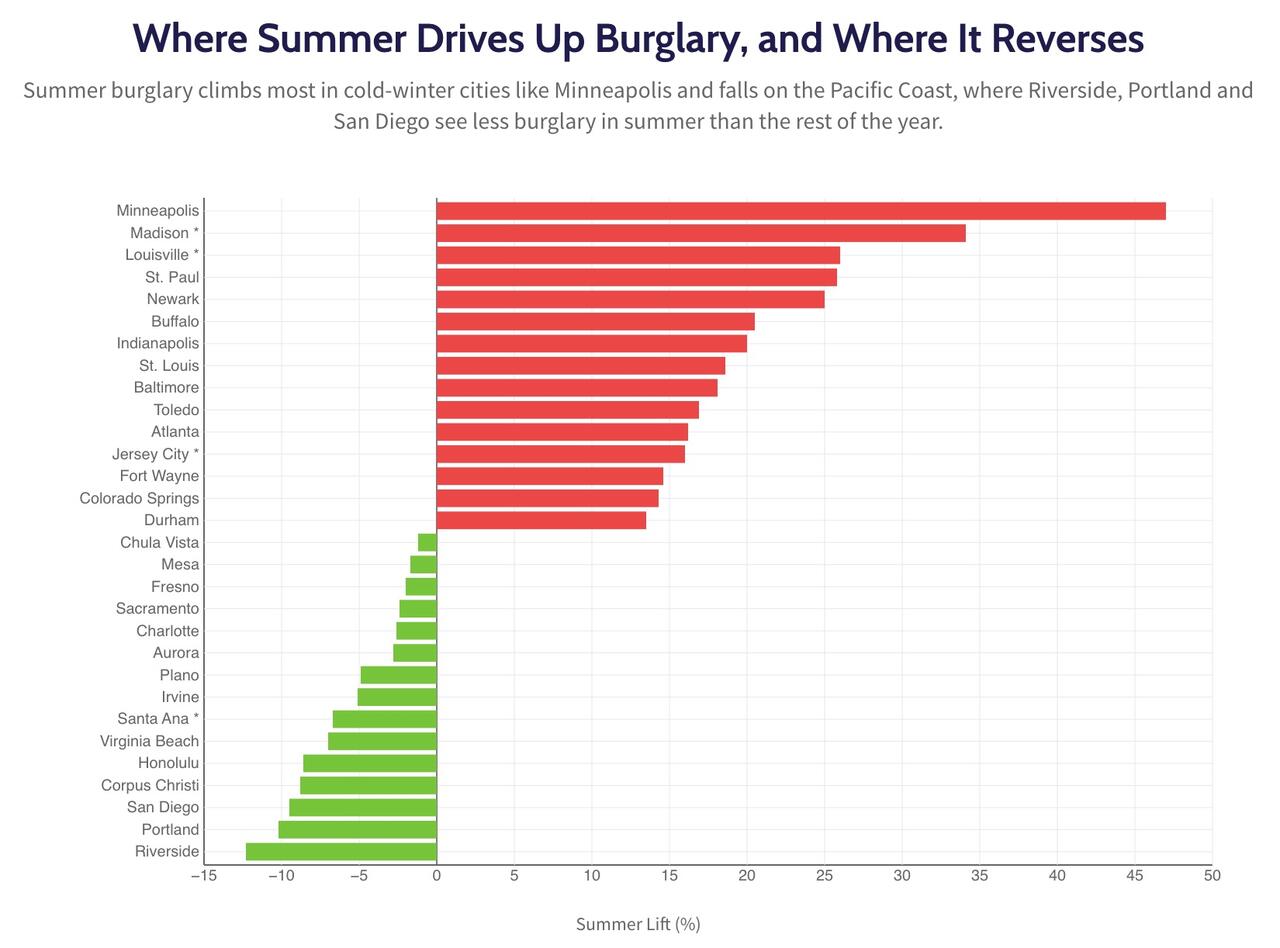
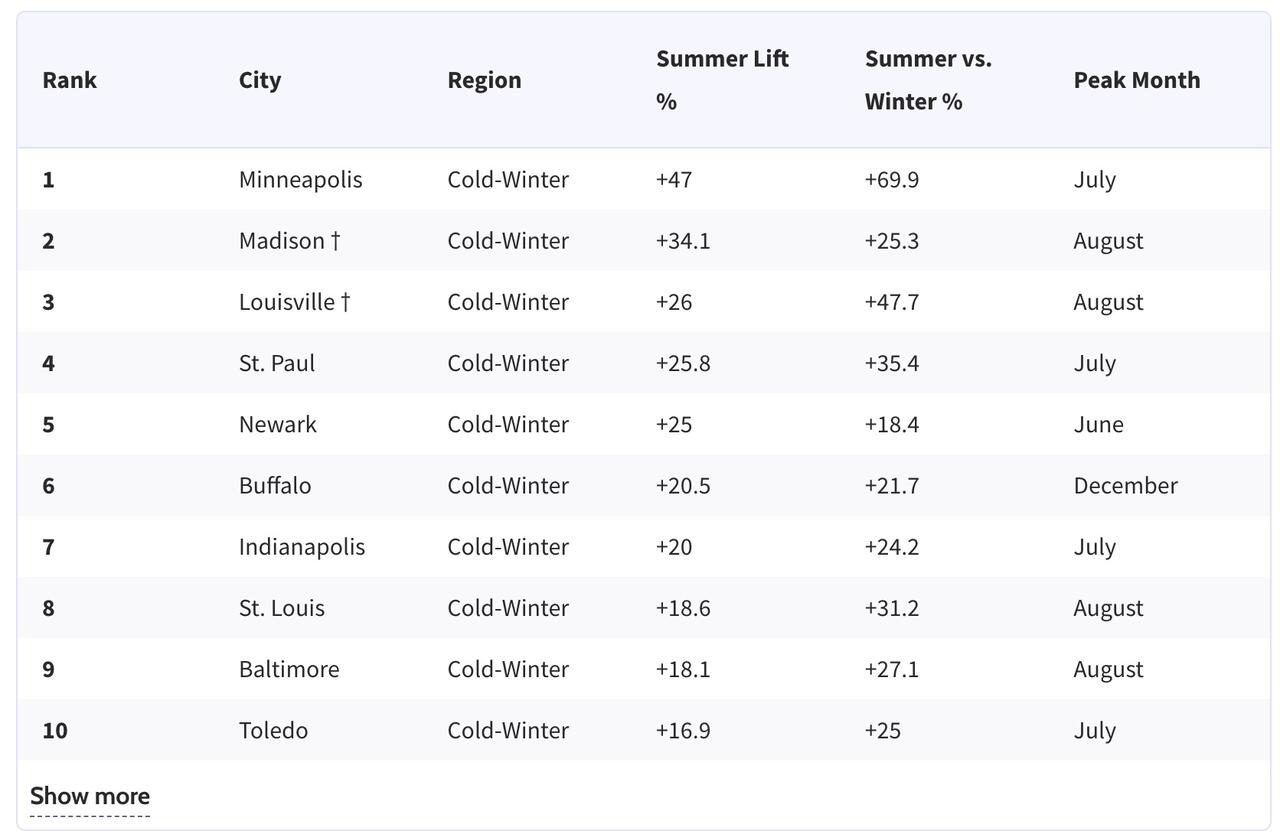
Moneygeek notes that cities with cold winters experienced the strongest seasonal swings. Minneapolis posted the largest increase, with summer burglaries jumping roughly 47% compared to the rest of the year. Other northern cities, including St. Paul, Newark, Buffalo and Indianapolis, also recorded significant summer increases.
Researchers believe harsh winters may naturally suppress burglary activity by keeping more people indoors and reducing opportunities for break-ins. When warmer weather arrives, vacations, student departures and increased travel may create more opportunities for property crimes.
The picture changes almost completely along the Pacific Coast.
Cities including Riverside, Portland and San Diego actually experienced fewer burglaries during the summer than during the rest of the year. Riverside showed the strongest reversal, with burglary rates falling more than 12% during the summer months. Honolulu and several other coastal cities displayed similar trends.
Rather than peaking during vacation season, many West Coast cities recorded their highest burglary activity during the winter months. Researchers suggest that milder climates eliminate the dramatic seasonal shifts seen in colder regions, leading to a much different pattern of criminal activity.
The study grouped cities into three broad climate regions. Cold-weather cities averaged nearly a 12% summer increase in burglaries, while Sun Belt cities showed only a modest seasonal change of roughly 5%. Pacific Coast cities, meanwhile, averaged a slight decline in burglary during the summer.
The findings also challenge the idea that homeowners across the country should prepare for burglary risk at the same time each year.
For residents in northern cities, traditional summer precautions—such as using timers, security cameras, holding mail and checking alarm systems—appear well supported by the data. But homeowners along the West Coast may actually benefit more from increasing those precautions during the colder months instead.
Researchers caution that the data does not prove why these seasonal patterns exist. The FBI’s monthly statistics also combine residential and commercial burglaries, making it impossible to isolate exactly what’s driving the differences. Still, the geographic pattern was remarkably consistent, with cold-weather cities showing substantially stronger summer increases than their Pacific Coast counterparts.
The broader takeaway is that there is no single national “burglary season.” Instead, burglary trends appear to be heavily influenced by regional climate and local conditions, suggesting that homeowners may want to think about seasonal security differently depending on where they live.
Tyler Durden
Tue, 07/14/2026 – 05:45