Vance In Switzerland As High-Stakes Iran Talks Get Underway: What We Know So Far
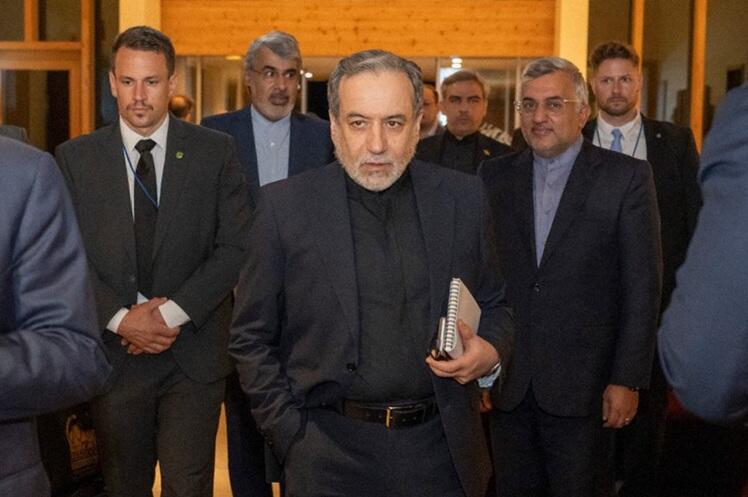
Qatar’s Foreign Ministry has formally confirmed the launch of the talks between the United States and Iran with the mediation of Qatar and Pakistan in Switzerland, with the Iranian delegation headed by Parliament Speaker Mohammad Bagher Ghalibaf and Foreign Minister Abbas Araghchi.
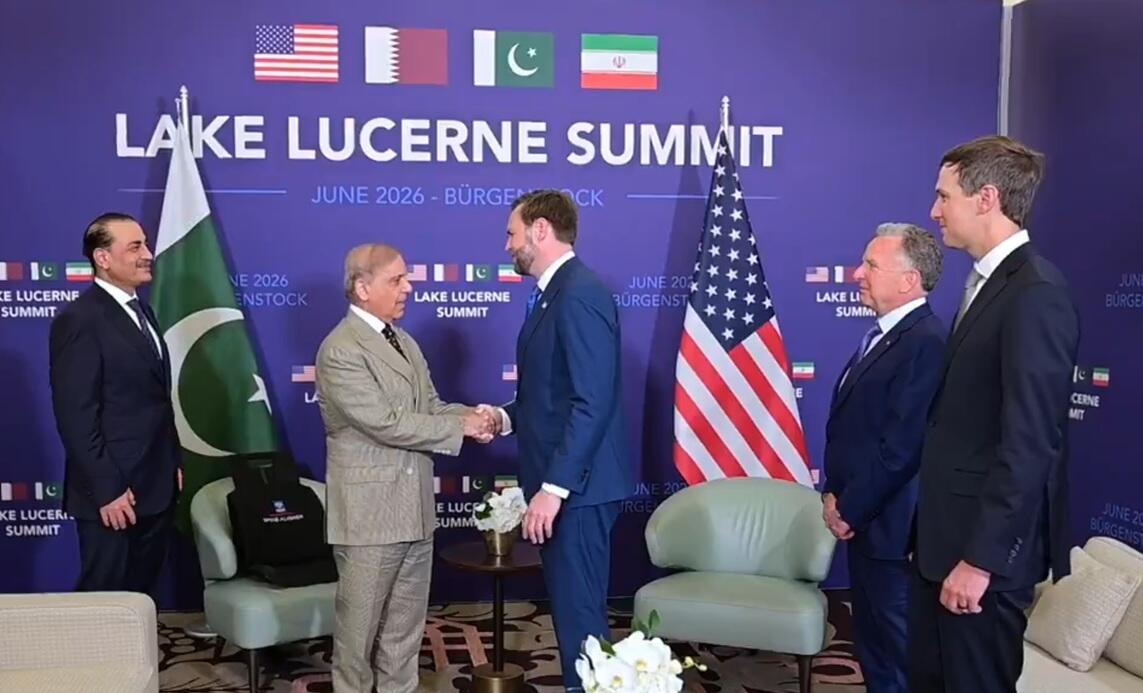
US Vice President JD Vance is leading the American side along with envoy Steve Witkoff. Also gathered at the Buergenstock Resort Lake Lucerne, near Stansstad, are Pakistan’s Chief of Army Staff Field Marshal Asim Munir, and Pakistan’s Prime Minister Shehbaz Sharif.
Qatar has expressed “its aspiration that these meetings will lead to the conclusion of a comprehensive and permanent agreement addressing all aspects covered in the Memorandum of Understanding.” Iran has reiterated it wants a comprehensive settlement and final end to the war.
The last time Vance sat physically across from Iran’s lead negotiator Ghalibaf was a full ten weeks ago, in mid-April. Interactions appear to initially be only through intermediaries, which will build up to face-to-face meetings, as happened in prior failed rounds.
Qatar’s foreign ministry has previewed the following planned format to the opening of the talks as follows:
- The ministry statement says “specialized technical and expert groups have been formed to negotiate the terms of the final agreement, which will cover all aspects of the Memorandum of Understanding” between the US and Iran.
- “Additionally, follow-up groups have been established to oversee the implementation of the Memorandum, monitor progress achieved, and work toward the conclusion of the final agreement,” it added.
- “This reflects the commitment of all parties to moving forward in the negotiation process in good faith, with the aim of reaching a comprehensive and sustainable agreement.”
Of course, in terms of “implementation” of just the MoU itself, things are quite there yet, as sporadic fighting and Israeli aerial attacks continue in Lebanon, which could serve to derail the Switzerland process at any moment.
After roughly 45 min, the bilateral meeting between FM @araghchi and his Swiss counterpart @ignaziocassis came to a close at Bürgenstock Hotel. Quadrilateral talks between Iran, the US, Pakistan, and Qatar are expected to commence shortly at another venue on the same premises. pic.twitter.com/hOmovguWFs
— IRNA News Agency ☫ (@IrnaEnglish) June 21, 2026
Additionally, Iran has declared it has ‘closed’ the Strait of Hormuz just this weekend, but which the US military has been denying is a reality. VP Vance in media appearances has also been downplaying it.
The Lebanon situation seems the bigger, more pressing threat to the peace process – at least from Tehran’s point of view. Dozens of people in Lebanon have been killed while at least six Israeli soldiers have been slaid, with 20 wounded over past days of Hezbollah rocket and drone attacks.
As a reminder, President Trump doesn’t want to oversee is an economic catastrophe driven by a worldwide energy crisis. It seems he’s ready to anything to not let it happen under his watch:
President Donald Trump said Wednesday that he was motivated to finalize the memorandum of understanding (MOU) with Iran to prevent “economic catastrophe” if the war was not resolved soon.
“So rather than possibly going into a depression, rather than having your favorite president be Herbert Hoover, he was always the one I didn’t want to be,” Trump said of the 31st president whose policies are often blamed for starting the Great Depression.
“I didn’t want to see economic catastrophe. If you kept this going, that could have happened. But all I know is, every time we talked about the possibility of peace, the stock market shot up like a rocket ship,” Trump said during a press conference Wednesday on the sidelines of the G7 Summit in Évian, France.
And so judging by this and other of recent Trump admissions, Iran clearly enters Switzerland in very strong negotiation position. It’s current rhetoric regarding the Strait of Hormuz also reveals this.
JD Vance met with Pakistan’s Prime Minister Shehbaz Sharif and Army Chief Asim Munir in Switzerland.pic.twitter.com/5bteI1Vtyu
— Clash Report (@clashreport) June 21, 2026
Tehran has accused the US of a “clear breach of its commitments” and announced Saturday that “the Strait of Hormuz will be closed to the passage of vessels,” according to state broadcaster IRIB.
For more on the details of the format, CNN has reported some further information in the following:
- When and where do the talks start? US and Iranian negotiators will begin their meeting at around 1 p.m local time (7 a.m. ET) at the Swiss mountain resort of Bürgenstock, an Iranian source told CNN.
- Who will be there? Both the United States and Iran have sent high-level officials to Switzerland. Vice President JD Vance is heading up the US side, while Iran’s lead negotiator, Mohammad Bagher Ghalibaf, will lead Tehran’s delegation, Iranian media outlet Saberin News reported Saturday.
- What format will they take? Iran’s Foreign Ministry spokesman, Esmail Baghaei, who is part of the Iranian team, earlier told state media “the Iran-US talks will be held in a quadrilateral format, with the presence of Pakistani and Qatari delegations.”
- What will be discussed? Lebanon is likely set to top the agenda after clashes between Israel and Hezbollah threatened the nascent agreement between the US and Iran. Vance says he hoped he would make advancements on negotiations surrounding the handling of Iran’s nuclear materials.
To put things in perspective about the long road ahead, analyst and reporter James Bayes – who is on the ground for the talks in Switzerland, has offered the following: “This is a very different deal from the Iran nuclear deal that was done by [former US] President Barack Obama … things have changed completely. But I think it’s worth looking at that deal for one reason, which is the timeline – how long these things take.”
“Because when they did an interim deal then, in November 2013 until the final deal in 2015, it took 597 days,” the correspondent added. “So, even though the circumstances have changed – it’s a very different deal and they’ve got the knowledge of that deal as well which is helpful – it’s a lot to do in just 60 days.”
Tyler Durden
Sun, 06/21/2026 – 08:45