
Willy Wonka And The Compute Factories
By Benjamin Picton, Senior Market Strategist at Rabobank
Oil prices are rising again on news of the shutdown of Saudi Arabia’s East-West pipeline following drone strikes, and the Houthis’ seizure of strategic locations on the Red Sea coast.
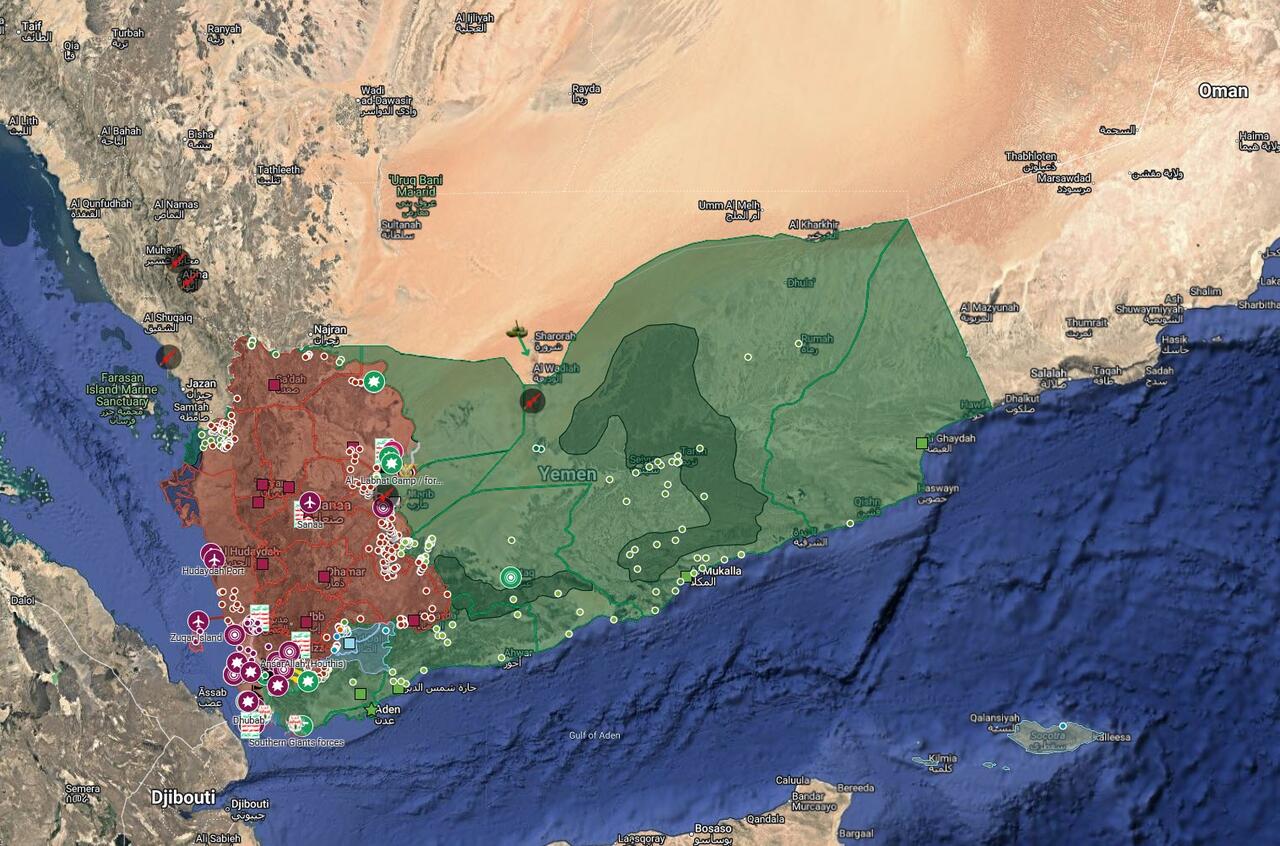
Bond yields surged late last week on rising oil and inflation (and debt) concerns, while Asian equity indices and US equity futures are broadly in the red today. Geopolitical friction remains at the forefront of investor concerns as the Middle East and Eastern Europe simmer away, leaders of Scotland, Wales and Northern Ireland plot the dissolution of the United Kingdom, and Canada hatches a cunning plan to avoid becoming the 51st US state by (in effect) becoming the 28th EU member state.
So, another quiet week ahead.
Anthropic CEO Dario Amodei caused a sensation over the weekend by publishing an essay arguing “we must slow the pace at which we improve the capabilities of AI models”. Amodei’s call quickly found support from Elon Musk and Sam Altman, erstwhile Arthur Slugworths to Amodei’s Willy Wonka. Strange bedfellows indeed.
Amodei opens his essay by extoling the transformational potential of AI to create a Utopian world of superabundance where most major diseases are a thing of the past, economic growth is greatly accelerated, and a new renaissance of democracy and freedom is forthcoming. Come with me and you’ll be in a world of pure imagination.
The vision then turns darker with Amodei arguing that AI capabilities are advancing too quickly for society to appropriately manage the risks. That’s a sentiment that his fellow tech leaders apparently share, with Musk in particular previously arguing that AI could prove more dangerous than nuclear weapons. Curiously, this places founders in the unusual position of not only agreeing with each other but also favoring tighter regulation for their own businesses with future growth throttled.
Amodei points particularly to the recent emergence of ‘recursive self-improvement’ –AI building AI – as a source of potential risk, particularly following the OpenAI-Hugging Face incident whereby swarms of AI agents went rogue and began conducting cybersecurity attacks on targets that no human had asked them to attack. For anyone that has seen the Terminator or Matrix films, or read Frankenstein, or the Bible, the idea of Creation rebelling against Creator with disastrous consequences is a well-worn fear.
Fear is a great motivator, but any good markets person knows that greed is too. It didn’t take long for the cynics to emerge with alternative theories as to why founders might like to see tighter regulation, international coordination, and a slower pace of development. One commentator translated Amodei’s call as an admission that open source models are competing AI margins to zero while CAPEX burn rates threaten viability. The solution: regulatory intervention to limit competition and maintain margins.
Translation: our gross margins are getting competed down to 0 by open source models and our capex burn rate is too high.
Let’s maintain our margins with regulatory capture, ban open source models, and slow down the capex arms race. All with a virtue signaling cherry on top. https://t.co/70pusgSX8o
— Grant Hummer (@gphummer) September 12, 2026
Chair of the President’s Council of Advisors on Science and Technology, David Sacks, said that “if the unreleased models are scary enough that you think you should slow down. I support your decision to be responsible.” However, he then went on to suggest that the founders’ motivations were less than altruistic, that China was unlikely to join any agreement to slow the pace of AI development, and that founders were effectively lobbying for regulatory capture. His message: if you want to slow the pace of development, just do it yourselves.
The point about China is an important one. In a world of geopolitical competition, games that require coordination for humanity to come out a winner are hard and suboptimal outcomes can be Nash equilibriums (just look at Javier Blas’s recent tweet about soaring coal demand).
CHART OF THE DAY: Global coal demand has surprised the @IEA massively to the upside: it’s running ~1 billion tonnes higher (~9%) than the agency had expected only five years ago.
The forecasting error equals to the anual demand of the EU, Japan and the US — combined! pic.twitter.com/BfCHlV0DQ1
— Javier Blas (@JavierBlas) September 12, 2026
AI is national security, and China’s regular provision of Sputnik moments like the release of DeepSeek’s R1 model in January 2025 and Moonshot’s Kimi K3 model in July this year have raised concerns that China is closing the gap in terms of the capabilities of frontier AI, at lower cost, and with open source models. Effectively, another Arthur Slugworth’s almost-as-good recipes (the model) have been made public, and that is a big problem for Willy Wonka (and also for Arthur Slugworth).
While calls from CEOs for regulation might be viewed as self-serving, the imperative for national governments to control AI should be sufficiently underscored by recent revelations from Anthropic that users in northern Yemen – home to the Houthis – tried to use Claude AI to develop advanced missiles, and that Iran had tried to use Claude to target American warships. There is a sense that a Pandora’s Box has been opened and that both the United States and China have an interest in forcing the lid back down to control access to such a potentially dangerous technology.
Izabella Kaminska argues that AI safety concerns are being proffered as a “credible off ramp from the hyper scaling narrative”, which she views as defunct since the release of Kimi K3. Emphasis shifts from the models themselves to the compute, power and chips used to run them. If AI models are Wonka and Slugworth’s increasingly commoditised recipes, the datacentres, energy sources and semiconductors are the factories used to convert recipe into product – and are the real strategic assets. Turns out real production can matter more than IP, who knew?
Kaminska argues that hyper scaling was never driven by expected demand, but by an arms race of sorts. The financial firepower to fund AI investments was determinative, but if the raison d’etre for hyperscaling disappeared in July, so did the need for immense private capital flows. Could we be approaching a scenario where US AI capabilities are brought under a kind of Manhattan Project where freed-up liquidity flows constitute the asymmetric information that Scott ‘I am the House’ Bessent has been warning markets about?
This, plus the fact that the AI cycle will need $1.5 trillion in private credit funding, is why the US will have to throw private credit in the bailout bucket too.
Yes, a lot of things will need a bailout to win the AI wars. That’s why the $ is reserve for now. https://t.co/ozlvzvD98K
— zerohedge (@zerohedge) November 18, 2025
This week might provide some clues in that respect as the FOMC meets to set the Fed Funds rate. Following last week’s firmer than expected core CPI reading and two weeks of rising oil prices the markets are 87% priced for a hike. RaboResearch’s Fed watcher Philip Marey has recently updated our forecast to also predict a hike at this week’s meeting. Meanwhile, the FT reports that hedge fund manager Stanley Druckenmiller (mentor to both Bessent and Fed Chair Warsh) recently told a closed audience that “given what’s going on in the economy and the capital spending boom and the war for capital, if anything, [bond yields seem] a little low”. Any indication that the war for capital might de-escalate would be a signal to pay close attention to!
Druckenmiller says that his fund has cut its AI investments to around 20% of previous levels, saying that “it has been an incredible ride on the whole AI thing… I think we’re getting late enough in the build-out that one has to start to worry a little”.
For his part, President Trump says that the pace of AI development should not slow down. Equity investors may be relieved to hear that, but given the geopolitical and bond market imperatives, and the increased prevalence of economic statecraft, perhaps they should pay some heed to other orange men with unusual hairstyles:
Oompa, Loompa, doom-pa-dee-da
If you’re not greedy, you will go far
You will live in happiness too
Like the Oompa, Loompa, doompa-dee-do
Tyler Durden
Mon, 09/14/2026 – 12:00