The European Union is moving toward one of the most aggressive online control systems ever proposed in the Western world as the bloc’s unelected globalist leaders prepare to roll out a sweeping plan that could force every social media user to provide government-approved identification just to access platforms online.
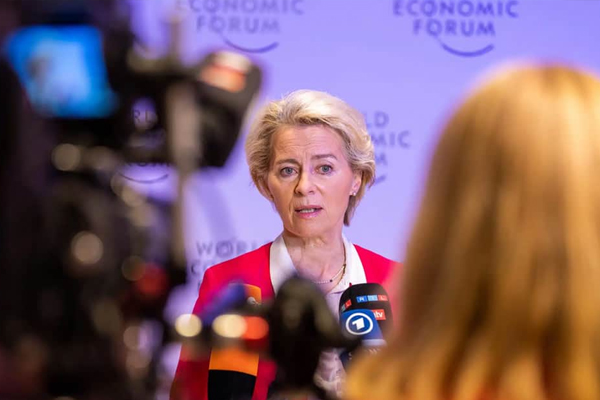
Under the proposal being advanced by European Commission President Ursula von der Leyen, an unelected bureaucrat, social media restrictions for children could be introduced across the EU as early as this summer.
But critics warn the real-world impact would extend far beyond children.
Because platforms would need to verify users’ ages, every user, regardless of age, could ultimately be required to submit digital ID credentials before being allowed to use social media.
The move is already raising alarm among free speech advocates, privacy campaigners, and critics of expanding global digital surveillance systems.


EU Signals Major Expansion of Online ID Verification
Von der Leyen announced this week that Brussels is actively considering a bloc-wide social media ban for minors following recommendations from an EU expert panel on online child safety.
“I believe we must consider a social media delay,” von der Leyen said during a conference in Copenhagen, Denmark.
“Depending on the results, we could come up with a legal proposal this summer.”
The European Commission president praised Australia’s recently enacted social media ban for minors and suggested Europe should follow a similar path.
“We are witnessing the lightning speed at which technology is advancing — and how it penetrates every corner of childhood and adolescence,” she said.
“Childhood and early adolescence are formative years, and I believe we should give our children more time to become resilient in this vulnerable phase.”
Australia introduced legislation last year restricting social media access for users under 16.
France is now preparing to become the first EU nation to adopt similar measures, with plans to block children under 15 from using social media beginning in September.
Spain, Germany, Ireland, Denmark, Greece, Austria, and the Netherlands are also considering restrictions.
Critics Warn of Digital ID System for Entire Population
While the proposal is being framed publicly as a child safety initiative, opponents warn that the system would effectively require universal digital identification for online access.
In practice, platforms cannot verify who is under 15 or 16 without verifying the identity of everyone else as well.
That means adults would likely need to upload official ID documents or use government-linked digital identity systems to access social media platforms.
The EU has already developed an age-verification app modeled after its controversial digital COVID certificate infrastructure.
It’s a system that many critics previously warned could evolve into a broader digital identity network.
Brussels has heavily promoted the app, though several governments remain cautious amid concerns over privacy risks, technical failures, and government overreach.
Critics say the proposal represents another major step toward centralized digital control systems long feared by civil liberties advocates.
The restrictions would likely be enforced under the EU’s Digital Services Act (DSA), which gives Brussels the power to fine tech companies up to 6 percent of their global annual revenue for failing to comply.
Global Push for Online Control Accelerates
The EU’s latest proposal comes amid growing international pressure to tighten online speech controls under the banners of “safety,” “misinformation,” and “harm prevention.”
Britain’s Labour government has already committed to imposing age restrictions on social media access for users under 16.
Prime Minister Sir Keir Starmer’s government confirmed in April that new restrictions would move forward despite earlier attempts to delay the issue pending public consultation.
Meanwhile, European officials continue expanding censorship powers under the DSA, which has already been criticized by the Trump administration and free speech advocates as a tool for suppressing dissenting political views online.
President Donald Trump has repeatedly blasted EU regulation of American tech companies as protectionist, anti-American, and hostile to free speech.
The White House has also warned that European censorship laws are increasingly being used to pressure U.S.-based platforms into policing lawful speech globally.


Growing Concerns Over “Safety” Justifications
Supporters of the EU proposal argue that restrictions are necessary to protect children from harmful online content and mental health risks.
However, opponents say governments are exploiting legitimate concerns about child safety to normalize mass digital identification systems and expand state oversight of online activity.
Several EU nations, including Poland and Estonia, are reportedly resisting bloc-wide mandates, arguing such restrictions may violate rights related to access to information and national sovereignty.
Still, Brussels appears determined to press ahead.
If enacted, the proposal would mark one of the most sweeping government interventions into internet access ever attempted in democratic nations.
The move will potentially transform anonymous online participation into a permission-based system tied directly to verified identity credentials.
In Case You Missed It:
Parents Sent To Prison After Isolating Kids For Four Years Over COVID Fears
For breaking news from one of the most over the target and censored names in the world join our 100% Free newsletter at Newsletter, The best way to get the information you want.
Also follow us at Gab
Follow us on Gab.com , Like, comment, and subscribe.
Telegram, Join our Telegram chat
Shop Patriot and Detox the Deep State by shopping with our sponsors.
RedPillLiving.com, Home of Sleepy Joe – the world’s most powerful all natural sleep formula.
The Serapeum.com, The Hidden History of Man & The Mystery Babylon Religion of The Deep State.